Margaret Little(1806-1879)
My Paternal 3rd Great Grandmother, married Benjamin Lanier Daniel

Families bearing the “Little” name were found as early as 1273 living in the border counties of England and Scotland. Legend has it they were big strong men (hence the teasing name “Little”) sporting reddish hair, fair skin and blue green eyes. The first Little to set foot in Pitt County, North Carolina was James Little who died in 1799 leaving behind a son William. William married Mary Crandall who bore 14 of their children, one of whom was named John (born 1779). John in turn married a woman, most likely also of Scottish descent, whose name has been lost to history. Their only known child was a daughter, Margaret, who was born on April 18, 1806 in the same county, Pitt County, as her great grandfather before her.
[Image: The magnificent landscape of Scotland]
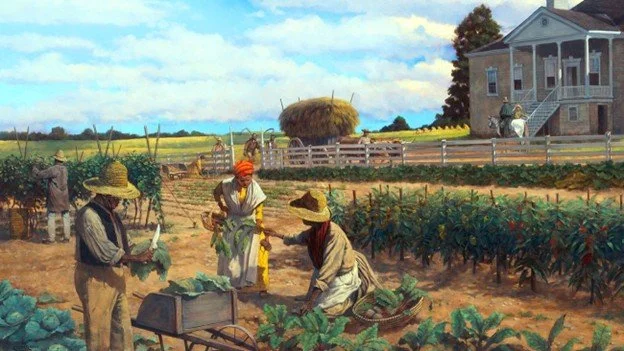
Margaret married Benjamin Lanier Daniel, a well-to-do farmer, 10 years older than she was. From the 1850 census, we know that Benjamin owned $4,975 in real estate, and that seven of their nine children were still living at home with them: John age 23, McRisden 20, William
18, Ebenezer 15, Beverly 9, Frances Elizabeth 6, and Benjamin Jr age 2. Francis, their only daughter, is my ancestor. According to the 1850’s census slave schedule, Benjamin owned 25 enslaved persons of ages ranging from 1 to 65. Ten years later in the 1860 census the value of his real estate had doubled; their son Beverly was a college student and young Francis and Benjamin were still living at home with them. Their lives were about to take a dramatic turn for the worse.
[Photo: Enslaved Labor by Keith Rocco]
In the early morning of April 12 1861, Confederate guns opened fire on Federal troops at Fort Sumter in Charlestown, South Carolina marking the beginning of the Civil War. Before the bloodbath was over, more than 620,000 lives were lost, countless others were wounded and forever scarred. Eight percent of all white males aged 13 to 43 living in America at the dawn of the Civil War died during the conflict which is the equivalent in today’s population of about eight million people.
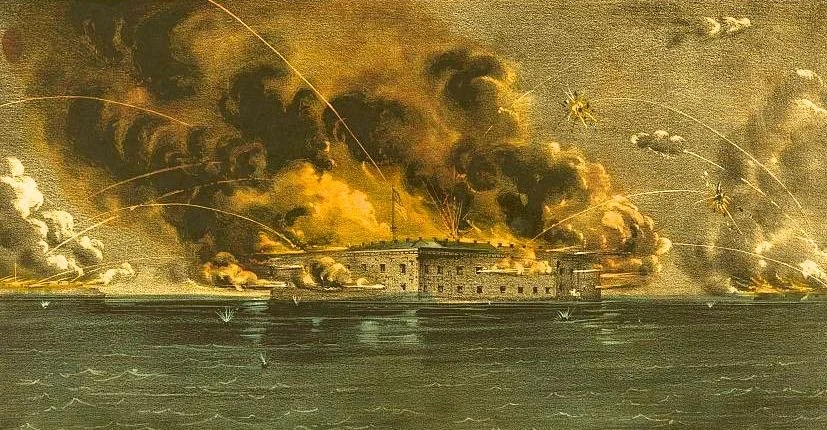
[Painting: The Battle of Fort Sumer 1861]
The residents of Pitt County were nearly tied in their voting record for the Presidential election of 1860 but when it came to succession in May of 1861, 85% of their delegates voted in favor. In 1860, Pitt County’s population consisted of 7,840 whites, 127 free blacks, and 8,473 enslaved persons. When the war rallying call came, 2,000 white men joined the Confederate militia and nearly the same number of blacks, desperate for their freedom, joined the Federal forces. Pitt County was first invaded by the Federal troops in June of 1862. This was the first of numerous local battles and by the end of the war, Pitt County was in tatters. All eight of Margaret’s sons fought in the war. The Daniel family paid a terrible heart wrenching personal price.
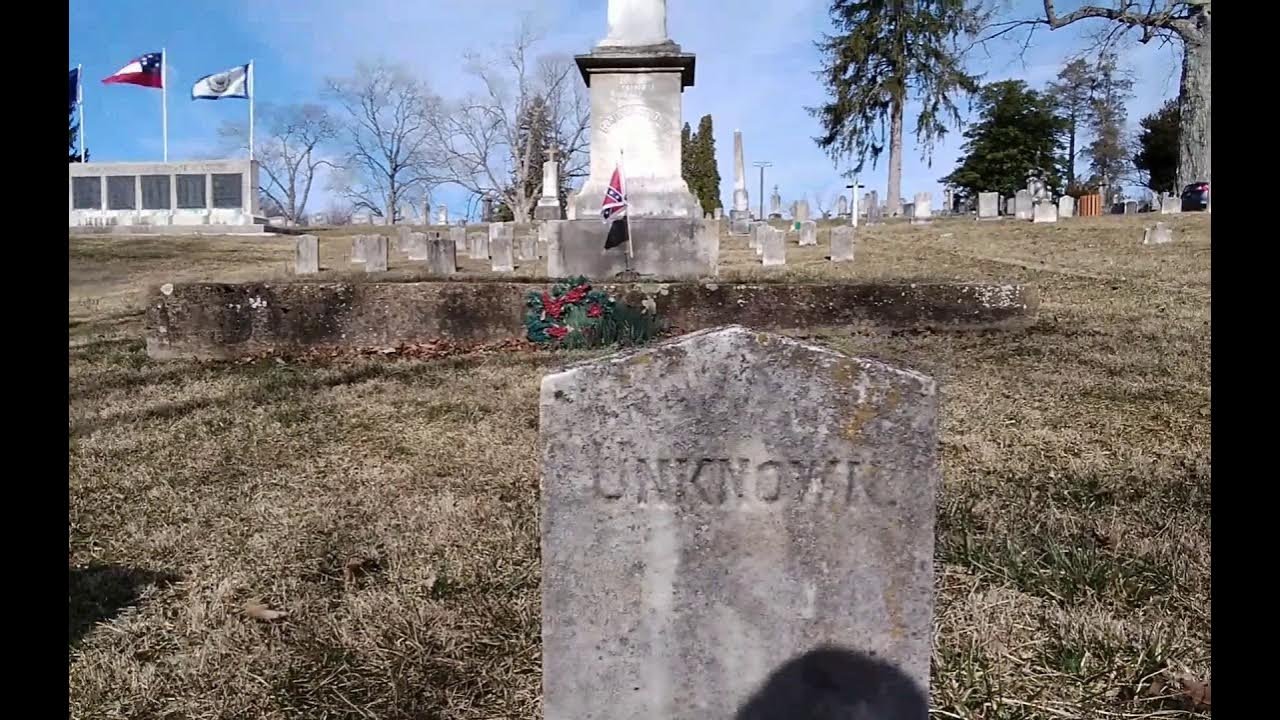
On April 26, 1861 their firstborn child, Sydney (born 1823) enlisted in the Confederate army as a Sergeant in Company C of the NC 17th infantry. He made out a will in May, joined the ranks, and was never heard from again. His will was discovered and probated in November of 1861. He left his sister Fannie “one negro woman named Sanna and her issues to her and her heirs forever”, and his brother Ebenezer “one negro boy named King Solomon to him and his heirs forever” and the balance of his property was left to his youngest brother Benjamin. The contents of the will are quite ironic under the circumstances. His body is buried in Elmwood Cemetery in Shepherdsville, West Virginia where 252 other Confederate soldiers are buried.
{Photo: Elmwood Cemetery ]
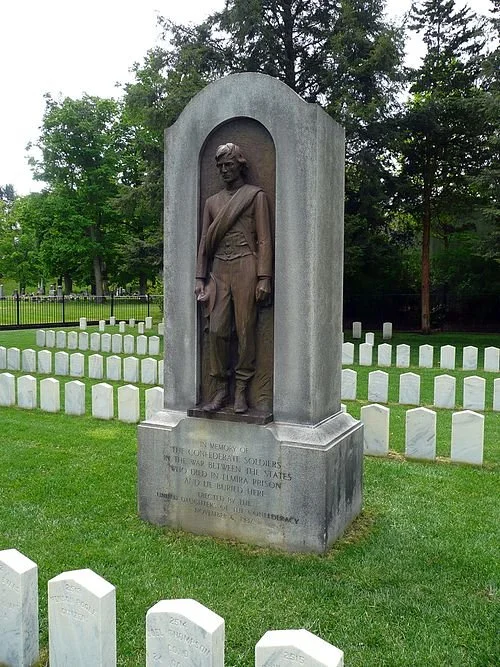
In June of 1863, their second son, Joseph (born 1825), enlisted in the Confederate army as a private in the NC 8th infantry, Company C. He was imprisoned a year later at Cold Harbor Virginia, where a bloody sprawling two week military engagement left more than 18,000 soldiers killed, wounded and captured. He was transferred to Elmira New York where he died as a POW of disease in August of 1864. Elmira Prison Camp, the most infamous of all the Union prison camps, held the largest number of Confederate POWs. Within three months of its opening in 1864 it was filled to three times its capacity. Dubbed “Hellmira” by its inmates, one third of the prisoners died of malnutrition, exposure and poor sanitary conditions and lack of medical care. It was such an embarrassment that after the war, the prison camp site was demolished and converted to farmland.
[Photo: Woodlawn National Cemetery in Elmira]
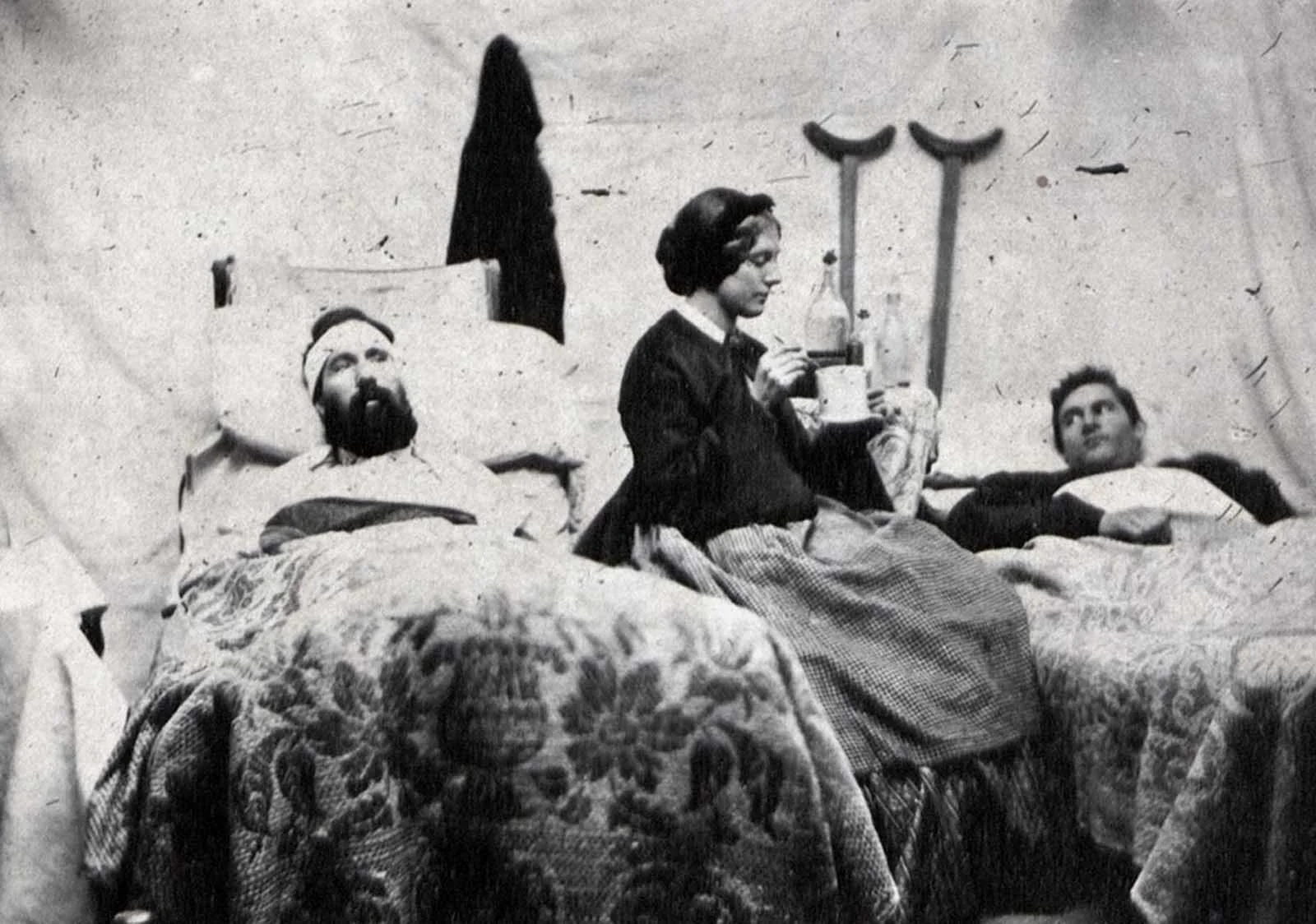
Their third son, John Little (born 1827), married Lizanna Chapman in December of 1859. Nine months later their daughter Margaret Francis “Maggie” was born. In May of 1862 he bid his wife and infant daughter goodbye and followed his brothers to war as a private with the NC 20th Infantry. He was wounded two months later in Malvern Virginia, recovered and went back into action. Two years later he was promoted to Corporal. In between battles he managed to impregnate his wife who gave birth to a daughter Elizabeth in the summer of 1864. War weary, in November of 1864 he was mustered out “absent without leave”. After the war John went back to farming and they had three more daughters: Nancy in 1868, Lovie in 1870 and Ann in 1883. In the 1900 census John was a town watchman, his wife an invalid, and their daughter Lovie a 23 year old seamstress, lived with them. Lizanna died in 1906, and John died a year later.
[Photo: Wounded Soldiers in Hospital in 1863]
Their fourth son, McRisden (or McGilbra or McGillan), was born in 1830. He never married and was killed in battle but not much detail is known about him.
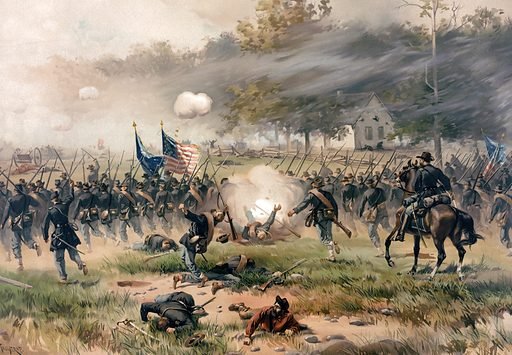
Their fifth son, William Barsylla (born 1832), married Julia Wilson and they had two children, William Edgar and Susan Rebecca. Two months after his second child was born in May of 1862, he enlisted in the Confederate army as a private in Company E of the NC 55th infantry. One month later he was promoted to Full Corporal. The 55th Regiment moved to Virginia where it was assigned to fight with Robert E Lee’s Army of Northern Virginia. On September 17, 1862, William was gravely wounded at Antietam, in the bloodiest single day battle of the Civil War and of America’s history with a combined tally of nearly 23,000 killed and wounded in the fields, woods and dirt roads of Maryland. He was one of several hundred Confederate soldiers who were brought back across the Potomac River where he died and was buried in a marked grave at Elmwood Cemetery in Shepherdstown, West Virginia, in the same graveyard where his older brother Sydney was interred.
[Painting: Battle of Antietam by Thure de Thulstrup]

Their sixth son, Ebenezer Pettigrew (born 1835) married Georgia Ann Holliday who gave birth to a son Sylvester in 1859. In the 1860 census Ebenezer was a farmer, had a live-in farm laborer and owned two enslaved persons. In February of 1862 Ebenezer enlisted as a private in the NC 3rd Calvary and eight months later he was wounded in a skirmish with the Federal army in Washington, North Carolina. In 1863 his wife gave birth to a second son, Sydney. He was listed on the NC troop roster in October of 1864 as a Corporal. Mercifully, he managed to survive the war. In 1869 a third child was born, Ida Clementia (“Tiny”). The last record of Ebenezer is in the 1880 census where at 45 years of age, with the help of his sons, he was making ends meet as a farmer.
[Photo: Cannon used in the Civil War at Antietam]
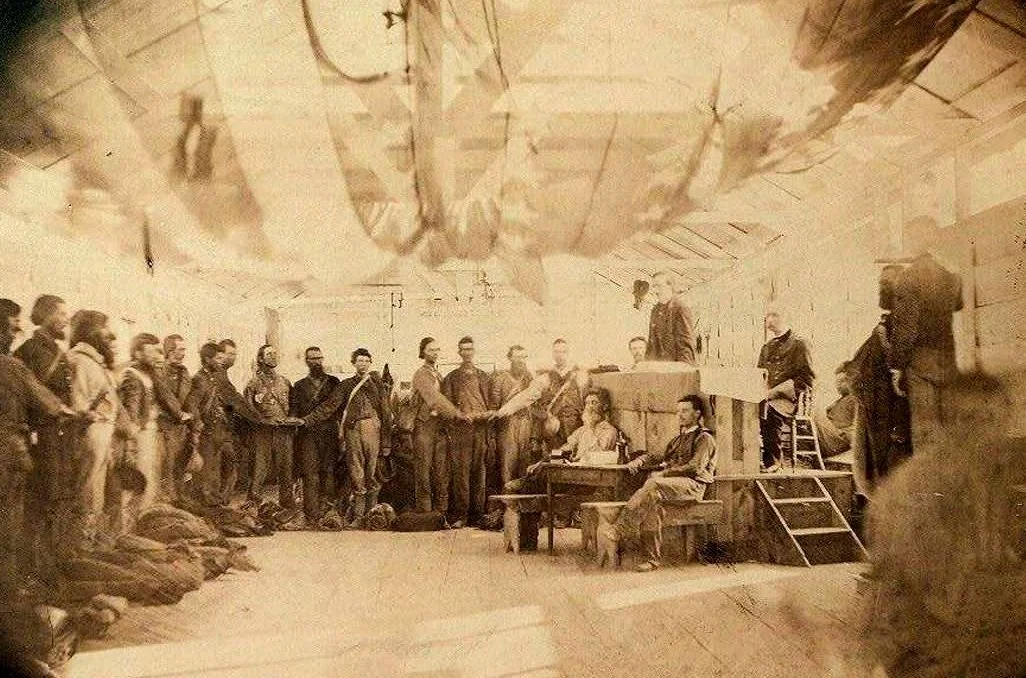
Their seventh son, Beverly (born 1842) enlisted in August of 1861 as a Private in the NC 8th Infantry Regiment. Five months later in October he was captured and imprisoned at Roanoke Island in North Carolina. He was held for six months and then exchanged. He was captured again and imprisoned a second time in September of 1864 at Fort Harrison Virginia and then transferred to Point Lookout Prison in Maryland. Point Lookout was one of the largest and notoriously deadly Union prisons. Prison guards at the camp were primarily African American Union soldiers who undoubtedly took this reversal of fortune as an opportunity to exact revenge on former enslavers. Major General Benjamin “the Beast” Butler would review the camp and gallop through the crowd of men hitting them as he sped by. Prisoners lived in horrific unsanitary conditions, crowded into flimsy tents and shacks with no protection from extreme eat, cold and coastal storms. Flooding was frequent causing living conditions to be unbearable. Chronic diarrhea, typhoid fever, respiratory diseases, scurvy, smallpox, and lice plagued the camp. Food was so scarce that rats became a major source of protein for some inmates. Beverly managed to survive and was exchanged once again in March of 1865. He returned to farming, married Maggie Louise Perkins and had three children. After her death he married Marina Langley and in the 1890s had two more children. Beverly died in 1907.
[Photo: Last of the Confederate Soldiers signing the Oath and being released from Outlook Prison in July of 1865]
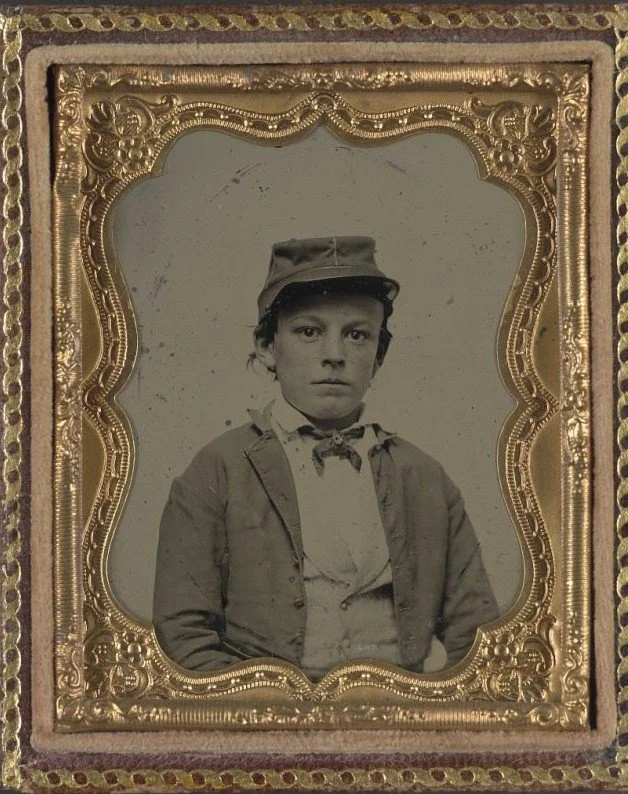
Their eighth and youngest son, Benjamin Jr (born 1847) enlisted in the Confederate army in Company H of the NC 2nd Regiment Junior Reserves. As the war waged on and the Confederacy became desperate for soldiers, a law was passed in the early spring of 1864 reducing the draft age for young men to age 17. These youngest recruits served in “Junior Reserve Units” in which they were responsible for guarding key military posts such as bridges, railway depots and prison camps. On their 18th birthday they were transferred to combat units. In March of 1865 Benjamin died in a military hospital in Raleigh North Carolina at the age of 18 of rubella. Robert E Lee surrendered at Appomattox on April 9, 1865.
[Photo: A haunting picture of an unnamed young confederate soldier, age unknown]
The anguish of losing five of their sons must have been unbearable for the Daniels. Oddly, there is no word in the English language for a parent who suffers the loss of a child. The most painful and defining event of one’s life and after all the centuries and the heartbreak of countless grieving parents there is no word to describe their new station in life. Lose a husband and you are a widow; lose a parent and you are an orphan; lose a child and – the only language that comes close is Sanskrit. They use the word “Vilomah,” which means “against the natural order” so named because a child should never have to die before a parent. Margaret Little was a Vilomah.
With the majority of white men off fighting the war, the women of North Carolina and other southern states struggled desperately to maintain farms and families, resulting in impaired health and too often death for the elderly and the weak. The economic costs were also staggering. The Confederate government spent millions upon millions to wage the war. Across the South homes and business property were destroyed. During the war, colleges closed, factories shut down, businesses failed, and banks collapsed. Almost none were in any condition to re-open after the war.
The aftermath of the war in the South was also deeply traumatizing. My grandfather, Durant Howard Tillitt,
wrote this heartfelt passage more than 50 years after the conflict:
“…..in 1861 North Carolina heard the beat of the drum and the roar of musketry. A sound that called nearly 150,000 of her bravest sons to battle. After four long years of struggle the heroes, over soil that had been fertilized by the blood of their comrades, marched home. They found their livestock gone; their barns plundered; their once cozy homes in ashes; the government they had helped to make and loved so well controlled by Northern men – all gone save honor, the memory of serving their state well, and loved ones that were as true as ever heroes… waiting at home.”
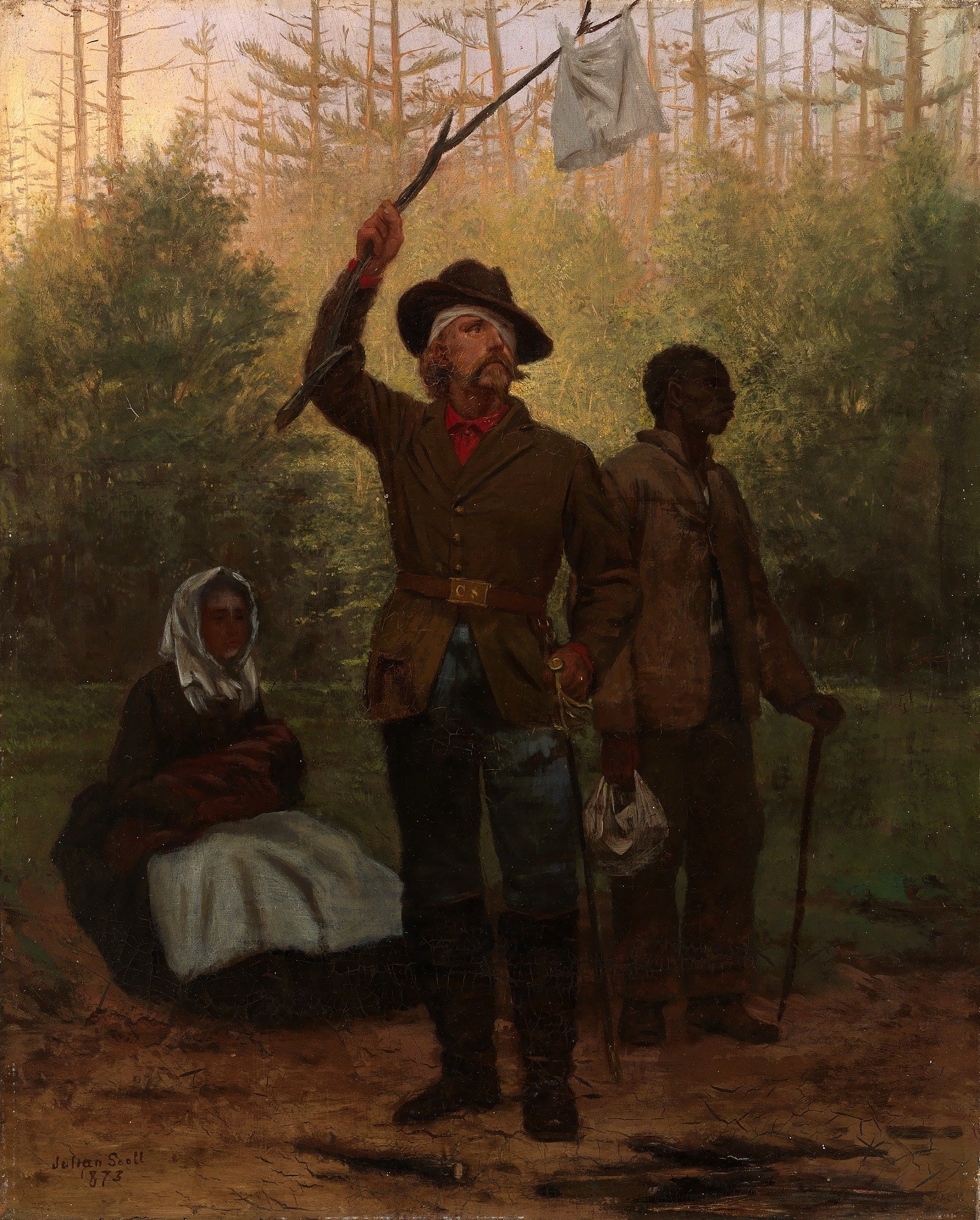
[Painting: The Surrender of a Confederate Soldier by Julian Scott. It is interesting to note that the artist enlisted in the Union Army at the age of 15 as a drummer boy, later served as an infantryman and awarded the Medal of Honor. He became an artist after the war was over.]
The destruction of the institution of slavery resulted in an enormous upheaval in the south. Those of wealth and affluence either lost their lands by government confiscation or by abandonment for lack of a labor force to cultivate it. Newly freed slaves had their freedom but little else. They, along with poor whites, sharecropped on land the enslaved population had previously tended. Most whites grudgingly agreed to give blacks the rights that they had not previously possessed as enslaved property, but they were adamantly opposed to legal and social equality.
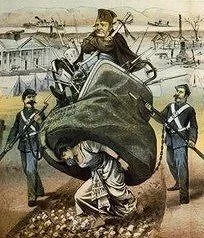
Abraham Lincoln had intended for the reconstruction to be handled humanely, without punishment for those who had rebelled against the Union. After his assassination Congress felt no such sympathy for the war torn south. Military rule was imposed, wartime leaders were forced to resign from their political posts, and voting was restricted to those men over twenty one who had not supported the Confederacy. The new rules ensured that freed slaves could participate in elections and government, while those white men, who had supported the Confederate cause, could not. Military courts were established to try civilians that allowed newly freed blacks to serve on them. Unscrupulous opportunists from the North traveled south to exploit the populace. Government corruption was rampant. The humiliations suffered by the South during this period set the tone for simmering hate and unrest. The divisiveness it caused has yet to be fully healed.
[Image: Political Cartoon. Carpetbaggers Crushing the South]
For the few Daniel family members that survived the war, life under these circumstances would have been a struggle on so many fronts -- emotionally, socially and economically. In the 1870 census 73 year old Benjamin was still a farmer, and not unexpectedly his real estate had plummeted in value. HIs wife Margaret was still living with him. Their son, Beverly, lived in the plot of land next to them and helped his father maintain his farm in exchange for half of the cotton crop.
In the 1880 census at the age of 74, Margaret was widowed, living alone, and “keeping house.” Her husband, Benjamin, died without a will and his estate was probated several years after his death in April of 1882. Margaret is not mentioned in the probate proceedings so most likely she died before the will was probated. Their surviving children fought for control of the assets. There was plenty to fight over –five parcels of land totaling over 700 acres. On one side of the court case was her son Beverly, her daughter Fannie and her husband Thomas, and her grandson William E Daniel (son of William Barsylla Daniel who died in the war). On the other side of the lawsuit was her son John Little, her son Ebenezer and her granddaughter, Susan (Ebenezer’s daughter) and her husband. No doubt, Margaret and Benjamin, if they had been alive to witness it, would have been deeply saddened by their family’s conflict.
