Thomas, William & Thomas Cooper Ferebee (born 1682,1722 & 1771)
My Maternal 6th, 5th and 4th Great Grandfathers, married Mary Ruth Fenford, Elizabeth Cooper & Margaret Williams, respectively
Thomas Ferebee, my 6th great-grandfather, was the son of John (the immigrant) Ferebee and Elizabeth Joyce Ellis. He was born in Hampton Roads Virginia in 1682. He married Mary Ruth Fenford in 1713 and moved to East Bridge North Carolina where they settled on an old 100 acre plantation called The Poplars. It was here in 1722 that she gave birth to their son William (1722-1783), my 5th great grandfather. Thomas died in 1739 followed by his wife several years later and William took possession of the family plantation. In the same year he married seventeen year old Elizabeth Cooper (1728-1794), the daughter of Isles Cooper, a prominent planter and member of the General Assembly of North Carolina. Between 1746 and 1757 Elizabeth gave birth to four daughters: Anne, Martha, Mary, and Sarah and two sons: Joseph Cooper and William Jr at The Poplars.
In 1761 William sold the Poplars and for the price of “42 pounds of pork and 10 Virginia currency and 10 proclamation money” and he bought a 160 acre parcel of land that once was the domain of a Waepemeoc Chief named Culong. This Native American tribe was spelled “Yawpim” on a map by Edward Moseley in 1733. After the tribe moved on, the area became known as Indian Town.
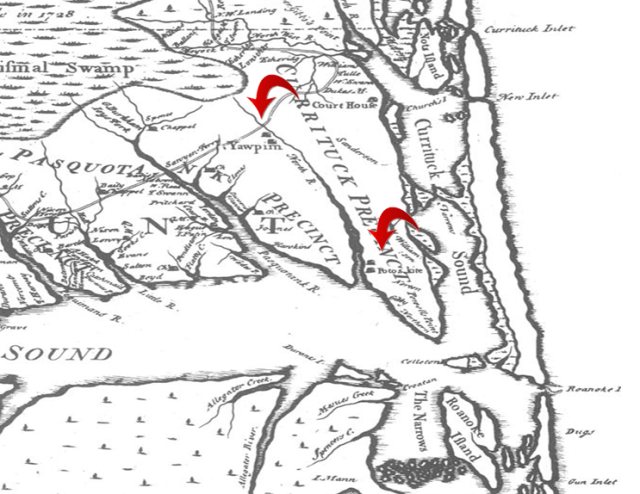
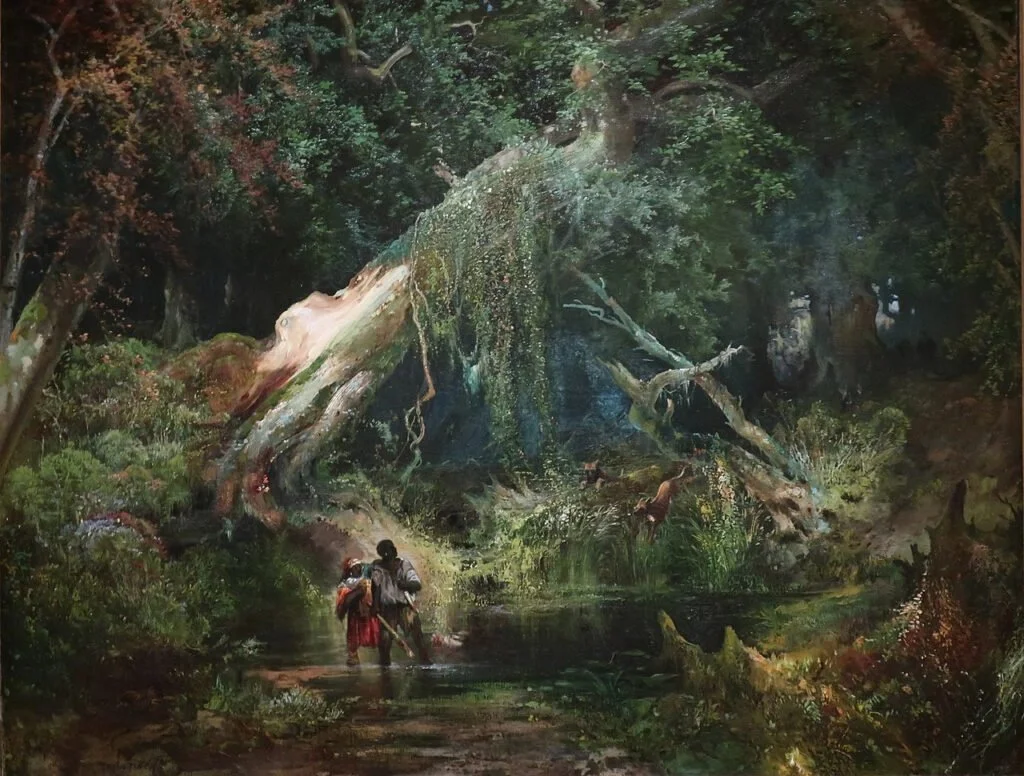
Indian Town is located in close proximity to the Great Dismal Swamp. This swamp is stunningly beautiful, but also wildly dangerous. It is easy to get lost in its mazes of islands and waterways. Home to Native American tribes for over 13,000 years, from the 1600s through the Civil War it became an ideal place for emancipated people and indigenous people to find refuge from enslavement and violence. Hundreds, possibly thousands of these so called “maroons” found shelter and freedom in the dense tangled hostility of the swamp. Harriet Beecher Stowe used the Dismal Swamp setting for her famous book, “Uncle Tom’s Cabin.”
[Photo detail: Yawpim Village and Reservation shown by the red arrow near Great Dismal Swamp]
Soon after William and Elizabeth settled in Indian Town, Elizabeth gave birth to two more daughters: Francis and Tabitha, and two sons: Thomas (who died as an infant) and Thomas Cooper Ferebee (1771-1834)my 4th great grandfather . William built the Indian Town Academy on his land so that his children and his neighbor’s children could receive an education. The Academy was burned down in a “negro raid” during the Civil War in 1862.) William served in the legislature in the NC Assembly and the State Senate and was a justice of the peace. He was appointed the road commissioner and oversaw the building of the Great Swamp Road which led to and traveled along parts of the swamp. Today the swamp is protected by the National Wildlife Reserve Program and is a popular tourist attraction.
[Photo Details: Maroons fleeing into Dismal Swamp]
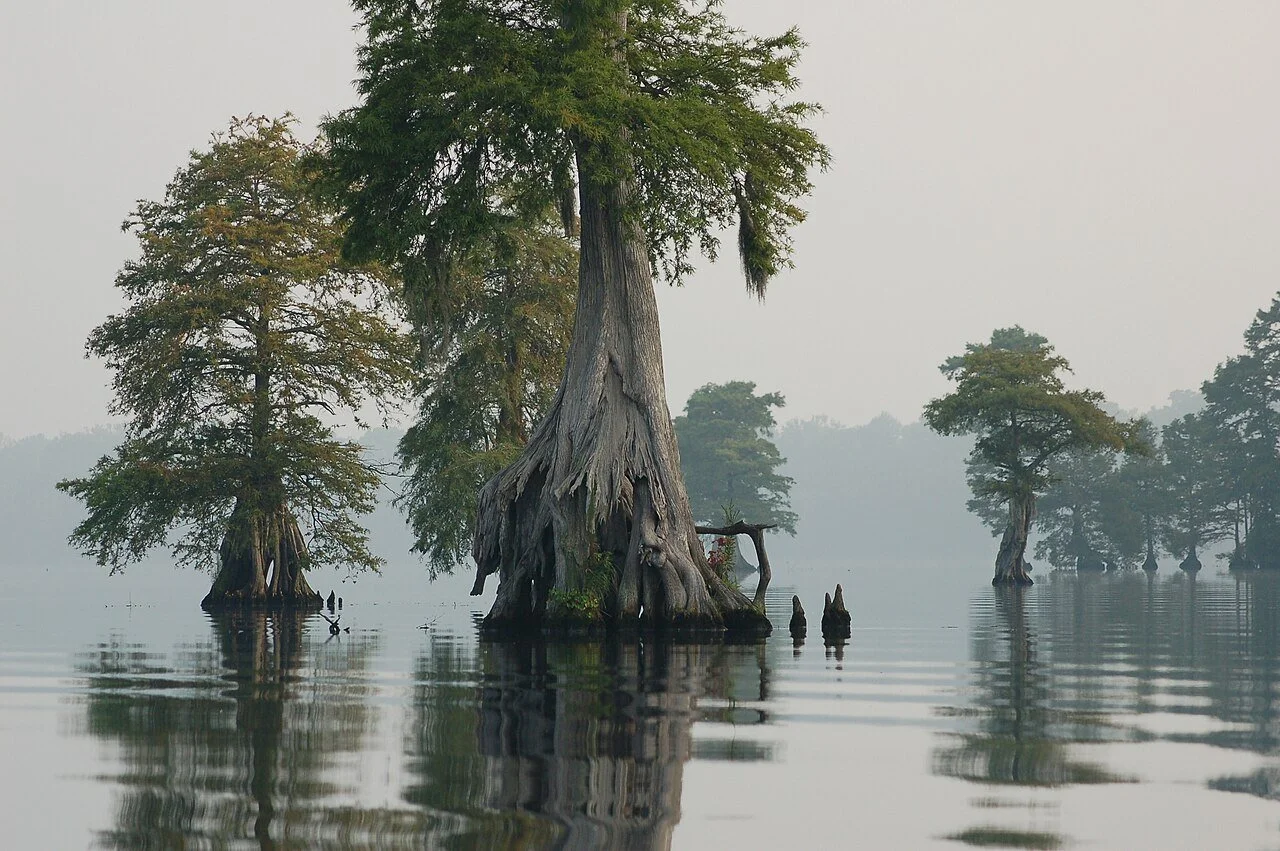
Great Dismal Swamp National Wildlife Refuge
William fought alongside his three oldest sons Capt. Joseph Cooper, Capt. William Jr, and Lt. Samuel in the Revolutionary War. When the war started Joseph was among the first to take up arms. He fought with Washington at Valley Forge and later with his father at the Battle of Great Bridge. During the Battle of Great Bridge, the first battle of the Revolution in the South, William Jr shot and killed Capt. Charles Fordyce, the British Commander. The sword he took from him as a memento became a family treasure until it was stolen by the Yankees many years later during the Civil War. Samuel was 17 when he joined the Continental Army. He has been described as a small thin man with a fiery temper who once through his officer’s commissions into a fire in protest over no pay and few rations. His passion must have paid off because later in life he became a Colonel.
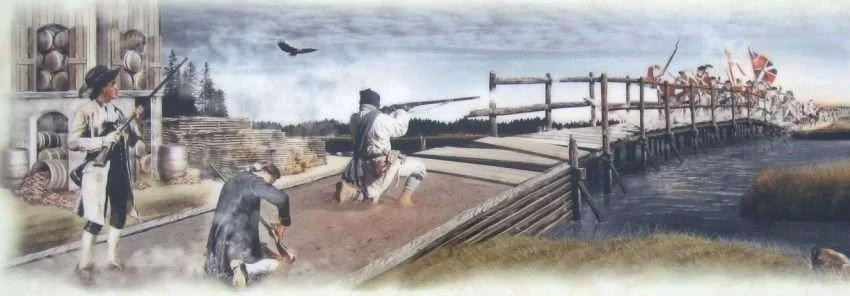
[Painting: The Battle of Great Bridge 1775]
In 1776 William Sr and General Isaac Gregory were commissioned to seize and sell Loyalist property in Currituck County. Among the property seized was a 600 acre tract of land that was conveniently located adjacent to William’s Culong Plantation. General Gregory issued him a deed for it. Why not, after all what are friends for? A nearby seized plantation was sold to his son Samuel. After America won its independence, William Sr was awarded over 3,000 acres of land for his service as part of the “War Bounty” program. When William Sr died in 1783 his will specified that after the death of his wife, Elizabeth, the Culong plantation and the land on which it sat, would go to his two youngest sons, Thomas C. and James, both of whom were still minors when he died. Family stories relate that Thomas C. of all the siblings was considered the “brainy” one. When his mother died in December of 1794, Thomas C. was 24 years old. Soon after he bought out his brother’ James’s share of the estate. It is said that James lost his life at sea while heading to New York to seek a better life.
A year later in 1796 Thomas C. married Lydia Humphries (1774-1798) and through marriage acquired a large adjoining tract that became part of Culong. Lydia gave birth to a daughter Margaret Elizabeth (1797-1823) who later in life married Dr Gideon C Marchant. Margaret died before the couple had any children and Gideon married a 2nd time to Emily Dauge, my 3rd great grandmother. Gideon and Emily’s story is told in a separate blog.
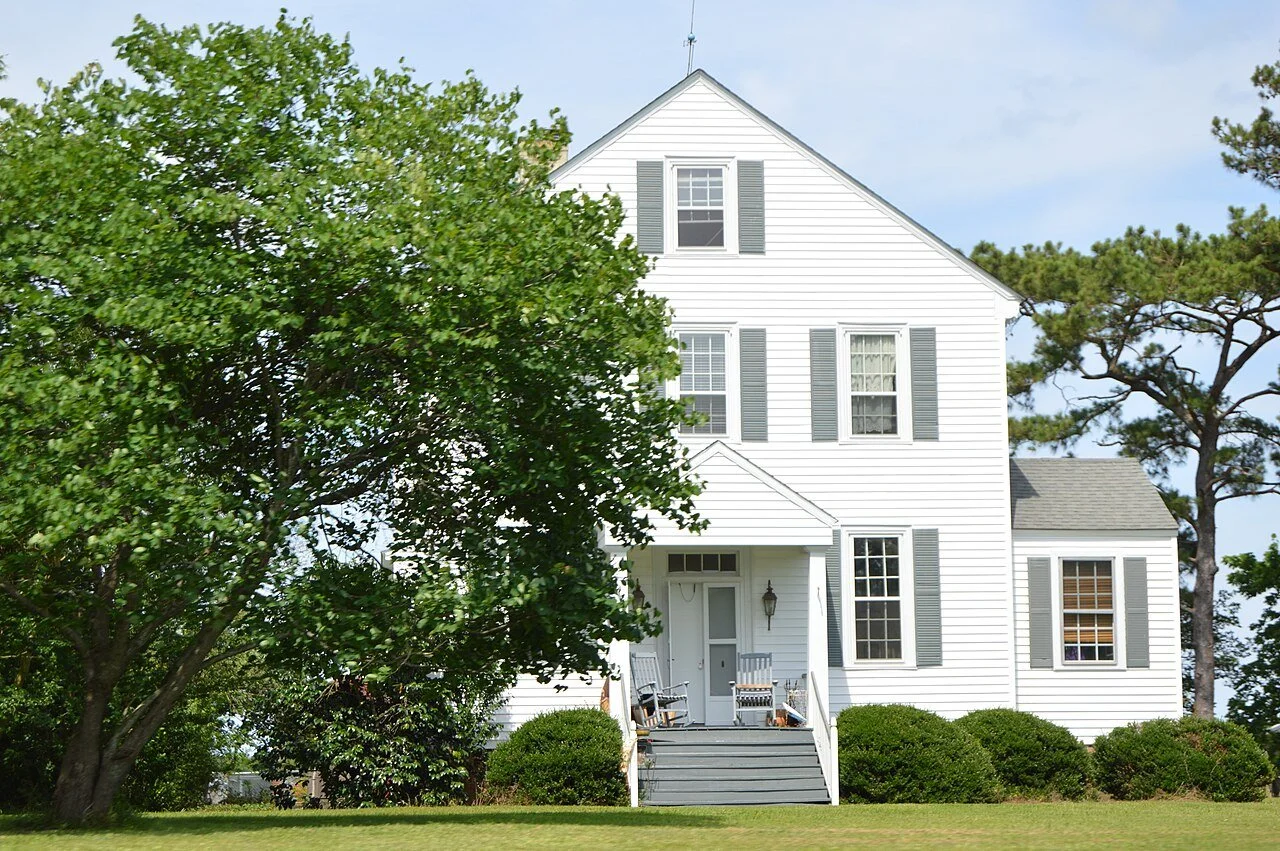
[Photo: Culong Plantation House on Indian Town Road built 1812]
Thomas C. married a second time to Margaret C. Williams in 1801 but this too was destined to be a short marriage. She died three years after she took her vows at age twenty. Before her death she gave birth to Samuel Williams Ferebee, my 3rd great grandfather. Samuel had a relationship with Delia Carter who produced two children out of wedlock. Their complicated relationship is discussed as part of the Bettie Ferebee Sanderlin blog. By 1805 Thomas had buried two wives and outlived his parents and both sets of in-laws. He continued to live in Culong with his two small children and in 1812 built a new plantation a short distance from his father’s house on the land he had inherited. Today the grand old home still stands and is listed on the National Register of Historic Houses.
At the age of 58 Thomas C. married for the third time to Judith Gregory Mackie who was 23 years younger than he was. Her family was quite wealthy. Her father owned salt mines and a fleet of sea going vessels that traveled to and from the West Indies, Bermuda and New England. Less than a year after their marriage, their son Thomas Cooper Ferebee Jr was born. Thomas C. Sr added more acreage to his property and increased his enslaved persons headcount to 43 “elevating him to planter status”. When he died in 1834 his obituary said: “Thomas Cooper Ferebee, Esquire was one of the oldest and most respectable men in the county.” His name became quite popular with his descendants. His name legacy ended with Thomas Cooper Ferebee VI who died young without any children in 1981.
Thomas C.’s brother Samuel was the most prolific member of the family. Samuel once held a family reunion at which 72 family members were in attendance. He married three times always on a Sunday and always on the 14th of the month and coincidently produced 14 children, one of whom was also named Thomas Cooper Ferebee. Two of Samuel’s wives were sisters: Sarah and Peggy Dauge. (The Dauge family name is entwined with the Ferebee family in many places and all of these Dauges have a common ancestor, Peter Dauge, who in turn is related to Capt. James Dauge the French Huguenot who immigrated to America in the late 1600s.) Samuel’s son, the Reverend Samuel Ferebee II, married 5 times. One of his children was named Thomas Cooper but the baby died in infancy.