William Caldwell Rodgers (1771-1856)
My Maternal 4th Great Grandfather, married Elizabeth “Betsy” Rutter
William Caldwell Rodgers (1771-1856) was the first born son John Rodgers and Margaret Daughtery. He was born in Lunenberg County Virginia and was ten years old when his family moved to Kentucky. At the age of 22 he married Elizabeth “Betsy” Rutter (1775-1832). Together they had two daughters, Nancy Owen and Margaret Martin, and a son Edmund Rutter, my 3rd great grandfather. In 1792 when Kentucky became a state, persons “possessed of a family and older than the age of 21” were entitled to land grants of 100 to 200 acres. William scooped up three grants, more than the normal amount perhaps because he “mustered in” to fight Native Americans in 1791.
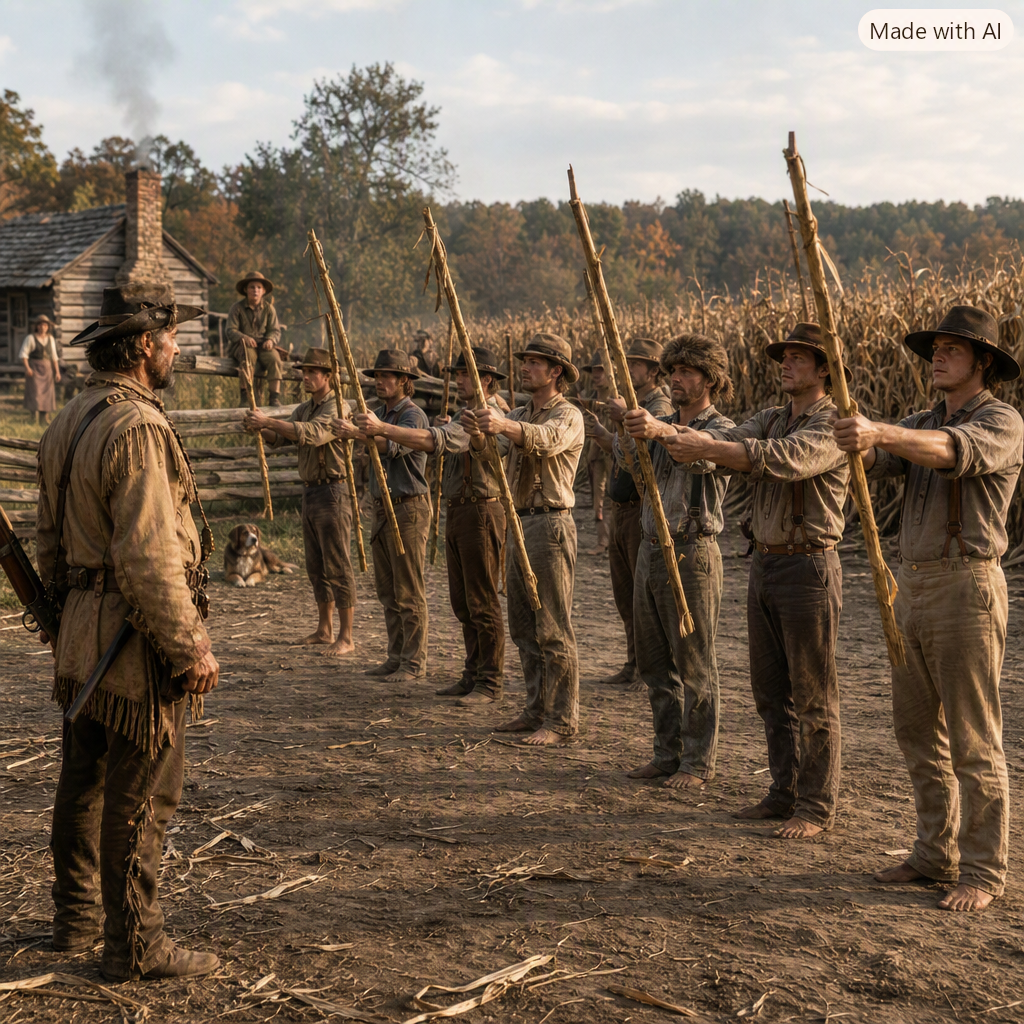
In 1806 William served as a Captain in what became known as the Corn Stalk Militia. Kentucky in the 1790s to 1820s was a violent frontier. When Kentucky became a state all free males between the ages of 18 and 45 were liable for service, but some of the units has no fire arms and drilling with corn stalks became common enough to give the militia its nickname. By 1806 it was the backbone of Kentucky’s defense system. Despite the poverty of frontier defense, it shows the resourcefulness of early Kentuckians and their David vs Goliath determination.
[Image: AI Generated image of the “Cornstalk Militia” being trained by William Caldwell Rodgers]
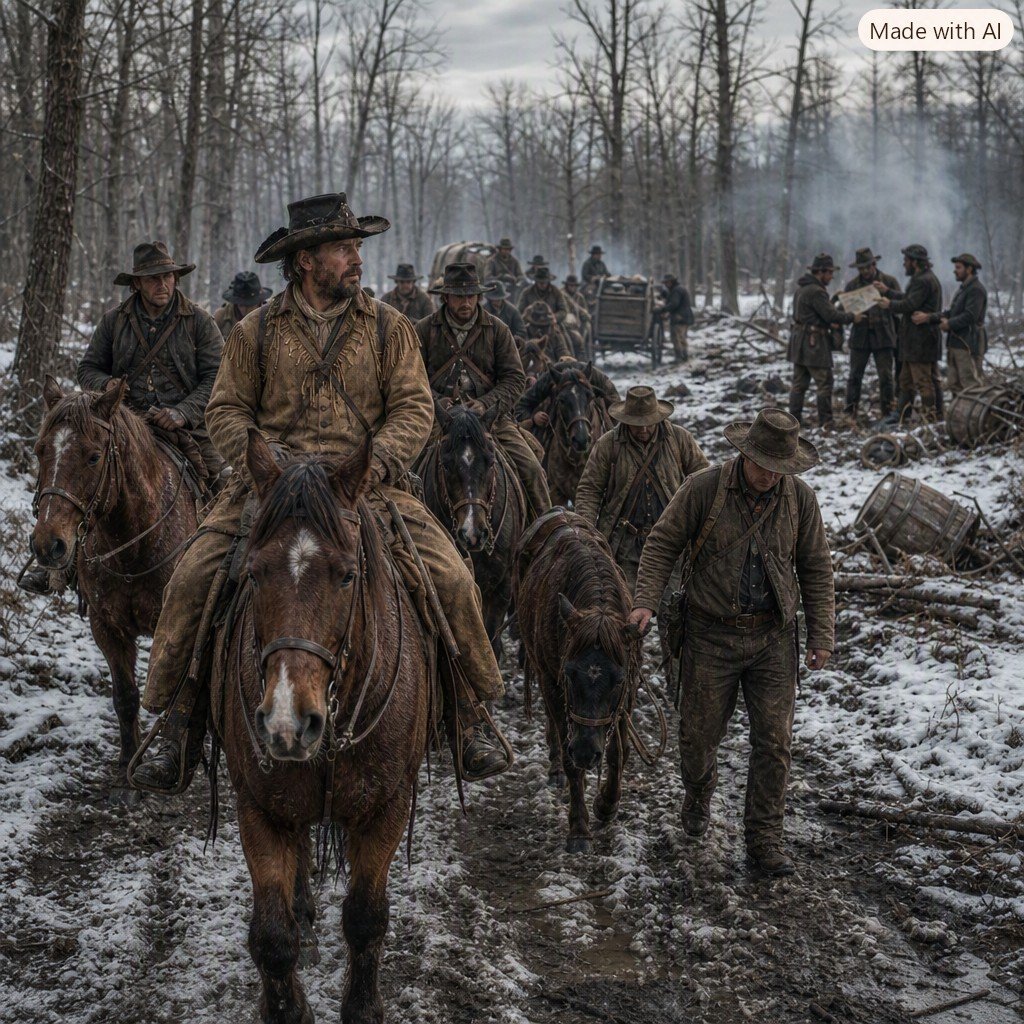
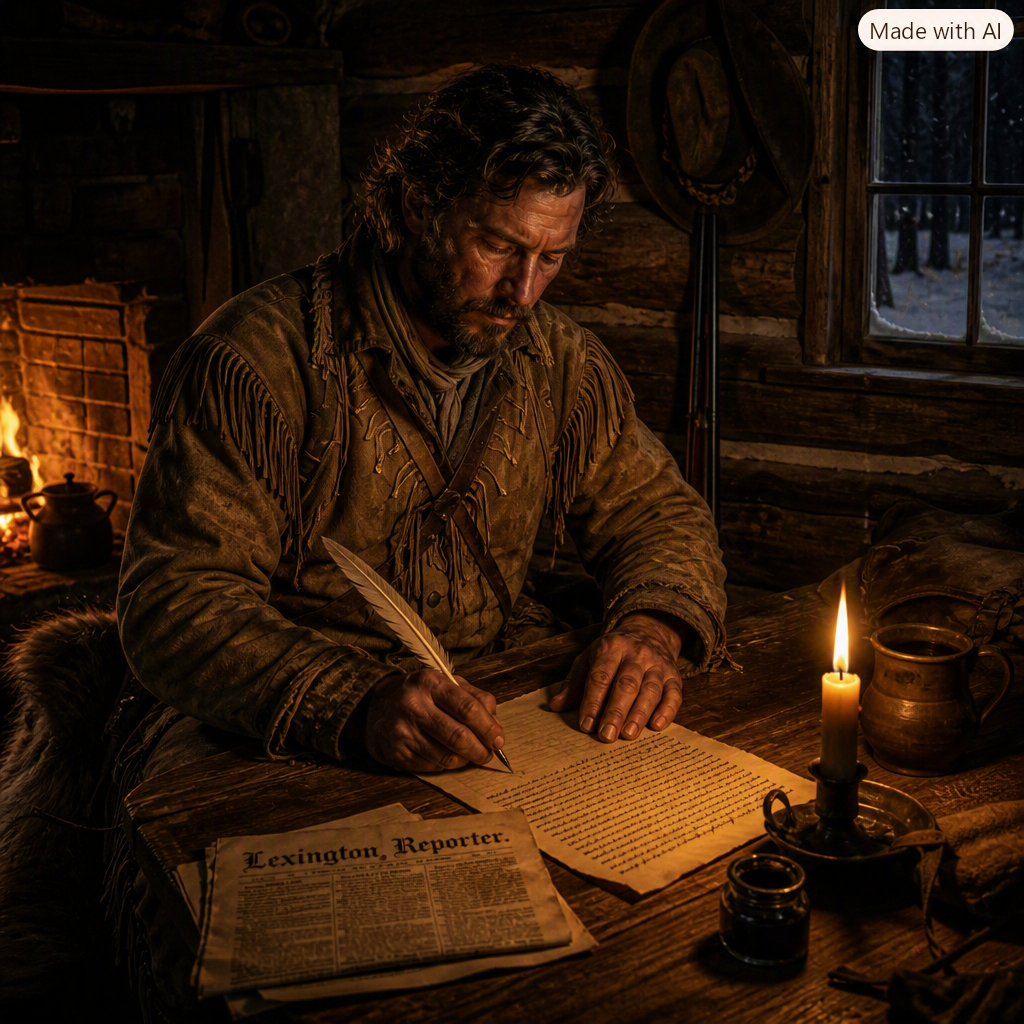
Later in 1812 William was a member of the Kentucky Mounted Militia as part of an expedition to destroy Indian villages and their winter supplies. When he returned from this expedition he wrote a long searing letter to the editor of the Lexington Reporter to complain that “the foray was a fiasco. I have been 30 years this day a Citizen of Kentucky and I have experienced the danger and hardships of my fellow soldiers and I never before saw so much disorder in an Army from first to last as this one. ” Supplies were inadequate, horses were starving for lack of food, some horses were accidentally shot by their own men. In William’s view it was a disgrace, a waste of manpower and did not accomplish its purpose.
[Image: AI Generated image of William Caldwell Rodgers leading an expedition in 1812]
William was the justice of the peace, the tax commissioner, and the surveyor for the County of Livingston in Kentucky. He built the courthouse and donated the land on which it stood to establish the Town of Salem, County Seat of Livingston County. An effort was made to impeach him in 1808 for improperly altering boundaries on a land grant survey and forging paperwork. William claimed he was innocent and that the man who initiated the impeachment was being vengeful due to a broken partnership deal. After a three day trail he was acquitted of wrongdoing. Five years after building the jail house, he was charged for failure to pay for some materials he had purchased to build it.
[Image: William Caldwell Rodgers writing a letter to the Lexington Reporter to complain of supply shortages in during the 1812 Mounted Militia expeditions.]
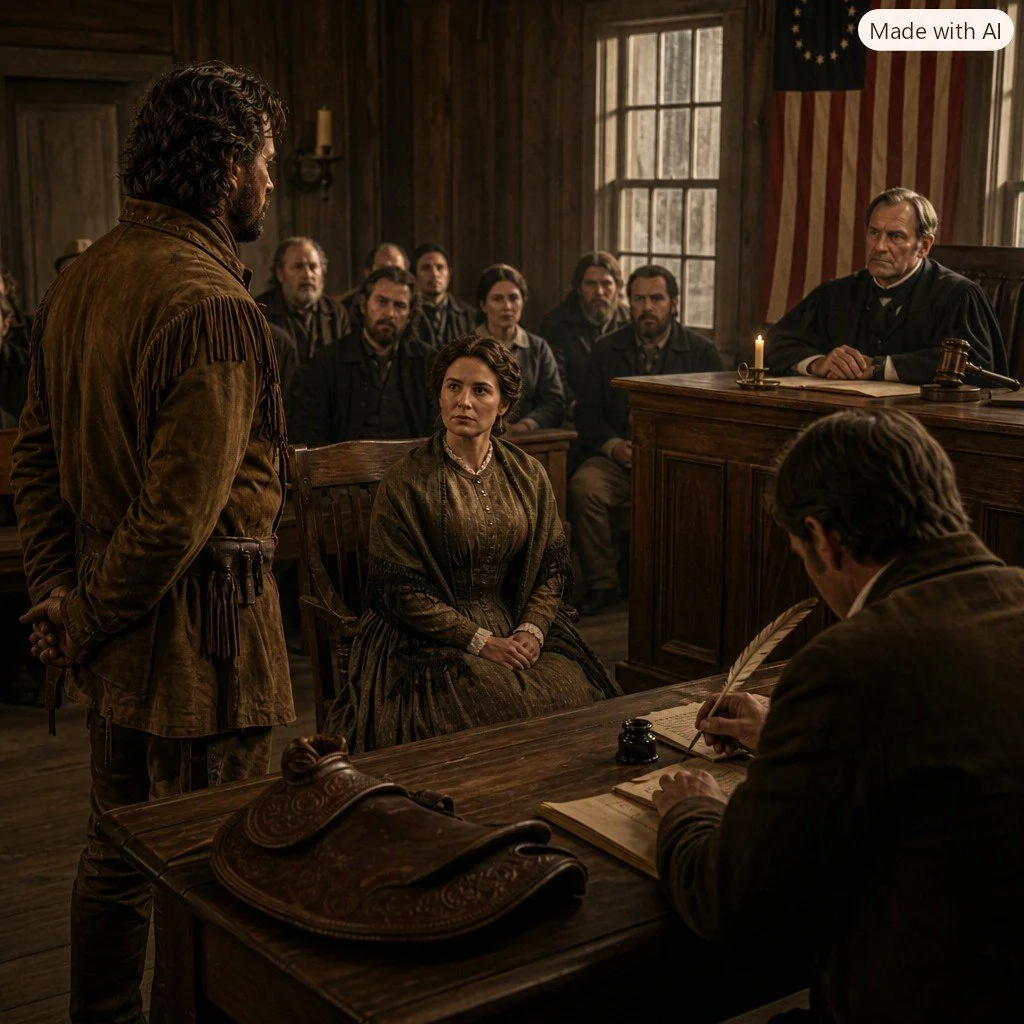
William also had troubles on the home front. It appears he was talented when it came to military duties but not so great as a husband. In 1811 he sued his wife for a divorce on the grounds she had left his “bed and board and “all hopes of accommodation and her returning to him were gone.” He claimed that they had “lived in harmony with tenderness for each other for eight or nine years but after ten years he discovered in her a want of affection” and “that she had neglected her household duties.” She counterclaimed that she had been young when she married him, had never loved him and had “concealed in great measure the anguish of mind that tortured her existence,” and that since “her abandonment of his bed and board she has been much better satisfied with her life.” Although it was very unusual for the time, the court granted the divorce and ordered William to pay her $150 and a new woman’s side saddle. Based on his net worth these sums were very stingy. After the divorce, her whereabouts were unknown. The evidence suggests that their 14 year old son Edmund stayed with Betsy but that their two daughters aged 16 and 11 may have stayed with William. Three years after his divorce he married Jane Searcy – he was 43 and she was 17 years younger. Jane gave birth to two children.
[Image: AI Generated Image of the Divorce between William and Betsy.]
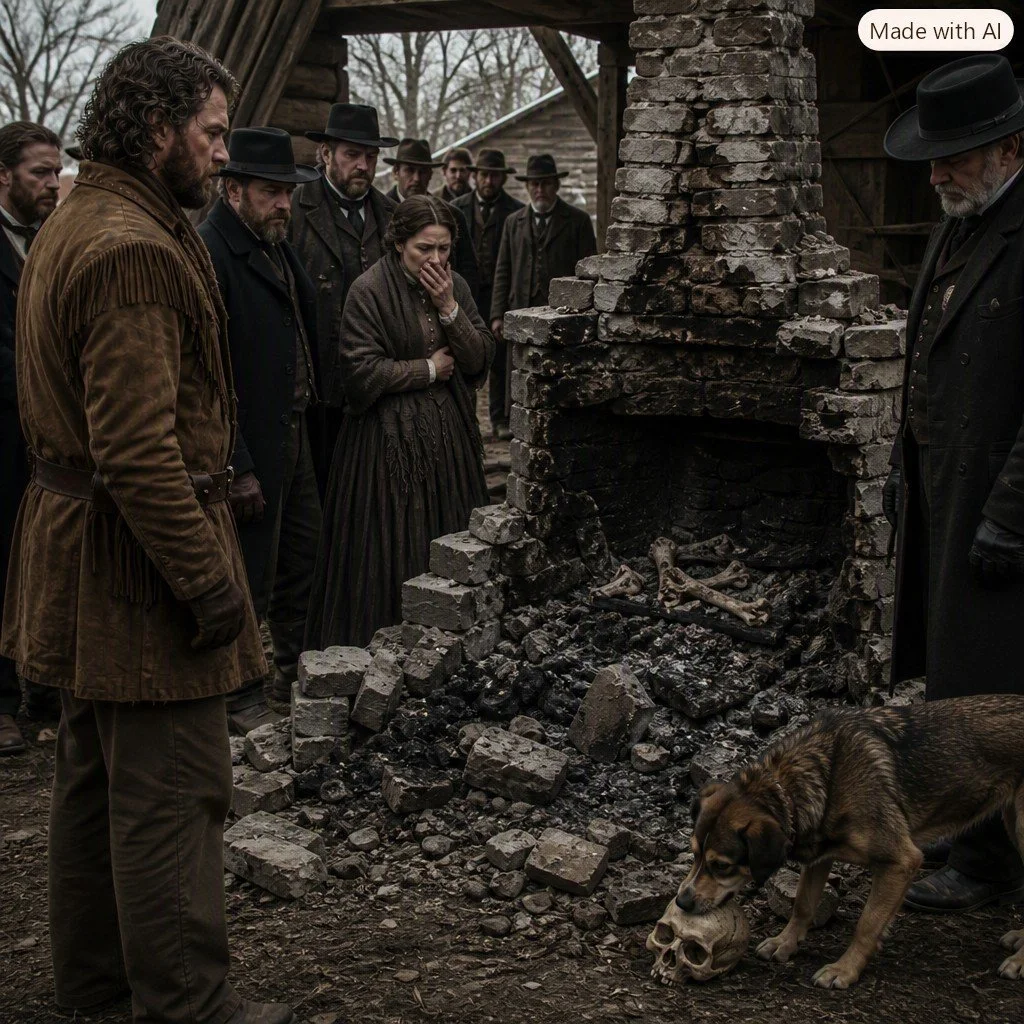
Despite his divorce from Betsy, William retained a relationship with her family. Betsy’s sister Leticia (my 4th great grandaunt) was married to Lilburne Lewis. In 1812, when Lilburne was indicted for murder and his brother Ishan was indicted as an accessory, William helped to post the bond. William didn’t do this entirely out of the goodness of his heart, he used Lilburne slaves as collateral in case he skipped bond. Lilburne was accused of murdering a seventeen year old enslaved boy named George for breaking a pitcher belonging to his deceased mother. In a drunken rage Lilburne had killed him by tying him to a table and striking a lethal blow to his neck with an axe. He then forced one of the other enslaved persons to dismember the body and burn it in the fireplace. Unfortunately for Lilburne, an earthquake struck that night causing the chimney to collapse, and the unburnt bones were mortared inside when they rebuilt the chimney. Several months later another earthquake struck, crumbling the chimney once again, exposing the remains. A stray dog was found chewing on a skull which was identified as belonging to George because of a scar on his forehead.
[Image: The famous chimney scene uncovering the murder by Lillian Lewis]
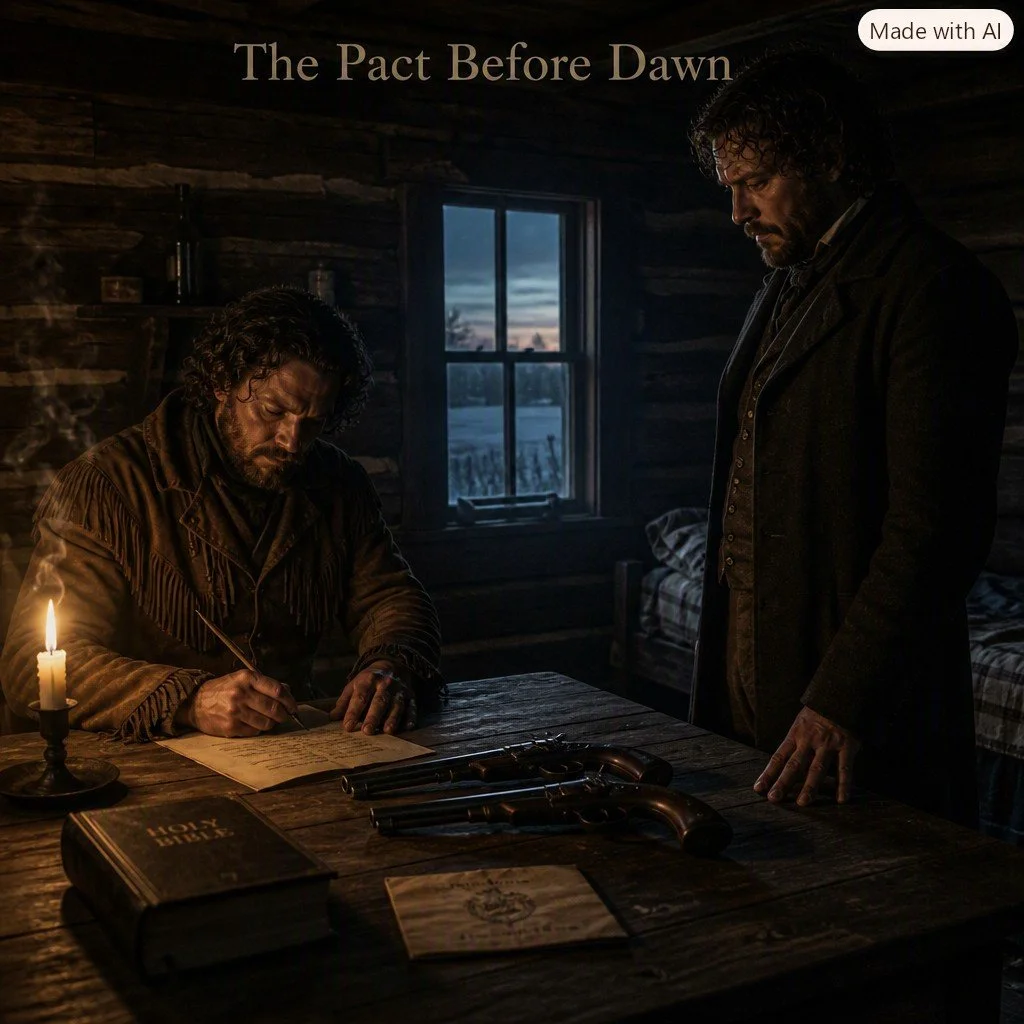
The two brothers knew they were in big trouble and made a suicide pact. Lilburne made out his will prior to shooting himself and in it he referred to his wife Leticia three times as “beloved but cruel” and said he hoped to be reunited with his first wife in heaven. He left most of his estate for his six children and left Leticia four enslaved persons. Lewis shot himself but Ishan chickened out, was arrested, escaped, joined the Army under an assumed name and was killed in the Battle of New Orleans in 1815.
[Image: The suicide pact between Lilburne and Ishan Lewis]
There are some strange ironies here. It’s okay to kidnap human beings and force them into slave labor. It’s okay to beat them if they don’t work hard enough, torture and hang them if they try to escape, rape their women, and keep them in abject misery. But it apparently is not okay to kill them if they break a water pitcher and turn them into a chimney. Afterall we are not heartless and we do have some lines that should not be crossed! And blaming his wife for being cruel in his will and wanting to reunite with his first wife? I am not even sure how to process that piece of information.
When William Caldwell Rodgers died at the age of 89 in 1856 he had outlived all five of his children and both of his wives but he did provide for his grandchildren. His will stated that if his grandson, William Woodfin (the son of his daughter Margaret) was still living with him and taking care of him at the time he died that he would receive three slaves and one half of the land that he lived on. It appears he was a businessman right until the end.