Durant Hall Tillitt (1831-1866)
My Maternal 2nd Great Grandfather, married Archann Dauge Marchant
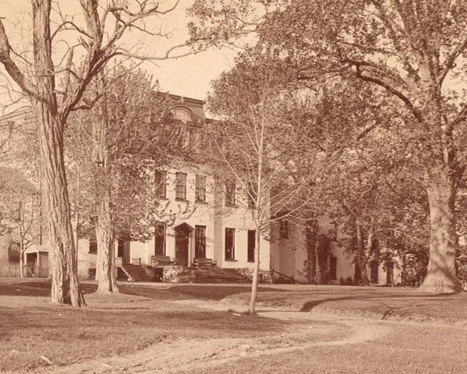
Durant Hall Tillitt, born March 22, 1831 in Powell’s Point Currituck County, North Carolina, was the eldest son of Isaac Tillitt and Mary Hall. In 1850 at the age of nineteen, Durant was one of 81 students ranging in age from ten to twenty-two at the College of St. James in Maryland. St. James opened its doors in 1842 and within ten years it became widely known for the strength of its academic program. In 1853 when Robert E. Lee was asked to recommend a school for his nephew, this college was one of his top choices. The president of Harvard commented in 1855: “there is one institution in the South which has sent to Harvard some remarkable exceptions to the rule of negligent and rowdy students. It is called the College of St. James.”
In sharp contrast to Durant’s privileged life, most of the 7,236 black and white inhabitants of Currituck County in 1850 could neither read nor write.
[Photo: College of St James]
In 1851 Durant married fifteen year old Cornelia Walston, the daughter of Ambrose Walston and Harriet Perkins and the brother of Joseph Walston, the Sheriff of Camden County. Poor Cornelia only lived to enjoy two years of her married life before she met an untimely death.
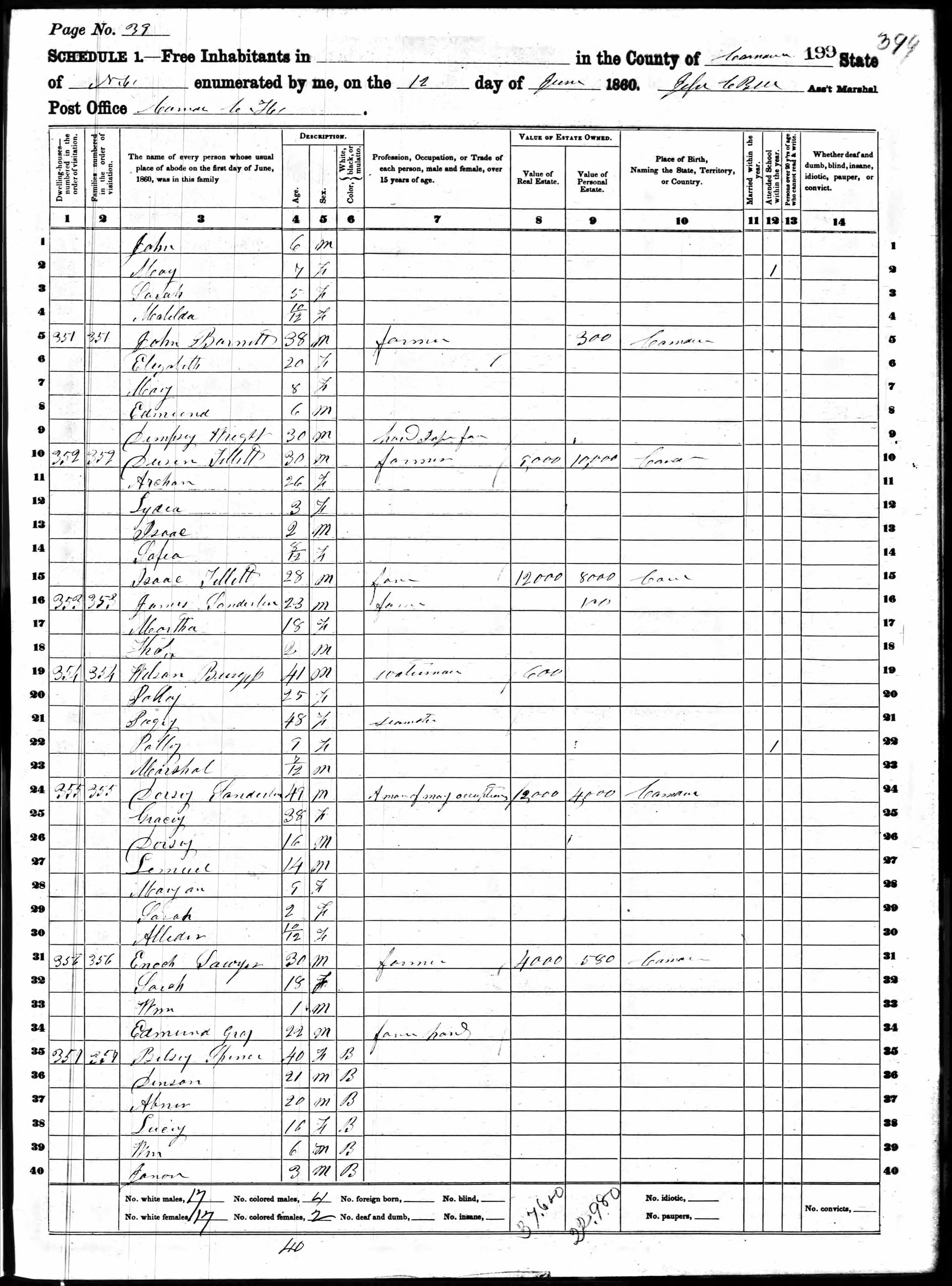
In 1856 Durant married a second time to Archann (“Archie”) Dauge Marchant, the daughter of Dr. Gideon C. Marchant and Emily Sawyer Dauge. Gideon was a descendant of a French Huguenot privateer named Christopher Marchant. Durant and Archann lived on Blue Bonnet, the plantation he had inherited from his father near Shiloh in Camden County. In the 1860 census, the year before the Civil War erupted, Durant was 30 years old, his wife 25 years old and they had three small children: Gideon Marchant age three (my ancestor), Isaac Hall age two (who died later that year), and Sophie Martin age eight months. His brother Isaac Newton also lived with them. Durant, like his two siblings, was quite wealthy. According to the 1860 Slave Schedules, Durant owned 19 enslaved persons. He was a farmer with $9,000 in real estate and $10,000 in personal property. Archie’s father had $50,000 in real estate. The Civil War and Reconstruction dramatically changed things for the worse.
[Photo: Copy of 1860 Census Camden County NC, Durant shown on line 10]
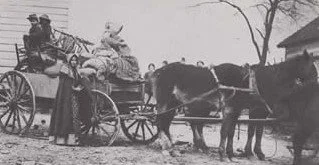
The Union army decided the area where Durant and his family lived had strategic importance. By the second year of the war the Union army had occupied the entire Albemarle Region of North Carolina and recruited runaway slaves, deserters and lawless whites. Their job: to terrorize residents, plunder the countryside, confiscate horses and provisions, and burn homes. Durant packed up his family, fled their home and joined his sister, Mary, further inland in Lincolnton, North Carolina. Durant’s brother in law lost his life at Gettysburg in 1862 and his brother, Isaac Newton, was captured and imprisoned by Union troops in Virginia in 1863.
[Photo: A terrified family abandons their home during the Civil War in North Carolina]
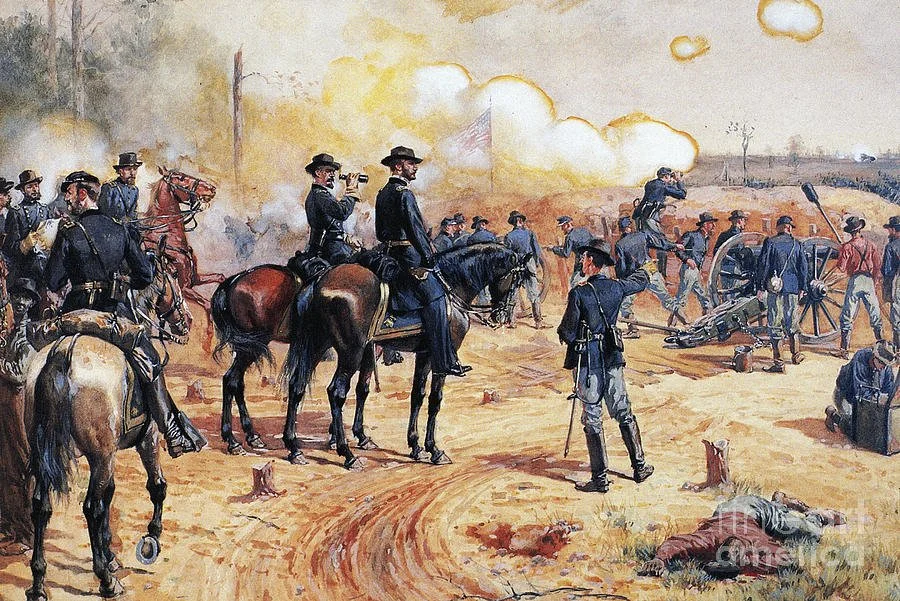
As if that weren’t suffering enough, General Sherman’s notorious march through Georgia spilled into North Carolina and blazed a destructive trail as far north as Raleigh. The first sizeable raid of his cavalry in North Carolina struck the town of Monroe, about sixty miles away from where Durant and his family had sought refuge. According to a first person account of a Monroe resident: “they struck furiously terrorizing the town and nearby rural community. Episcopal Bishop Atkinson, under the threat of death if he refused, gave up his clothing, watch and horse. A raider shot one of the oldest and wealthiest residents of the county in his own home when the old man did not surrender his money and watch, which he could not do because another raider had already taken it.”
[Photo: Sherman’s March to the Sea in 1864 by Granger]
Sherman believed in a strategy he called “total war” – terrorize and demoralize civilians and the soldiers will surrender sooner. Best summed up by a Union officer who opposed Sherman’s tactics: “The conduct of Sherman's army was reprehensible in the extreme ... they indulged in wanton pillage, wasting and destroying what could not be used. Defenseless women and children and weak old men were not infrequently driven from their homes, their dwellings set aflame, and subjected to insult and privation. The inhabitants, white and black, were often robbed of their personal effects, were intimidated by threats — and occasionally were even hanged to the verge of strangulation to compel revelation of the places where money and jewelry were buried, or plantation animals concealed, — horses, mules, cattle and hogs were either driven off, or were shot in the fields, or uselessly butchered in their pens."
In 1864 Durant and Archie had a fourth child, Samuel Caldwell, and after the war in 1866 they returned to Camden where their son Durant H was born. They were in the midst of putting their lives back together when Durant Sr died in November of 1867 leaving his widow, who was pregnant with their sixth child, Archann D, and their other children to take care of. A public sale of his property was ordered to pay Durant’s debts ($35,000) and a portion of the assets were carved out for his widow’s dower.
