James Lang Cobb (1812-1858)
My Paternal 2nd Great Grandfather, married Fannie May Williams
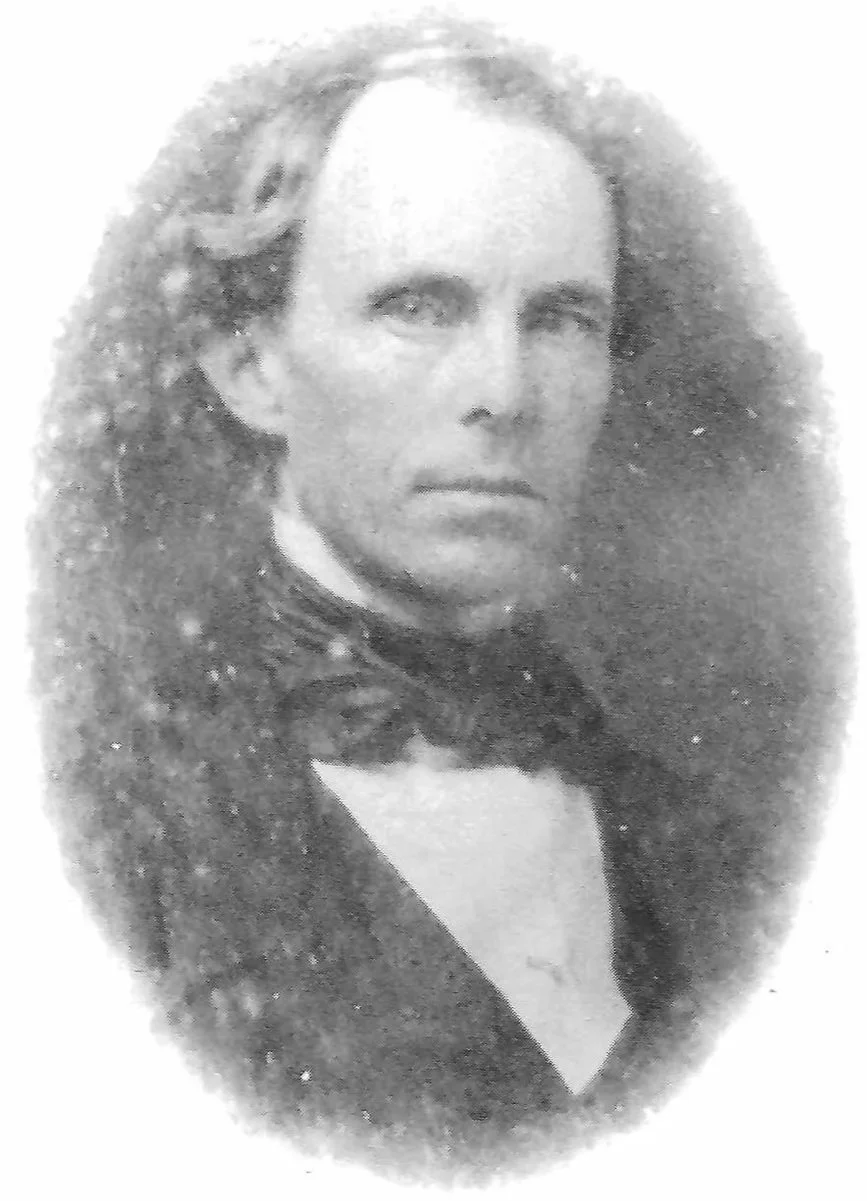
James Lang Cobb, the son of Stephen Cobb and Patsy Lang, was born on February 17, 1812 in Pitt County, North Carolina. Despite his humble beginnings, he seems to have enjoyed a modicum of success. He was a farmer, a merchant and served as the first postmaster of Falkland District, North Carolina (from 1838 until his death in 1858). Being appointed Postmaster in those days was part of a political patronage system. Postmasters were often seen as key figures in maintaining the loyalty of political representatives to the party in their area. President Lincoln once served as a Postmaster, and in 1835 was paid $55.70 for his efforts.
North Carolina was struggling in the early 1800s but things gradually began to change. In 1834, railroads began construction and cotton mills were built. Mill towns sprung up and each county began developing infrastructures to support its population - courthouses, jails, bridges, merchant establishments and the like. The out-migration stopped, and the state’s population began to grow.
[Photo: James Lang Cobb]
In 1839 at the age of 27, James married Fannie May Williams. She gave birth to eight children between the years of 1840 to 1856, one of whom is my great grandfather William Edward Cobb.
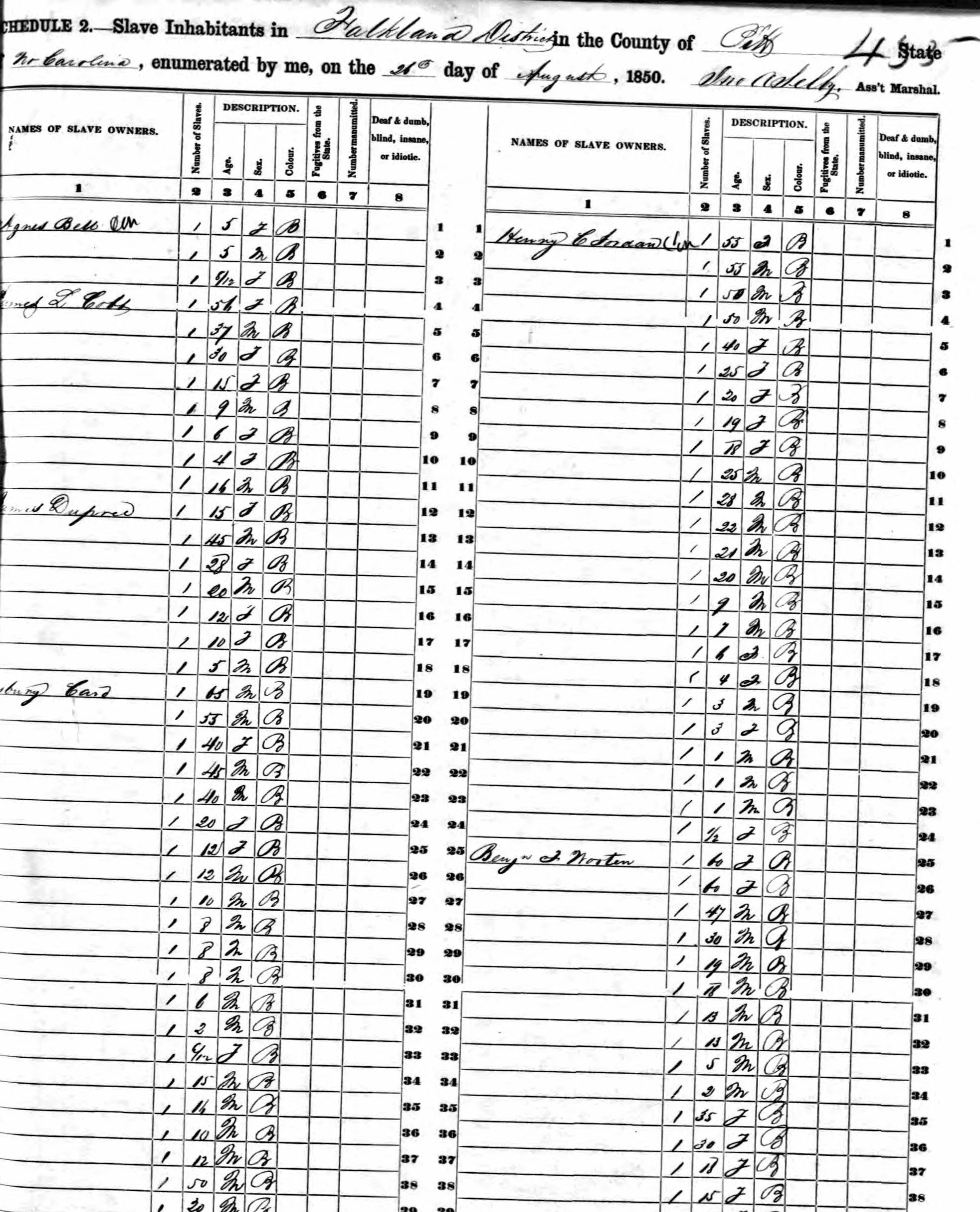
In the 1850 census James and his family lived in the district of Stancill, in Pitt County. He listed his profession as merchant and he had real estate valued at $1,000. The 1850 Federal Slave Schedule reported that he owned 8 enslaved persons between the ages of four and fifty-one. Pitt County was composed of 1,315 dwellings, housing a population of nearly 14,000 individuals (half of whom were white). Only 1,135 of the white population over the age of 20 were able to read and write.
The Pitt County legislature chartered a road in 1850 in the neighboring district of Greenville that provided that “any white person who should travel the road without paying a toll would be fined five dollars. Any slave who failed to pay the toll would receive up to twenty lashes.”
[Photo: Copy of 1850 US Slave Schedule. James Lang Cobb is on line 4]

One morning in September of 1853, sparks from the fireplace caught the roof on fire and their home was severely burned. This must have been a huge blow to the family at a time in history when insurance was not widely available.
Another terrible blow: in the spring of 1856 there was snowfall and a freeze in Pitt County the likes of which the oldest inhabitants had never seen before. All of the fruit and vegetation were completely destroyed and whole fields of wheat were decimated.
[Photo: The home of James Lang Cobb and his family in Pinetops, North Carolina]
Two years later in August of 1858, James died at the age of forty-six. At the probate, his widow received one year’s provisions out of the crop which included among other things: 2,000 pounds of pork, 60 barrels of corn, 30 pounds of coffee, and 2 pounds of allspice. Certain items were not on hand when the Executor visited the residence, and the missing items were valued at $392. These missing items included 2,000 pounds of pork, 25 barrels of corn, 400 pounds of brown sugar, 70 pounds of coffee, 20 gallons of molasses, 75 pounds of picked cotton, 5 gallons of brandy, 2 gallons of wine, 2 ounces of nutmeg, 4 ounces of cinnamon, 4 cakes of chocolate, 2 pounds of ginger, 25 pounds of soap and a barrel of fish.
At his death his distraught widow, Fannie, was left alone to provide for five of their children.
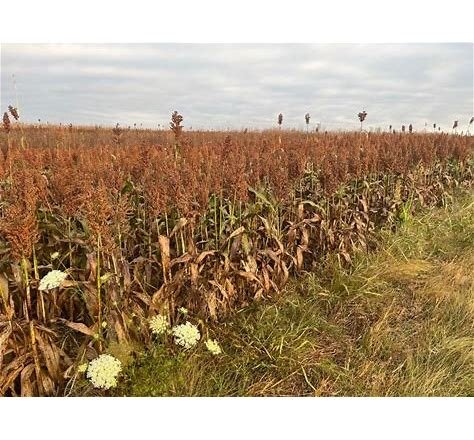
[Photo: Sorghum Molasses Cane Field]
