The Grimes Family
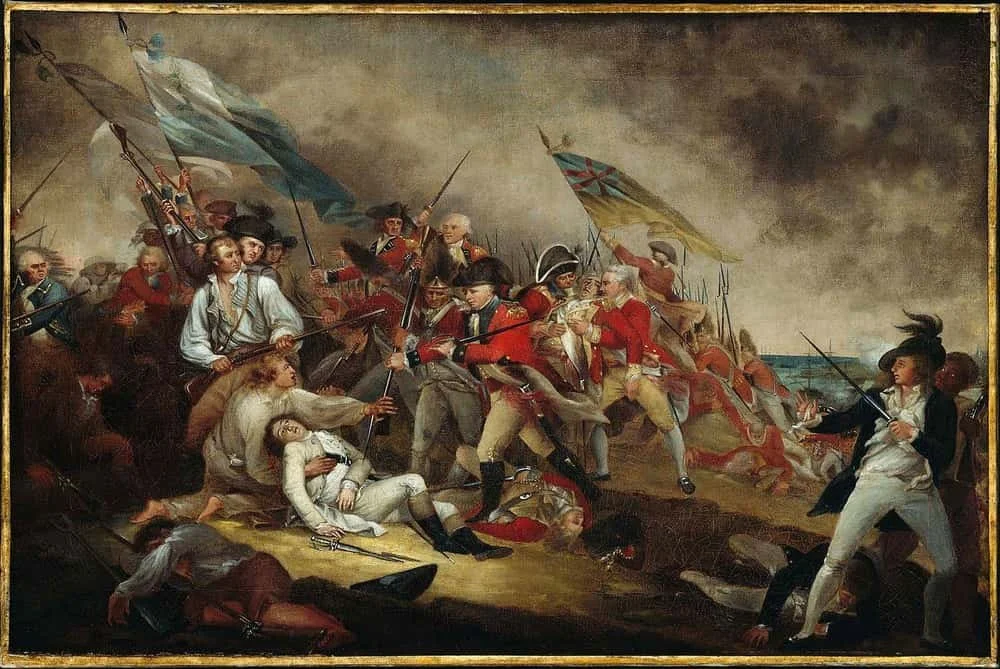
Demsie Grimes, my fifth great grandfather, was born in 1740 in Norfolk County Virginia. He migrated to North Carolina and married Penelope Coffield of Bertie County North Carolina in 1760. The Coffield’s were an English family who were first reported in America in 1638. Demsie and Penelope settled in Edgecombe County on Fishing Creek to start a family and not long after, they moved to Pitt County where he bought land along the Tar River and built Avon Plantation. He was one of the signers on the 1774 Pitt County Declaration of Independence stating “no man could be taxed without his consent’ - two years before Thomas Jefferson’s famous declaration in 1776. Demsie served as a Justice of the Peace and was a member of the Pitt County Safety Committee, a group that raised militia, provided for the army’s salt (to preserve their food supply), gave relief to the poor and handled education. The Committee also tried people for offenses, routed out Tories, and appointed patrols to capture enslaved persons who had runaway from their “Masters.” Demsie served in the army during the American Revolution War. He died on Avon Plantation in Pitt County North Carolina in 1778.
[Photo: Painting of the Battle of Bunker Hill in the Revolutionary War 1775 by John Trumball ]
Based on the Grimes family bible, Demise and Penelope gave birth to five children one of whom, Penelope Coffield Grimes, who was born in 1771, is my 4th great grandmother. In his will Demsie bequeathed two enslaved persons to each of his four daughters along with their feather beds and various amounts of silver and gold. His son William received all of the real estate. Penelope married Benjamin May, Jr. Her father-in-law, Benjamin May, Sr served alongside her father Demsie on the Pitt County Safety Committee. Penelope and Benjamin produced the family line that can be directly traced down to my father, John Edward Cobb. The May family history can be found on s separate blog.
Dempsie’s son William, became a prosperous farmer, a prominent local politician and served terms in the General Assembly. He bought several tracts along the Tar River in Pitt County and built a plantation home on the property, which became known as “Grimesland.” In 1790 he married Anna Byran (1762-1828). William died young at the age of thirty-one in 1797. His will “lent his beloved wife Anna his plantation during her natural lifetime” and she and their four living children (one of whom was “yet unborn”) each received one fifth of the “Negros, furniture, bonds and bills and book accounts” when they became of age.
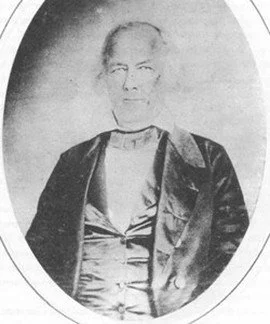
William’s oldest son Bryan ultimately inherited Grimesland. Bryan married Nancy Grist in 1815, and it was in this plantation house that Nancy gave birth to at least ten children, one of whom Bryan Grimes Jr, was destined to become a living legend during the Civil War.
[Photo: Bryan Grimes, Sr 1793-1860]

Bryan Grimes Jr. received Grimesland and control of 100 enslaved persons as a graduation gift when he graduated from the University of North Carolina in 1848. By contrast, when I graduated from college I got a Ford Pinto (it was later recalled because it had a propensity to catch on fire when involved in rear end collisions). Ultimately this horrific buying and selling and inheriting of human beings was about to be engulfed in a different kind of fire – the war between the states.
[Photo: Replica of Enslaved Family Cottage in the Grimesland Plantation today]
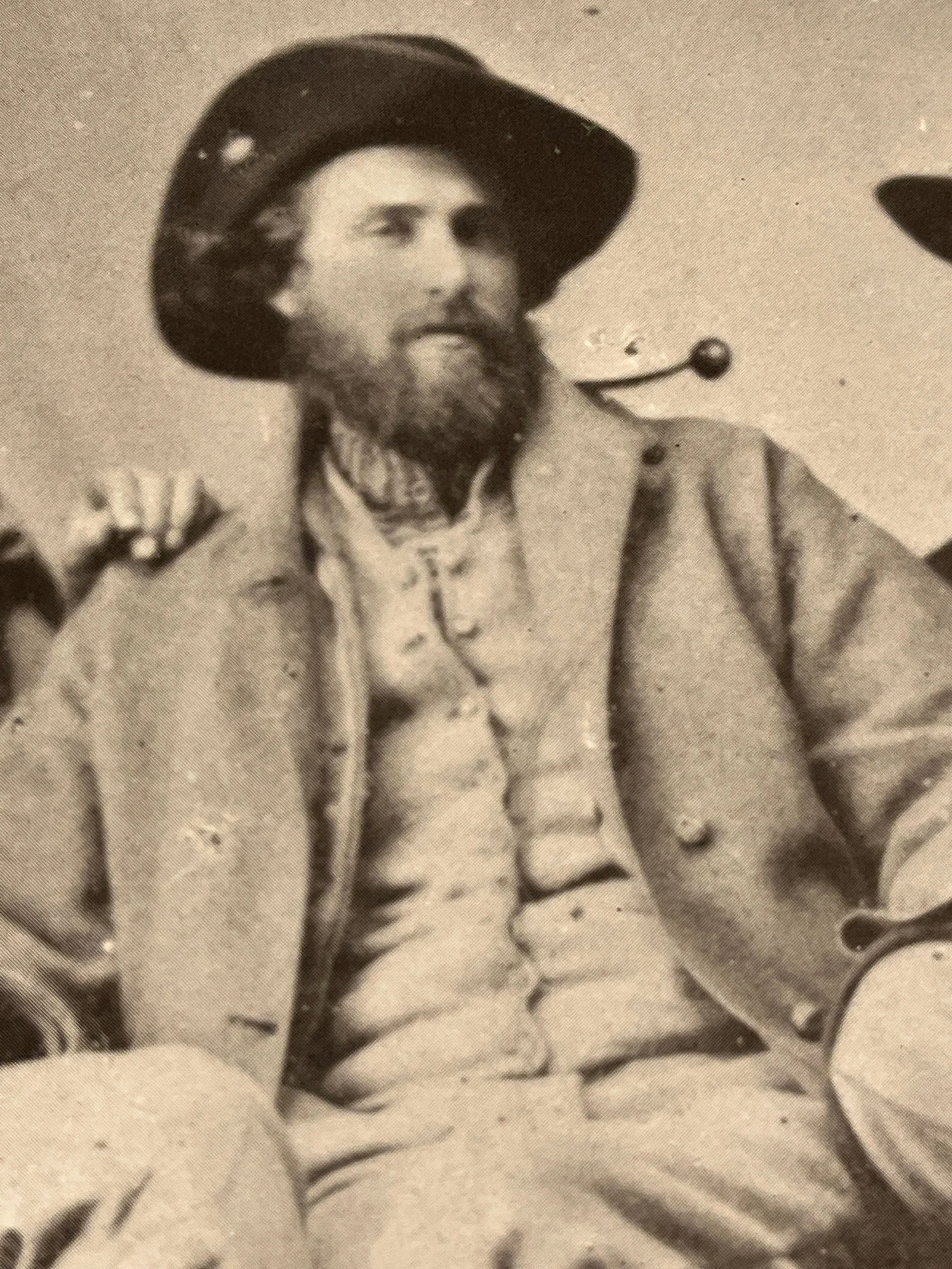
Bryan Grimes Jr was a strong secessionist, and in 1861 was elected a delegate to the Secession Convention. He was a driving force in North Carolina’s withdrawal from the Union. Although he lacked military training and possessed a fiery temper, he demonstrated skill and legendary courage throughout his service with General Robert E. Lee's Army of Northern Virginia and received rapid promotions in the field. He joined the Confederate Army as a major and as the commander of the Fourth North Carolina Regiment at Sea Pines where 462 men out of 520 men were killed and he alone out of 25 officers survived. During the battle a cannon ball took off the head of his horse and Bryan’s leg was penned under the poor animal’s shattered carcass. Bryan wavered his sword calling for his men to free him, seized the flag that had fallen from a wounded soldier and led a charge capturing a fortification.
[Photo: Major General Bryan Grimes, Jr in 1862]
The man was unstoppable. All told during the war, four horses were shot out from under him. In one battle he received a kick from a horse that was so severe that doctor’s discussed having to perform an amputation but fortunately they decided against it. It healed, and soon after he went back in battle.
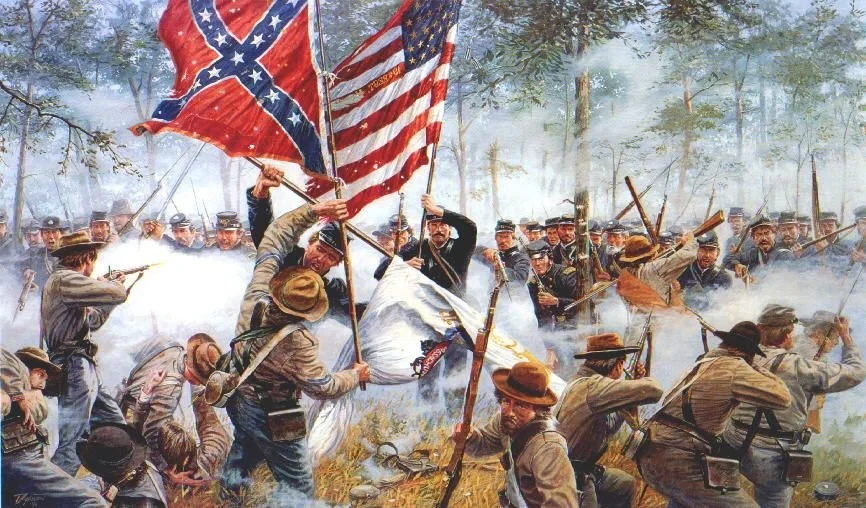
His military career involved nearly all the big name battles on the eastern theatre – Bull Run, Fredericksburg, Chancellorsville (where his sword was broken by a ball, his clothes perforated by bullets one of which lodged in his belt and he was wounded in the foot), Gettysburg (his unit was the first confederate to enter the streets of this town), Wilderness, Overland, Petersburg.
[Photo: The Battle of Gettysburg, artist unknown]
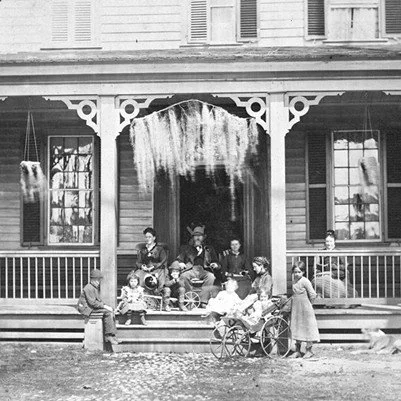
At the war's end he had advanced to the rank of major general and his regiment fired the last volleys prior to the surrender of the Army of Northern Virginia. He led his division in fighting at Petersburg, Fort Stedman, Sayler's Creek, and Appomattox. When notified of Lee's surrender to Grant, Bryan's initial reaction was to march to North Carolina, join the Confederate troops there and continue to fight, but another officer convinced him that it was disgraceful to violate a flag of truce. Bryan surrendered his division with the rest of Lee's tattered army at Appomattox Court House. "Go home, boys," he told his troops, "and act like men, as you have always done during the war." He rode back to his plantation and resumed his life as a farmer.
[Photo: General Bryan Grimes Jr and Family after the War]
On the afternoon of 14 August 1880, Bryan was returning to Grimesland from a business trip. While he was crossing Bear Creek, approximately four miles from his home, the gun of a concealed assassin was discharged, killing Grimes instantly. The alleged cause of the murder was to prevent Grimes’ testimony in court in an immigrant deportation court case. William Parker, described by the Raleigh News and Observer as a "sorry kind of a fellow with no particular occupation, and with a reputed bad character," was arrested on suspicion of murder. The jury found him not guilty, and Parker was set free.
Seven years later an intoxicated Parker returned to the area and foolishly boasted of killing Bryan. He was arrested for being drunk and disorderly. Early the next morning, between a dozen or so masked men entered the jail, dragged Parker out, and strung him up on the drawbridge across the Pamlico River. A coroner's jury assembled and returned a verdict of "death by hanging at the hands of parties unknown." Charges were never filed, and no serious effort was made to solve the new murder.
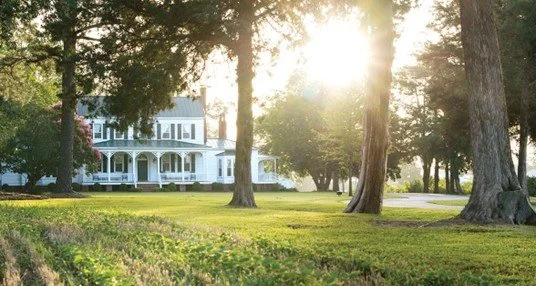
The Fully Restored Grimesland Plantation Today
Bryan died without a will, so his widow held the family property “under the law of dower” until her death in the 1920s. The house underwent a major preservation effort in 2011 and is currently listed on the National Register of Historical Places. Situated on Grimes Farm Road on 3,300 acres of land in a small town that bears the same name s the plantation, Grimesland is open to the public for viewing. In the 2020 census the town of Grimesland had a population of only 440 people with a median income per family of $36,250. My how the mighty have fallen.
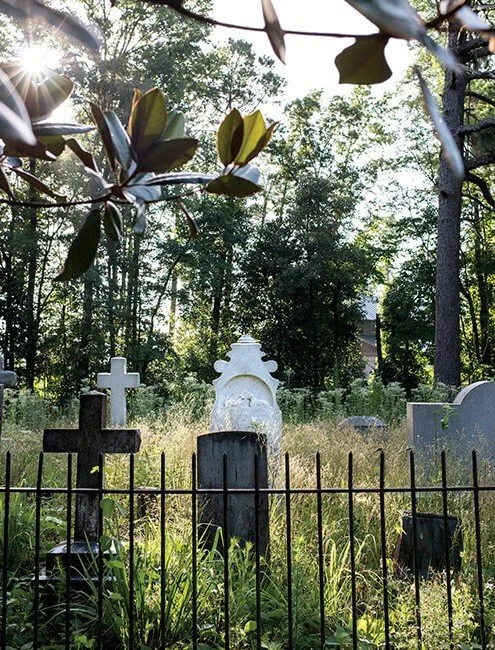
In a clearing some distance from the plantation, Major General Bryan Grimes lays quietly in the serene small family graveyard that’s separated from pastureland by trees and an ancient wrought-iron fence.
[Photo: Grimes Family Cemetery]
