John Caldwell (1691-1750)
My Maternal 7th Great Grandfather, married Mary Margaret Phillips (1865-1748)
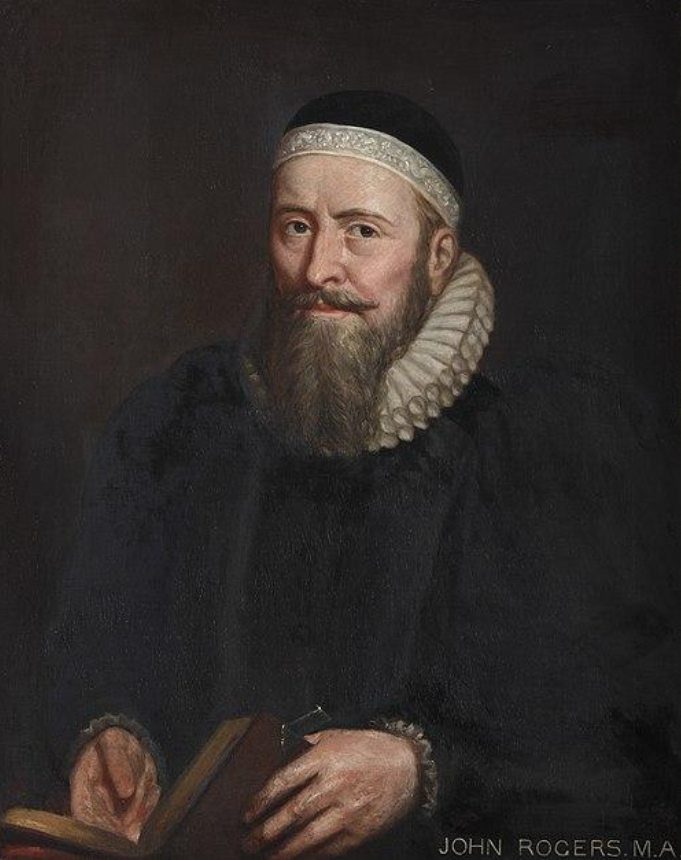
In 1534 John Rogers traveled to Antwerp, Belgium to serve as a chaplain. There he met the celebrated William Tyndale, a leading figure in the Protestant Reformation, who convinced John to abandon his faith in the Roman Catholic Church. William translated the New Testament into English from Hebrew and Greek texts and created the first English translation of the bible to use a printing press in 1526.
William felt everyone should be able to read the Bible in their own language, directly challenging the authority of the Catholic Church that maintained control over biblical interpretation. He fled from England to Belgium to escape persecution; and was betrayed, imprisoned and executed there in 1536.
John took up the cause where William left off, publishing the Bible under the pseudonym “Matthew’s Bible” in 1537. For his efforts he was imprisoned in the notorious Newgate Prison in London to be “lodged among thieves and murderers and very uncharitably treated.” He refused to “revoke his abominable doctrine” and in 1555 was burned at the stake.
[Photo: John Rogers 1505-1555 Bible Translator and Martyr]
His wife came to the execution with all eleven of his children in tow with one “suckling at her breast” perhaps to offer support; perhaps to compel him to speak the words that would prevent his cruel death. But he would not give in. In so doing he became the first of 280 religious dissenters to be executed as “a heretic” in England under the rule of Bloody Queen Mary I.
A copy of this ancient Matthews Bible can be found today at the Museum in Washington D.C. and several other museums across the country.
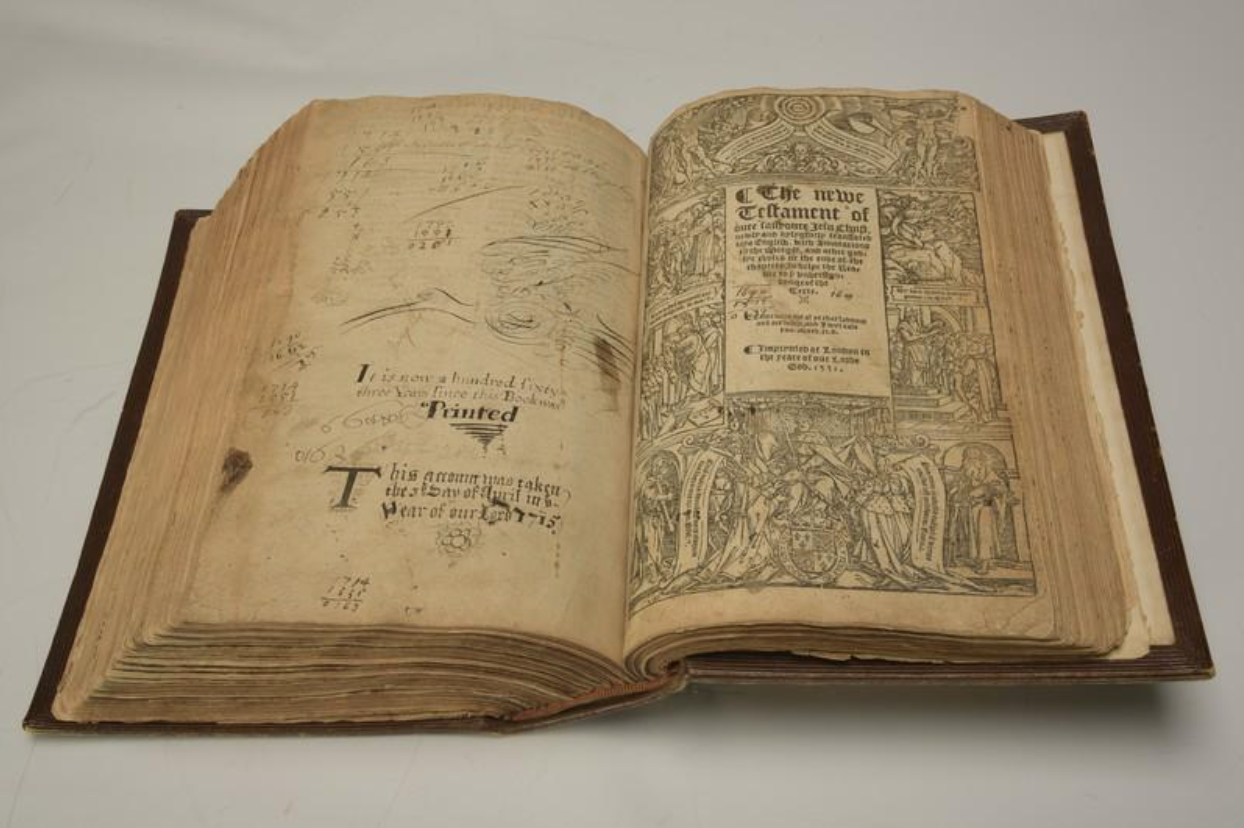
[Photo: The Matthew Bible published in 1537 by John Rodgers]
The next six generations have been meticulously documented. John Jr (1548-1601), who would have been seven years old when his father was engulfed in flames, did not go into the ministry. But the next four generations did. There was the Rev. John Rogers (1548-1601), followed by the Rev. Nathaniel Rogers (1598-1655) who landed in Boston in 1636, followed by the Rev. Dr. John Rogers who was a minister, a physician and the fifth President of Harvard University, followed by the Rev. John Rogers of Ipswich Massachusetts (1666-1745), followed by William Rogers (1697-1750) born in Massachusetts and travelled to Virginia where he married Margaret Caldwell, the daughter of John Caldwell and Margaret Phillips, followed by a son Thomas who was born in 1725.
Unfortunately, according to extensive research by my mother, this is not correct. William Rodgers (my 6th great grandfather) is not part of that family tree. The Rogers family that descended from John the Martyr belonged to the Church of England but William was a Presbyterian. All of William’s other alleged brothers, John, Nathaniel, Richard, Daniel, and Samuel graduated from Harvard, William did not. William’s alleged son Thomas was born in 1725 but this could not be their son because Margaret Caldwell did not arrive in America until 1727. Our ancestor William spelled his name Rodgers with a “d” which was the spelling used in Scotland. John the Martyr was born in England. Unfortunately there is no solid connection between our William Rodgers and the John Rogers the Martyr powerhouse genetic pool.
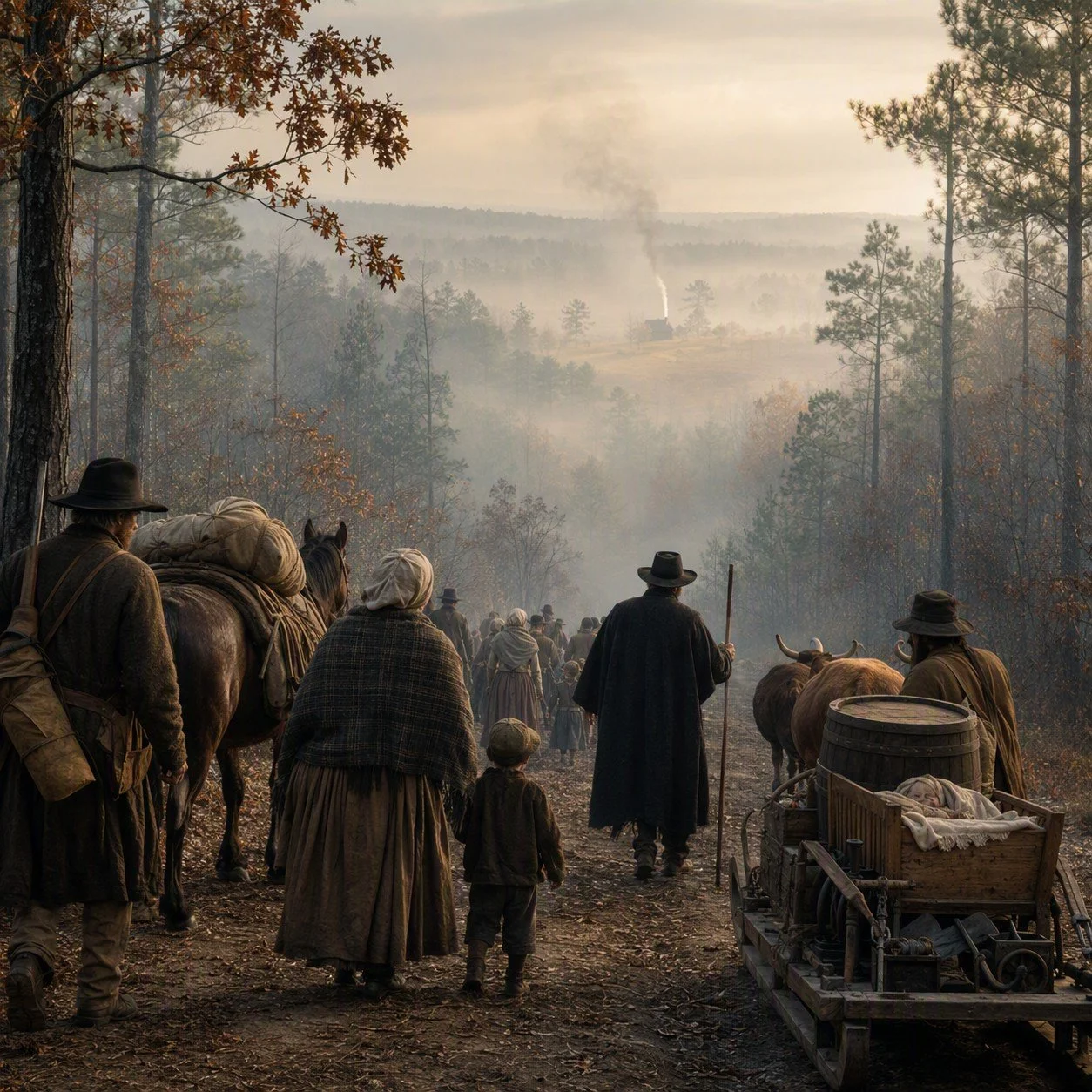
I located a headstone which stated: “John Caldwell I (1682-1750) and his wife Margaret Phillips (1685-1748), both born of Scottish parents, emigrated from Derry, Ireland and landed in America at Newcastle Delaware on December 10, 1727.” It was on this very day that George II was proclaimed king and he heralded in an era of “loose British oversight” that shaped early American identity. His policies allowed self-government and economic autonomy, a mindset that fueled the later revolution. John convinced the Governor of Pennsylvania to provide a large 30,000 acre land grant in what is now known as Virginia which became known as the Caldwell Settlement on Cub Creek, a colony for Scots Irish Presbyterian “dissenters”. The Governor sought loyal settlers of Presbyterians (religiously aligned with them) to create a Scots-Irish frontier community to buffer them against Native Nations and French influence. We might not be connected to “The Martyr” but the Caldwell family was quite the powerhouse in their own right and there is conclusive evidence that they are connected to the Rodgers family. John Caldwell and Margaret Phillips are my 7th great grandparents.
[Image: An AI generated image of immigrant heading to what became known as Cub Settlement.]
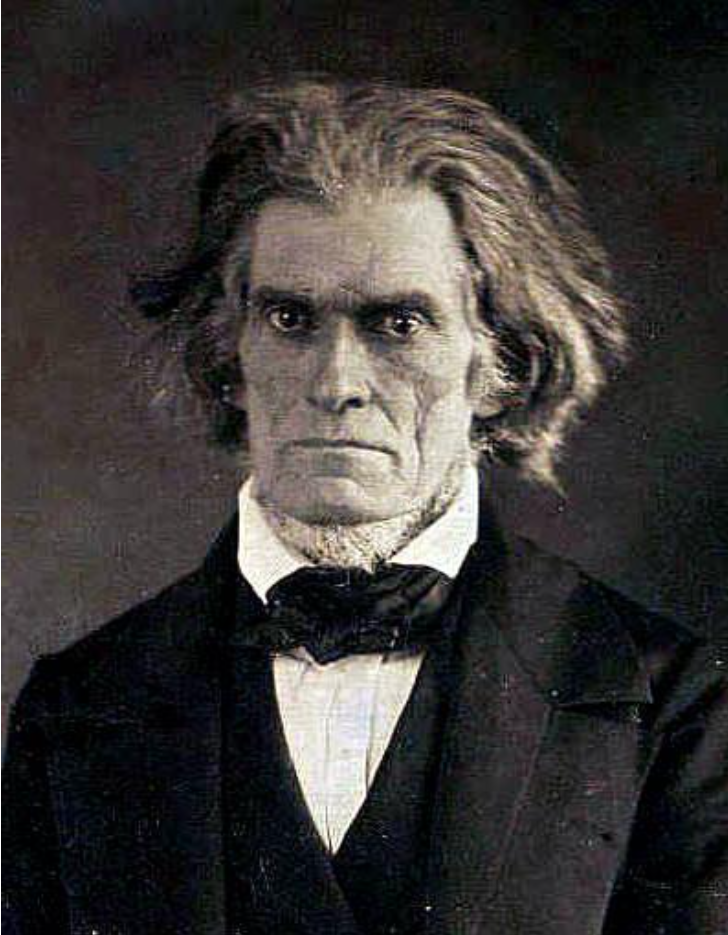
John Caldwell and Margaret Phillip’s oldest son, Major William Findley Caldwell (1704-1761), married Rebecca Park, and fought in the French & Indian War. William’s daughter, Martha, married Patrick Calhoun and their son, John Caldwell Calhoun, became a South Carolina statesman and served as Vice President under John Quincy Adams. Calhoun was a fiery advocate for state’s rights and slavery. The owner of 70 to 80 enslaved persons, his beliefs heavily influenced the South’s secession from the Union.
[Photo: John Caldwell Calhoun, fiery statesman (1782-1850)]

John Caldwell and Margaret Phillip’s son Robert (1732-1806) served in the Revolutionary War. Robert’s son General John Caldwell was a veteran of both the Revolutionary War and also the Kentucky Indian War 1786. He was a key figure in the treaty process with indigenous North American Nations on the American/Canadian border. He lived among the Tribes and learned their languages in order to understand their culture and gain their trust in negotiation. In 1792 he was elected to the Kentucky State Senate and later in 1804 he became the 2nd Lt Governor of Kentucky in 1804. While presiding over the state senate John died from a stroke, known in those days as “inflammation of the brain.” Caldwell County in Kentucky was named in his honor.
[Painting: John Caldwell dressed for an inter-nation War Council in January of 1780 at Wakeetiomike Canada.]
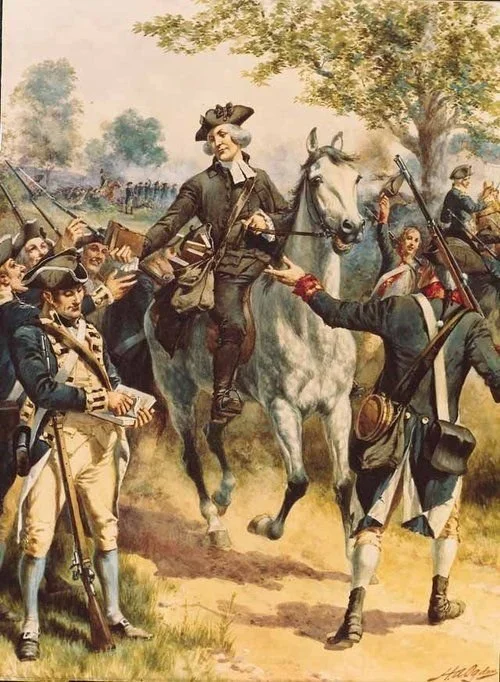
John Caldwell and Margaret Phillip’s youngest son, Rev. James Caldwell (1734-1781), was a hero in the Revolutionary War. James took an active role in military operations and his patriotism and fervor led the British to call him “The Black Rebel” and to his patriots “The Fighting Pastor.” He moved his family away from the parsonage but returned on occasion to preach to his congregation. A price was out on his head and he was often forced to preach with a loaded pistol lying on the pulpit. His wife, Hannah Ogden, was at home with their three youngest children and an eight month old infant when British soldiers arrived at her doorstep. She expressed confidence to her children that they would not do injury to them. To calm them she said, “They will respect a mother.” She was mistaken. A shot was fired through the window, it entered her chest and she was killed instantly by the “bloody hand of a British ruffian” right in front of her terrified children. The house was torched and reduced to ashes along with all their belongings. Fortunately, her children were spared.
[Painting: Rev. James Caldwell handing our hymn books that were used as wading during the war.]
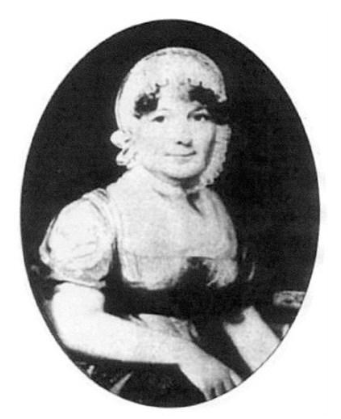
A year later in 1781 James was also shot and killed, this time by an American sentinel who was thought to have been bribed by the British to do so. James left nine orphaned children. When his body was brought home many lined the streets and wept. The sentinel was convicted of murder and sentenced to death by hanging. Offers poured in from around the country to help take care of his children. Marquis de Lafayette took in one son and sent him to France to be educated. The future President of the Continental Congress Elias Boudinot gave assistance. General George Washington himself contributed $100.
[Photo: Hannah Ogden Caldwell]
John Caldwell and Margaret Phillip’s only daughter Margaret Caldwell married William Rodgers (1708-1750) in 1738. William and Margaret’s story is continued in a separate blog post.
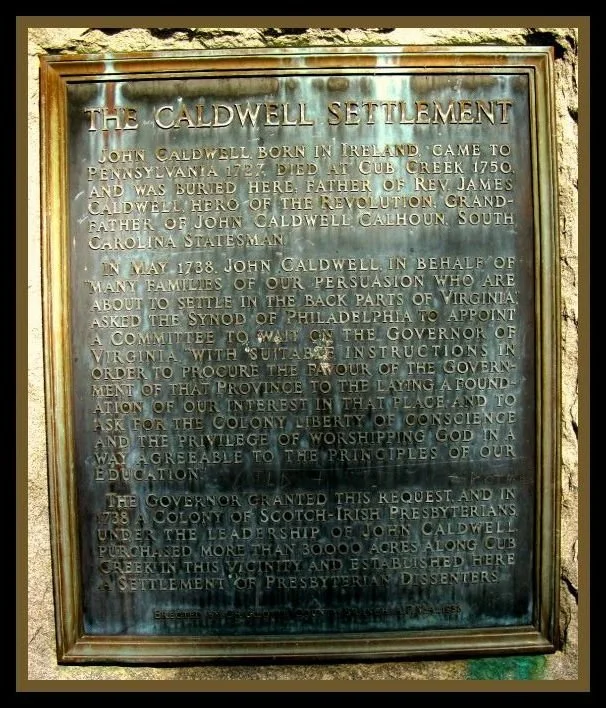
When John Caldwell he died in October of 1750, his will left his property to his five sons, William, John, James, David and Robert who each received acreage in Cub Settlement of plots of land ranging from 400 acres to 600 acres. His son, William received his “great Bible.” His son-in-law William Rodgers witnessed the will. Not mentioned in his will were his wife and his son Thomas (both of whom predeceased him), and for reasons unknown his daughter Margaret who had married William Rodgers. Today there still exists a plaque which commemorates John’s efforts in securing the land for the cub creek settlement in Charlotte, Virginia. The cemetery that bears its name is the resting place for 108 people including many members of the Caldwell family,
[Photo: Commemorative Plague for John Caldwell, the Immigrant.]