Hannah Walker (Before 1776-After 1806)
My Maternal 5th Great Grandfather, married William Kelley II
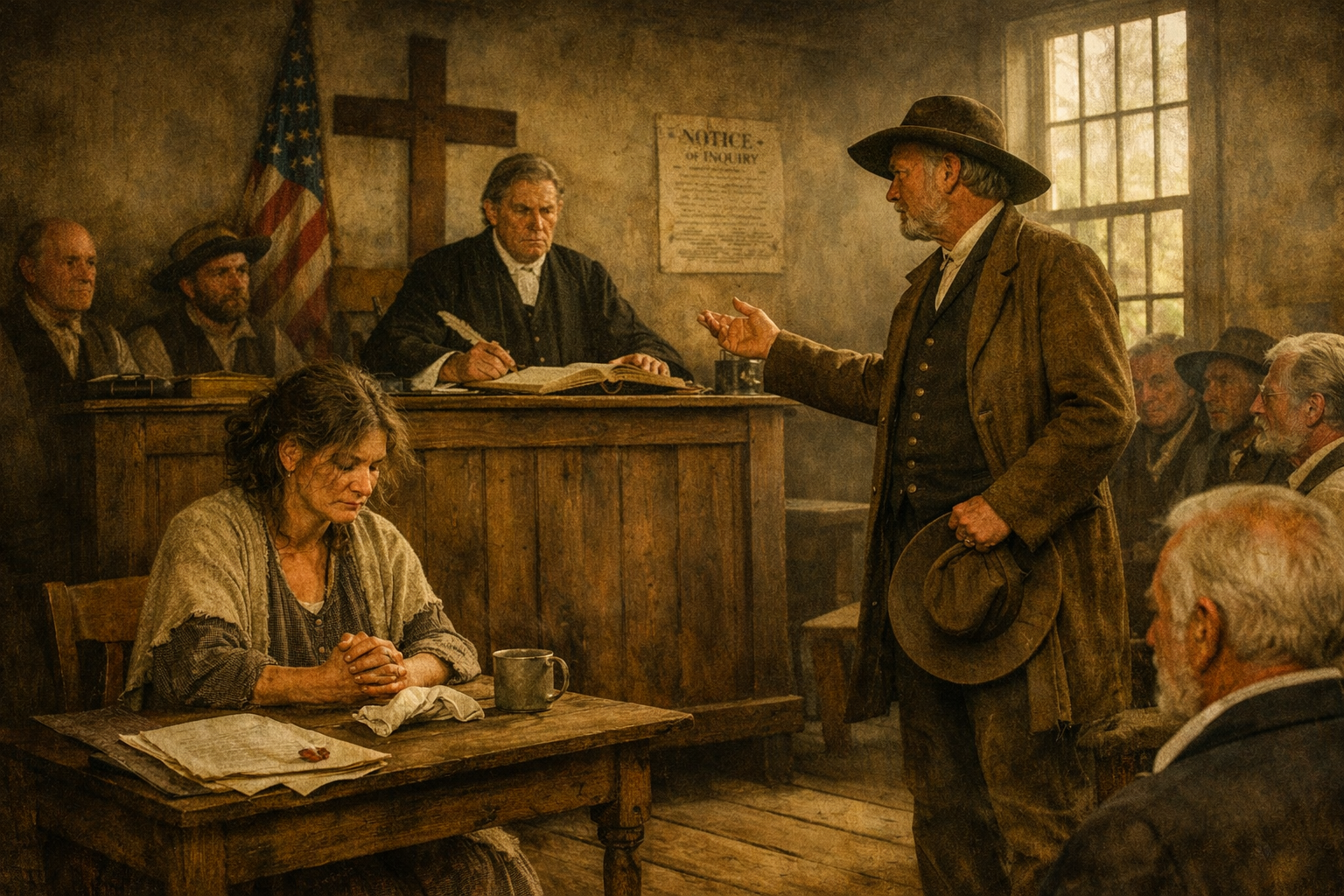
I was not able to find any reliable information on Hannah Walker’s parents. She married William Kelley II, a revolutionary war soldier and a man of means and together they had at least four children: Samuel, Nancy, Jane (“Jency”) and James Wilbourne. James is my fourth great grandfather. When her husband died at age 45 in 1791 in Wilkes County, Georgia he named his wife as the executor of his estate. In his will he left her “all land I possess, slaves Joseph and Esther, cattle, etc to be disposed of as she sees fit.” Soon after Hannah married for the second time to John Jones. Her greedy brother in-law, James Kelley, stepped forward in what is clearly a money grab, and accused Hannah of estate related forgeries. The court rejected the accusation and fined James five hundred pounds sterling for malicious slander when it was determined that Hannah could neither read nor write and therefore could not possibly have forged any documents. This was the first of many struggles Hannah would have with the court.
[Image: AI generated image of Hannah Walker in the courtroom]
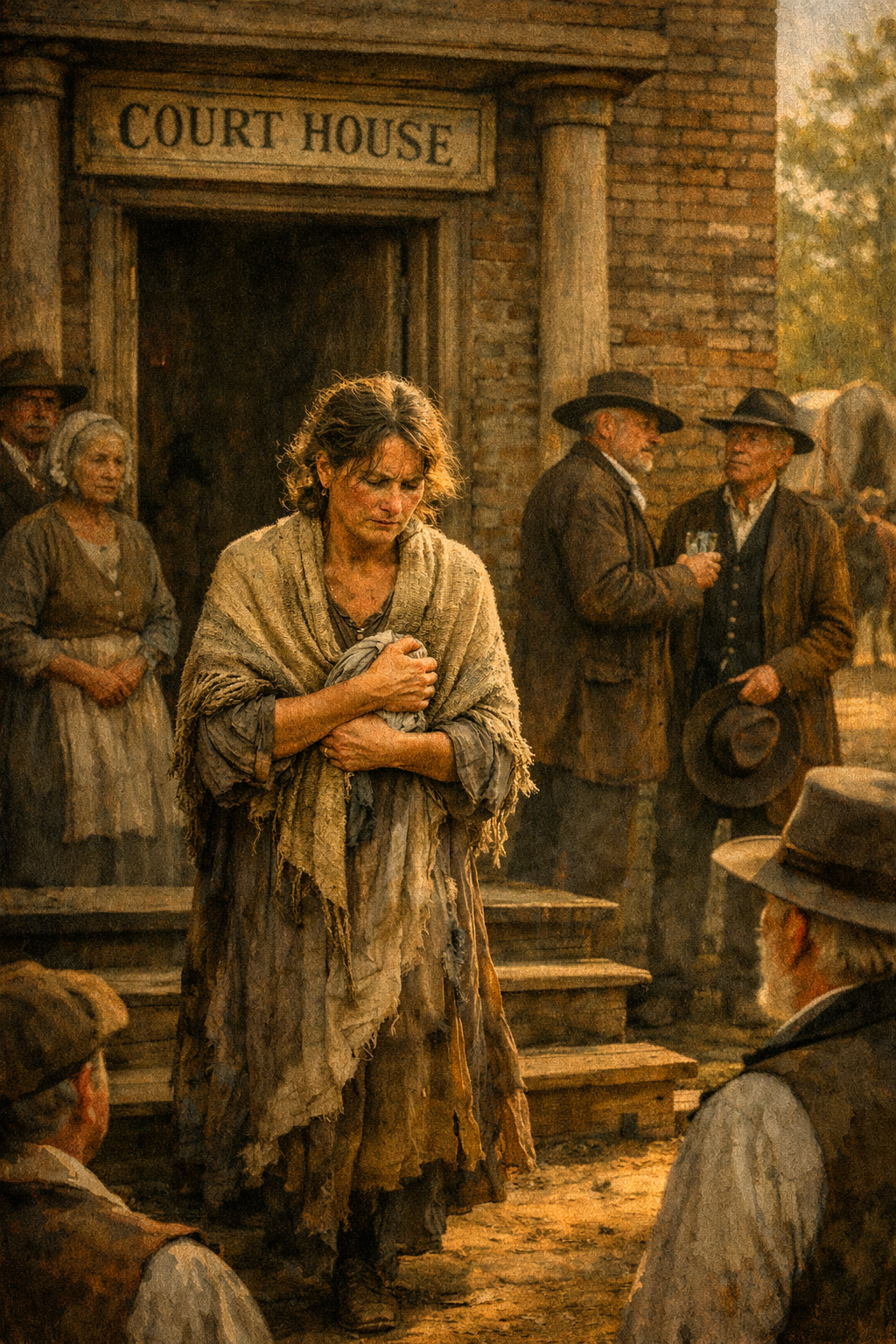
In 1800 the court appointed Hannah’s two brothers as guardians for her children. The children are referred to as “orphans” by the court so it appears that Hannah may have been unable to take care of them. Her brother John Walker was assigned as guardian of her two daughters, four year old Nancy and three year old Jency, and her brother Moses Walker was appointed as guardian of her two sons, five year old Samuel and two year old James. In the same year Hannah’s marriage to John Jones was annulled and he was taken into custody for “wasting the estate”. In March of 1806, Hannah was declared legally insane by a court and assigned two guardians, Thomas Kent and Micajah Little. The guardians appointed by the court were there to “protect” her property; her care remained the responsibility of the family. It is not known who took care of Hannah or even if she was truly mentally ill. Hopefully, she was treated humanely. In those days, if the mentally ill could not be cared for at home, they were either confined to an almshouse or jailed in shacks constructed to confine the person and preserve peace in the community.
[Image: AI generated image Hannah leaving the court house]
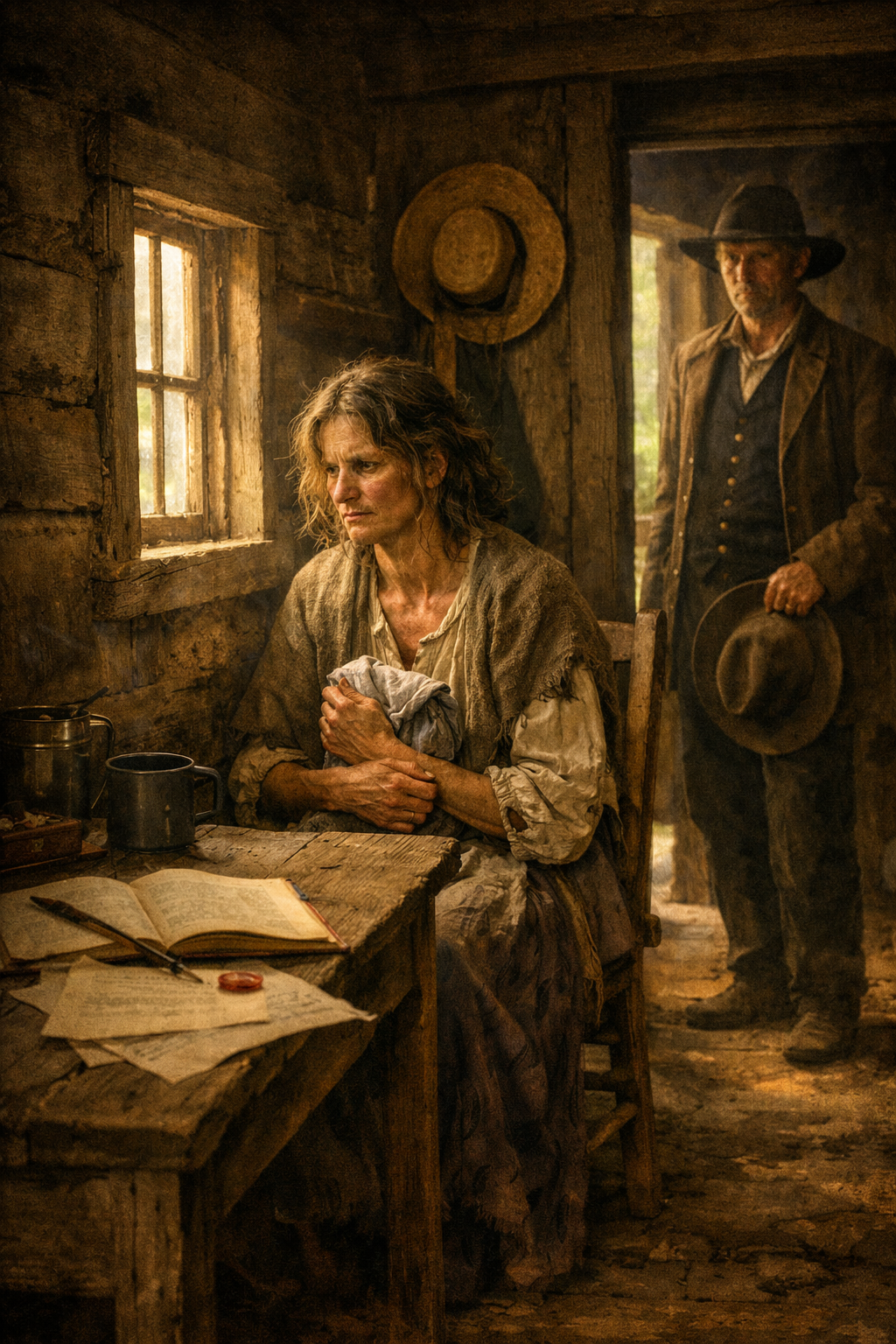
After Hannah was declared “insane” in 1806, no further record of her was found. In September of that year her son Sam married Jenny Moore. He died at age 55 in 1850 of inflammation of the intestines, the most common cause of death in those days. Hannah’s daughter Nancy married a farmer, Usury Ray, and the couple moved to Alabama. After Usury’s death in 1833 Nancy became a seamstress and outlived her husband by 30 years. Hannah’s daughter Jency married Wylie Davis but little is known about them. The life of Hannah’s son James Wilbourne, my fourth great grandfather, can be found on a separate post.
[Image: AI generated image of poor Hannah ]
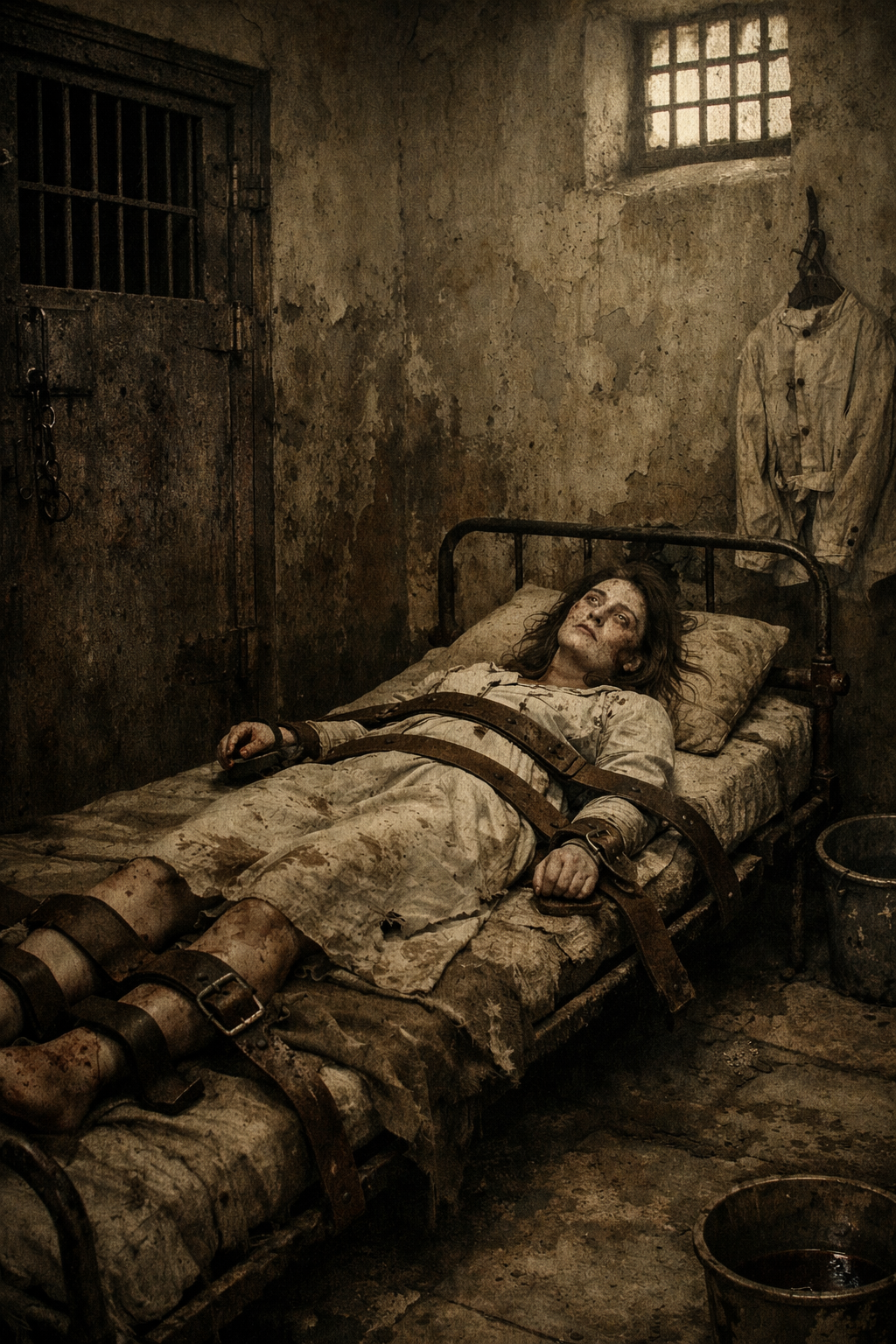
The first hospital to treat the mentally ill, the Georgia State Lunatic, Idiot and Epileptic Asylum, did not open its doors in Georgia until more than three decades later in 1842. Its first patient died six months later of “maniacal exhaustion”. Early institutions were places of misery where inmates were locked up and left to the mercy of their keepers. Typical asylums were filthy, offered very little treatment, and often kept people for decades. The focus was ostracizing them from society rather than treating their disorders. Often these people were kept in windowless dungeons, beaten, chained to their beds, and had little to no contact with caregivers. Treatments consisted of ice water baths, physical restraints, blood-letting and forced vomiting to purge their systems.
The cruel horror show continued until Jack Nelsen won a Pulitzer prize for his 1959 expose about Georgia Lunatic Asylum. Nelsen noted that:
Doctors wielded the psychiatric tools of the times—lobotomies, insulin shock, and early electroshock therapy—along with far less sophisticated techniques: Children were confined to metal cages; adults were forced to take steam baths and cold showers, confined in straitjackets, and treated with douches or “nauseants”. Thousands of patients were served by only 48 doctors, none a psychiatrist. Indeed, some of the “doctors” had been hired off the mental wards.
[Image: AI generated image of an early insane asylum in America.]
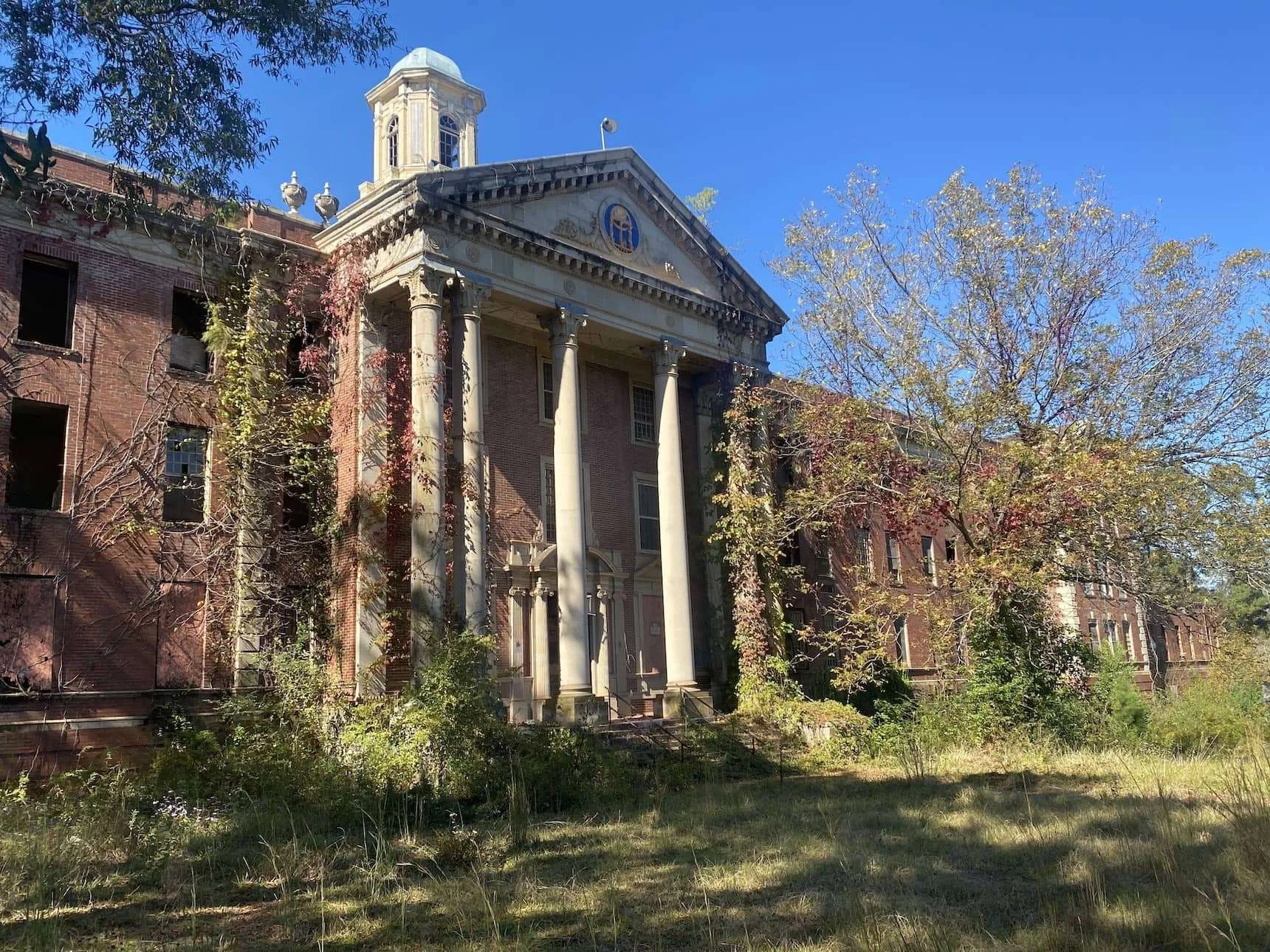
The public was horrified by the book and reforms were introduced. The facility stopped accepting patients in 2010 and only a few of the buildings on its once massive campus are still in use. On the grounds are 25,000 numbered graves. One of the abandoned buildings was used for a TV show series about vampires.
[Image: The now abandoned Georgia Lunatic Asylum.]
