Edward Cobb, Jr (1748-1817)
My Paternal 4th Great Grandfather, married Sarah Winifred Gray (1751-1793)
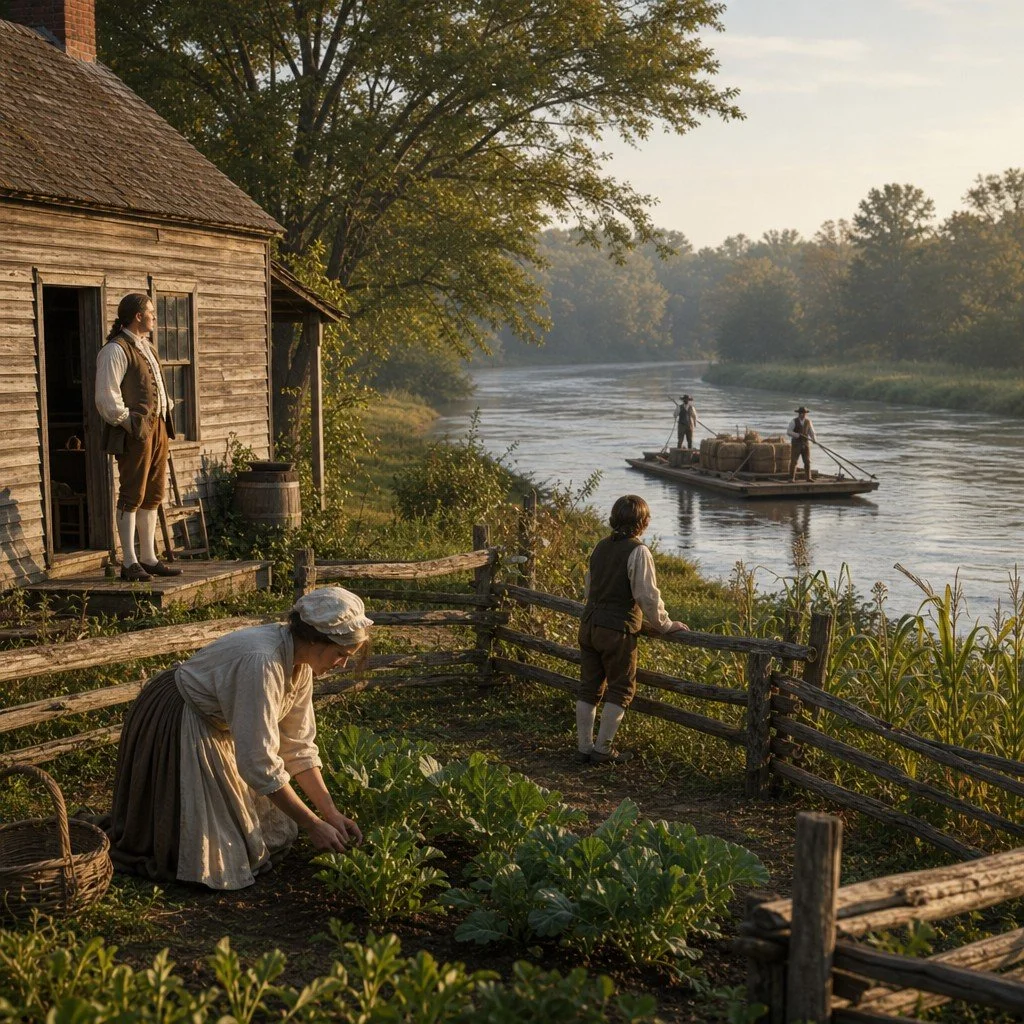
Edward Cobb, Jr was born about 1748 in Edgecombe North Carolina. He married Sarah Winifred Gray, daughter of John Gray and Ann Bryan. John Gray, a prosperous Scotsman who immigrated to America in 1713, built the 1,000 acre Rosefield Plantation and fathered a son who founded the Town of Windsor. The Gray family story is told in a separate blog. Edward bought 60 acres of land, on the north side of Tar River, next to Sharp's Bridge, Cheek’s Mill adjoining the 193 acre parcel his father, Edward Sr owned. It was there that his wife gave birth to their first child, Stephen (my ancestor) in 1768, followed by another son Gray in 1770 and a daughter Fanny in 1775. In March of that year Patrick Henry famously proclaimed: “Give me liberty or give me death!” That cry reverberated all across the colonies. Three months later North Carolina began to raise troops and when all hope of reconciliation with the British was lost, in April of 1776 it was the first colony to officially call for independence.
[AI Image: Rural life along the Tar River before the War]
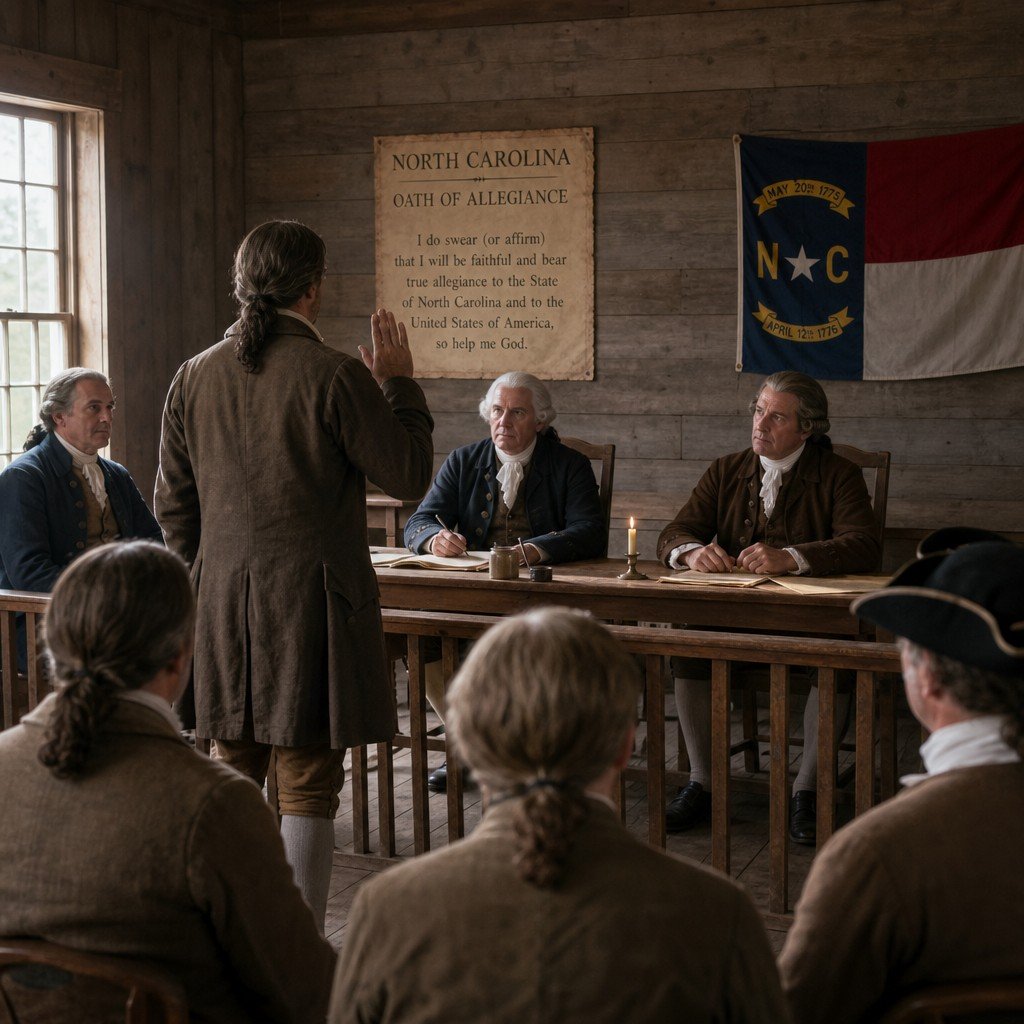
At that time North Carolina was home to many Scottish Highland Loyalists, wealthy planters with British ties, and Anglican clergy creating a deep division in the state. The Patriots finally took control when North Carolina Patriots crushed the largest Loyalist uprising in the South at the Battle of Moore’s Creek Bridge. Beginning in 1777 all North Carolina men were required by law to take an oath of allegiance to the Patriot cause. That year the state began confiscating the property of Loyalists, depriving them of their right to vote and if they refused to serve in the military or committed treasonous acts (like harboring British soldiers, or supplying British militias) jailing and sometimes executing them. Edward lived in Edgecombe County during the height of Loyalist suppression. In May of 1778 he officially renounced King George the Third and took the Oath of Allegiance. Soon after he joined the military.
[AI Image: The Oath of Allegiance.]
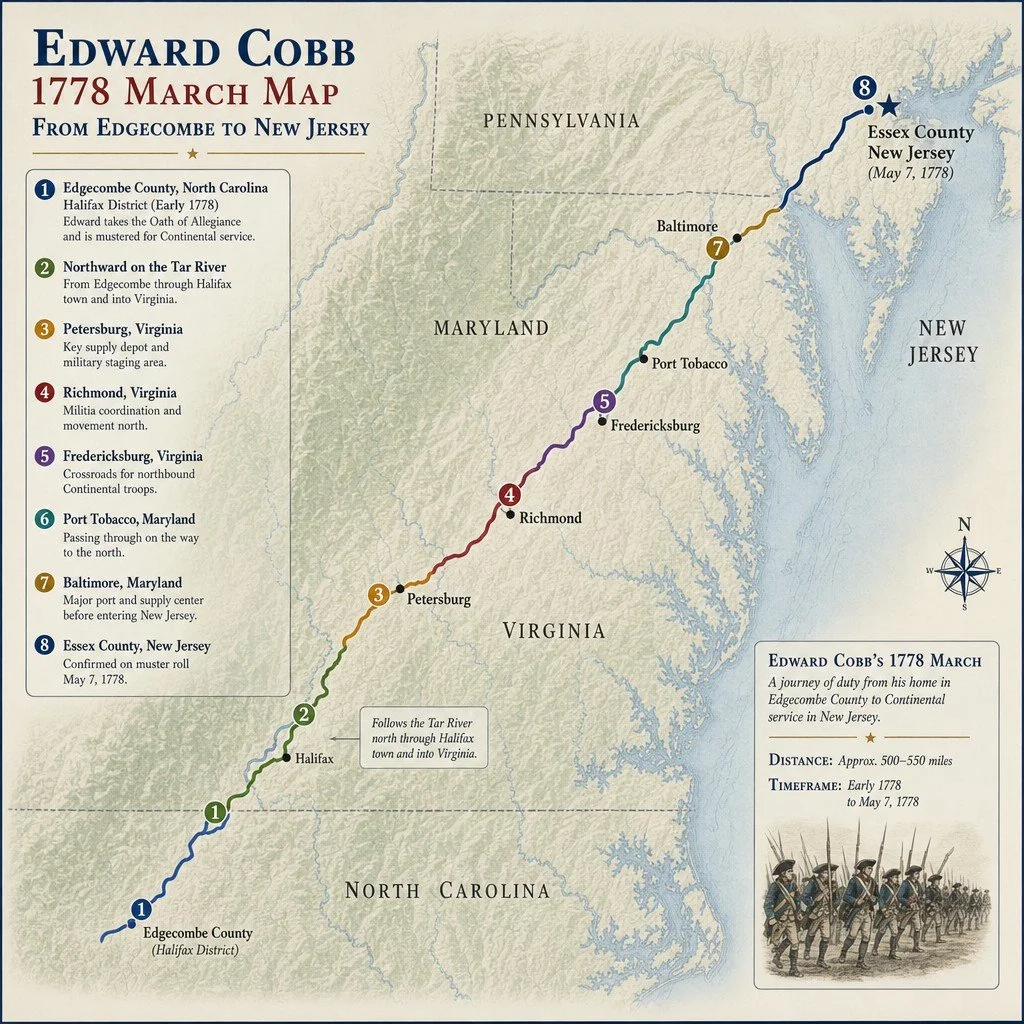
Edward’s unit marched north to provide reinforcement to the George Washington’s exhausted troops who had just endured a harrowing winter and battle at Valley Forge. Edward served as part of a mounted militia called Captain Crane’s Troop of Horse. His unit fought in the Battle of Monmouth’s Courthouse in New Jersey. This Battle proved that the Continental Army had been transformed into a professional fighting force, capable of standing toe to toe against the British. It forced the British into a defensive position, and coming on the heels of Valley Forge, it was a major turning point in the war.
[AI Image: Edward’s March from North Carolina to New Jersey]
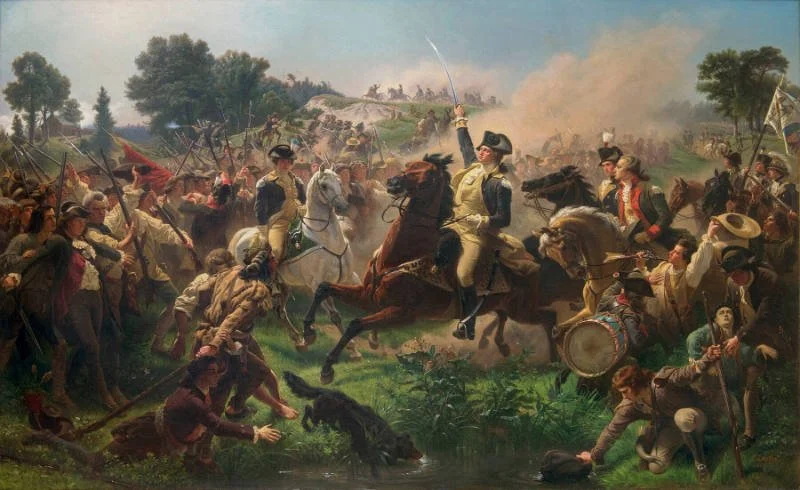
Image: [Painting of “Washington Rallying Troops at Monmouth” by Emanuel Leutze.]
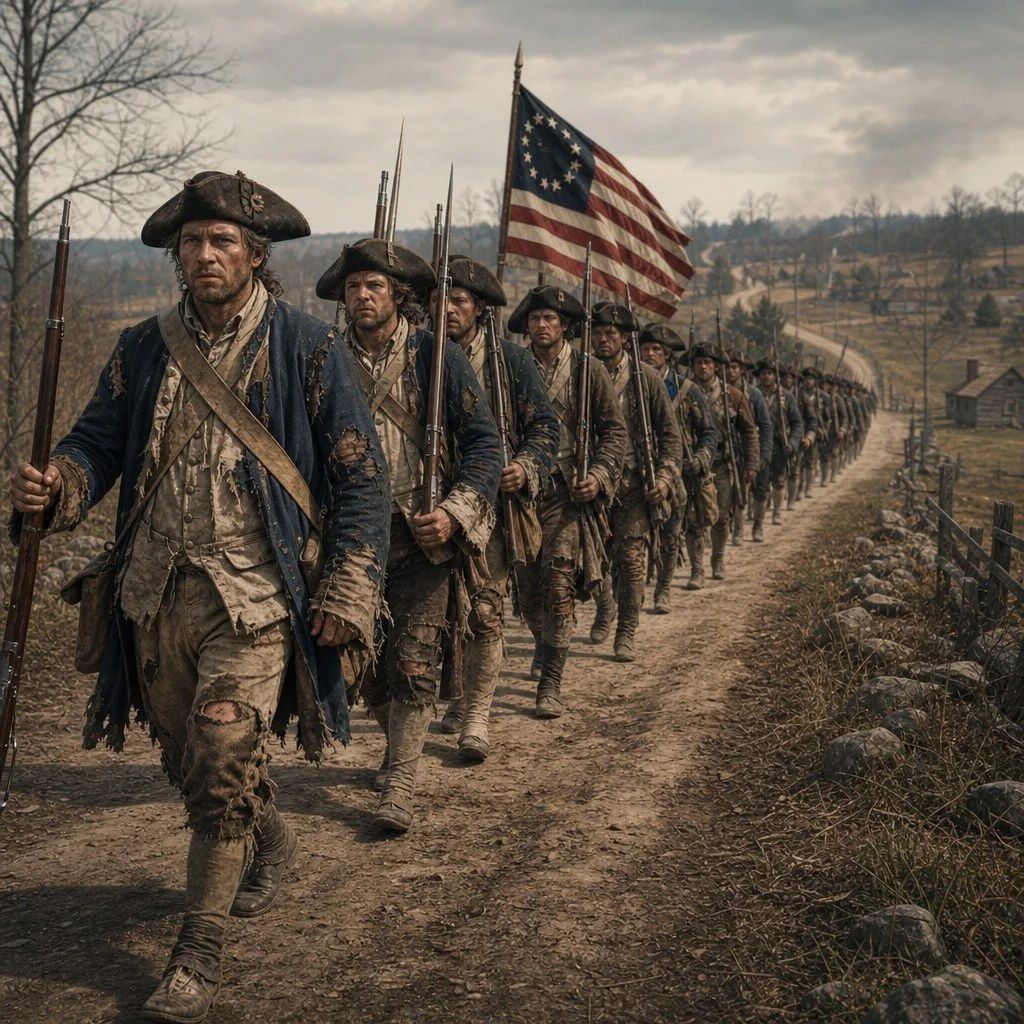
At this point in the war the Continental dollar had lost 99% of its value. Soldiers were paid (if at all) in money that couldn’t buy a loaf of bread. Many marched barefoot, others wrapped rags around their feet, bayonets were scarce, powder supplies inconsistent, tents often non existent. The soldiers often lived on “firecake”(flour plus water baked on a rock). The army was rag-tag but they were elite in experience. By 1780 the remaining soldiers were hardened veterans and fiercely loyal. Their clothes may have been ragged but their resolve was iron. After Monmouth, North Carolina units were sent south to reinforce the American army in Charlestown, South Carolina. The British captured the City in the fall of 1780 and with it, a large American army.
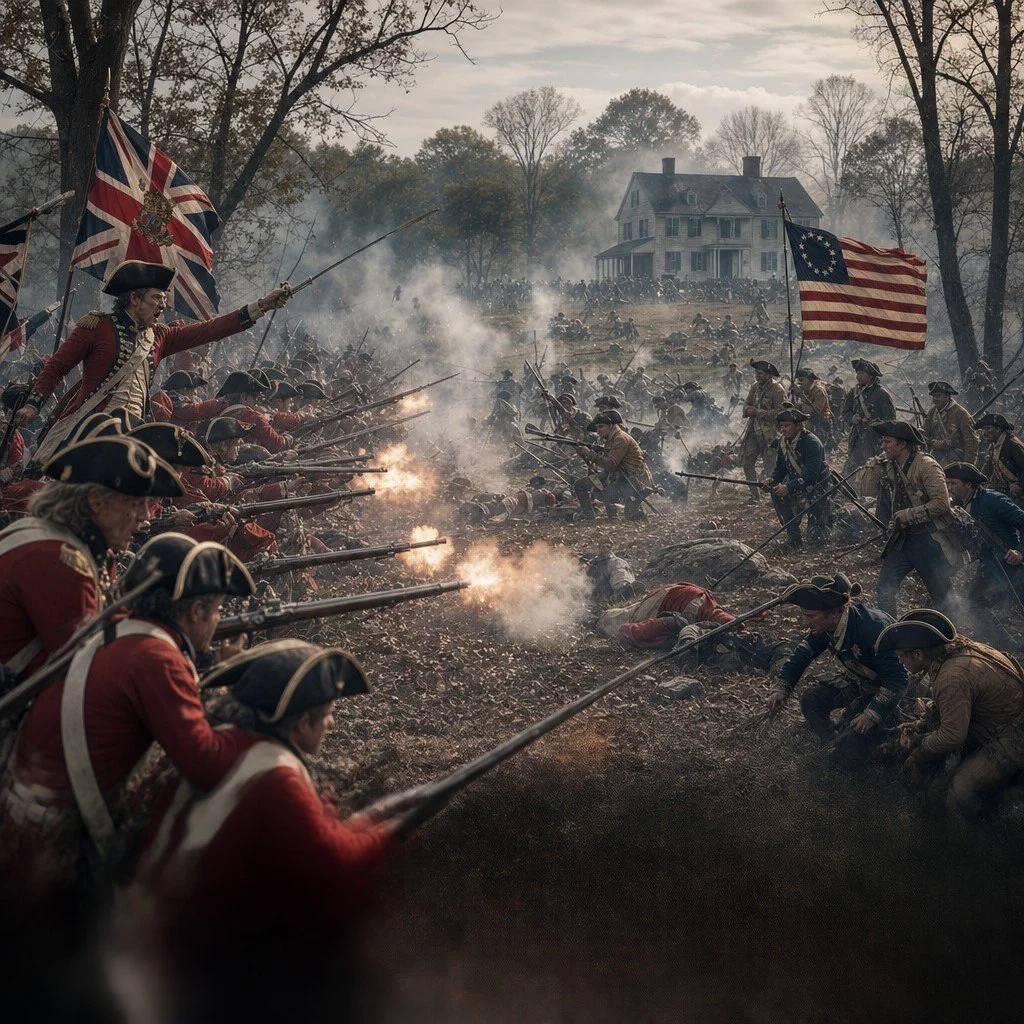
Among those who surrendered were 600 North Carolinian militia men (mostly from the Halifax military district where Edward was from). Many of those captured at Charleston were sent home where they rejoined local militia. After Charleston fell, Lord Cornwallis pushed northward and into North Carolina, sending shock waves through the populace. Men from Edgecombe were documented as being present at least three battles in North Carolina from February to September of 1781. One of those battles was Guilford Courthouse. Although Cornwallis “won” the battle it was a pyrrhic victory: he lost 25% of his men, all of his best officers, and had to retreat to Virginia to regroup, setting the stage for his final loss at Yorktown. After the war Cornwallis. “I have never seen such fierce fighting since I came to America”.
[AI Image: The Battle of Guilford Courthouse.]
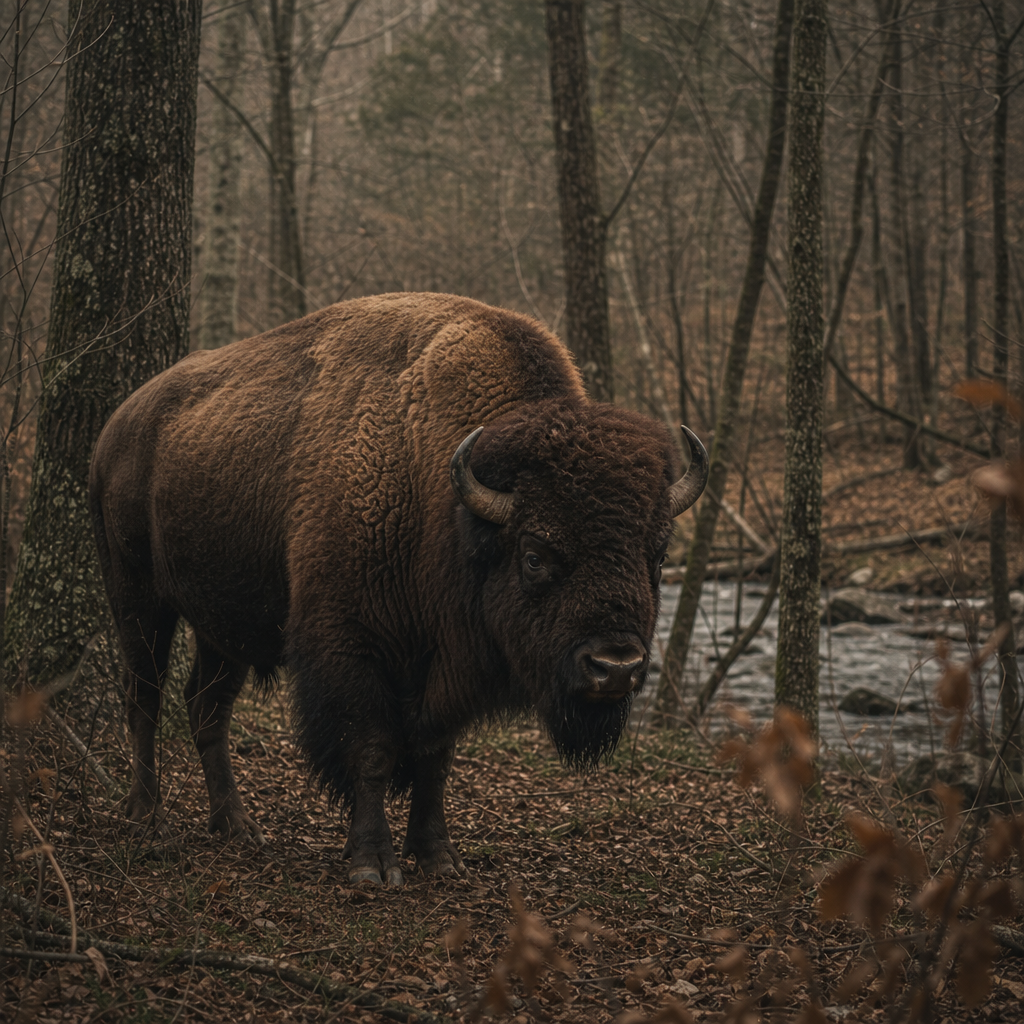
Despite the war, Edward and Winnifred managed to have a daughter Sally in 1780, a son Jonas Gray in 1781, a son John (birthdate unknown) and later a son Edward III in 1792. Edward Jr would live to see the invention of the cotton gin in 1793 which paved the way for a lucrative new cash crop for North Carolina and unfortunately an increased need for enslaved labor. In 1795 the University of North Carolina opened its doors in Chapel Hill – the first state university to do so. The frontier had largely disappeared -- the last known bison in the state was shot and killed in 1799.
[Image: Lonely bison in a disappearing frontier.]
Edward Jr was laid to rest in 1817 leaving his estate to his beloved wife and children in accordance with his will dated November of 1812:
"In the name of God Amen. I Edward Cobb of the County of Edgecomb & State of North Carolina being of sound disposing sense & memory do ordain this my last will and testament. That is to say I lend unto my well beloved wife Winifred Cobb all my property real & personal during her natural life. Item I give unto my sons Stephen Cobb Gray Cobb & John Cobb my daughters Sally Thigpen & Fanny Mayo ten head of cattle after the death of my wife to be equally divided amoungest them. Item I give unto my sons Jonas Cobb & Edward Cobb my plantation with all the lands I am pozest of with all the remaining part of my estate at the death of my wife. I construe & ordain my sons Stephen Cobb and John Cobb executors to this my last will and testament in witness thereof I have herein to set my hand & seal this 28th day of November 1812.Witnesses: Harmon Edwards, Bryant Edwards, Edward Cobb.