John Rodgers (1747-1836)
My Maternal 5th Great Grandfather, married Margaret Ann Dougherty
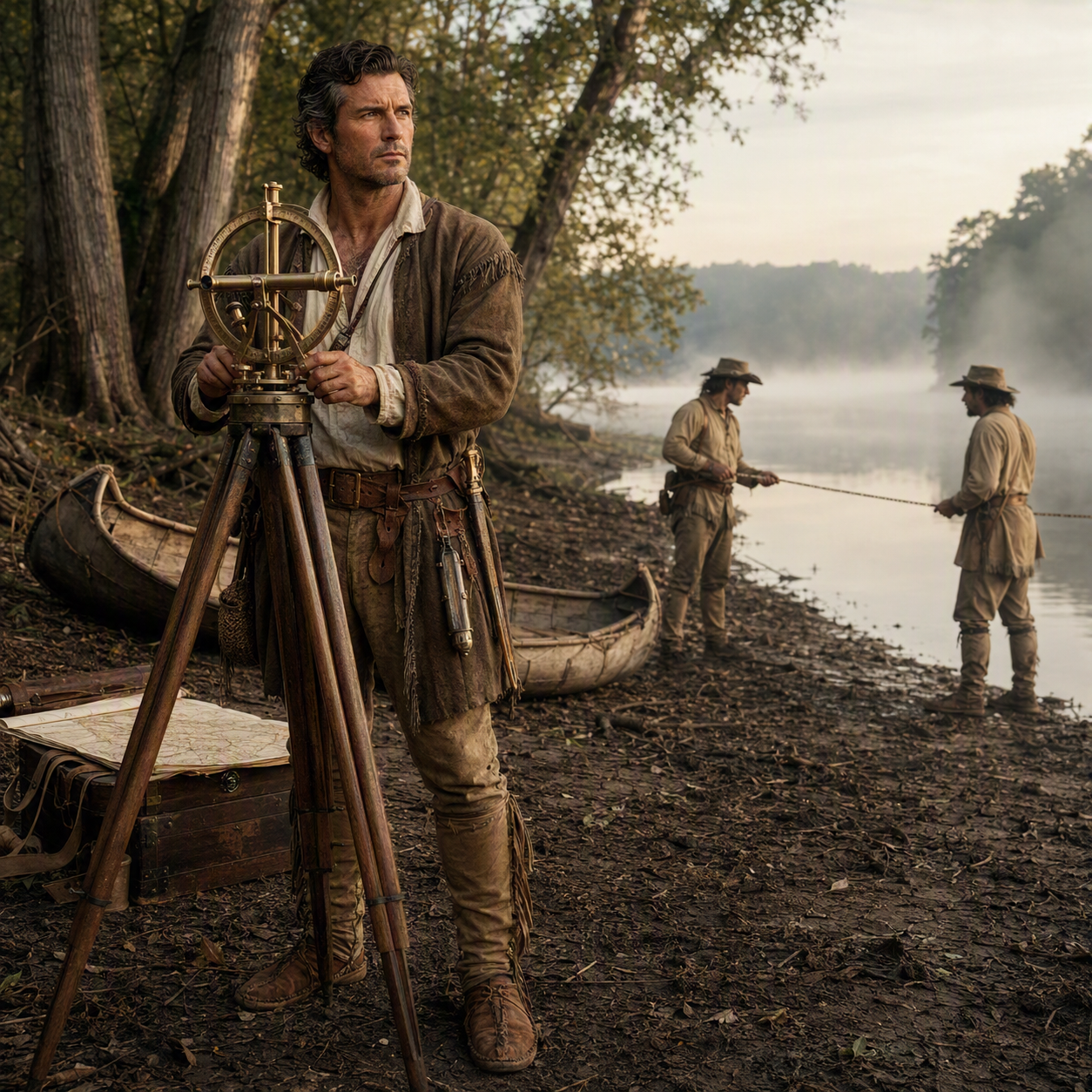
John Rodgers, the son of William Rodgers and Margaret Caldwell, was born 25 miles from the Caldwell Settlement at Cub Creek his grandfather had founded. He married Margaret Ann Daughtery (1748-1808). To highlight what a small world they lived in, Margaret’s grandmother Anne Phillips Daughtery was the sister of John’s grandmother Margaret Phillips Caldwell. In other words John and Margaret were “kissing cousins.” John enlisted in the military in 1776 and served a two year term as a Corporal in the third Virginia regiment in the Revolutionary War.
He and his wife lived in the Caldwell Settlement area until 1781 when they ventured off to Kentucky and later to Franklin, Tennessee where John died. He was a surveyor and is said to have surveyed 12,000 acres of land along the Mississippi River. The first six of their children were born in Virginia and another three were born in Kentucky.
[Image: AI generated image of a John Rodgers, Surveyor, in the late 1780s]
John Rodgers and Margaret Daughtery’s daughter Sarah (1786-1854) married Col. Randall William McGavock (1826-1863). Randal was an attorney, a Southern Planter, and a Colonel in the Civil War. He later became the Mayor of Nashville. In 1826 with the help of slave labor Randall built Carnton Plantation in Franklin, Tennessee. Randal was well connected; his good friend President Andrew Jackson visited him at his plantation on many occasions.
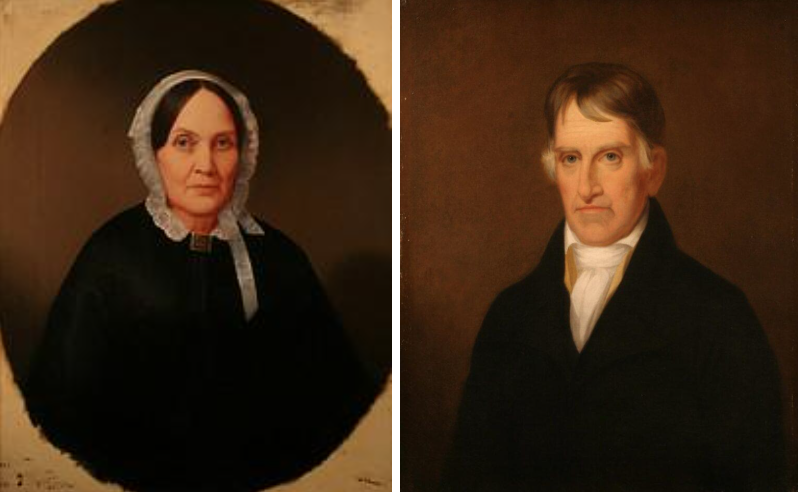
[Photo: Sarah Rodgers and Randall McGavock]
The Carnton Plantation, now a museum, was inherited by their son John and his wife Carrie Winder (1829-1905) who lived in it during the Battle of Franklin during the Civil War when it became a temporary field hospital for the wounded. More than 1,750 Confederate soldiers lost their lives during the battle in a town of less than 2,500 people. The bodies of four Confederate generals’ bodies killed during the fighting were laid out on their back porch. Today the floors of the house are still stained from the blood that was shed in their home by the wounded and dying soldiers that filled every room in their home and spilled out onto their porches and lawns.
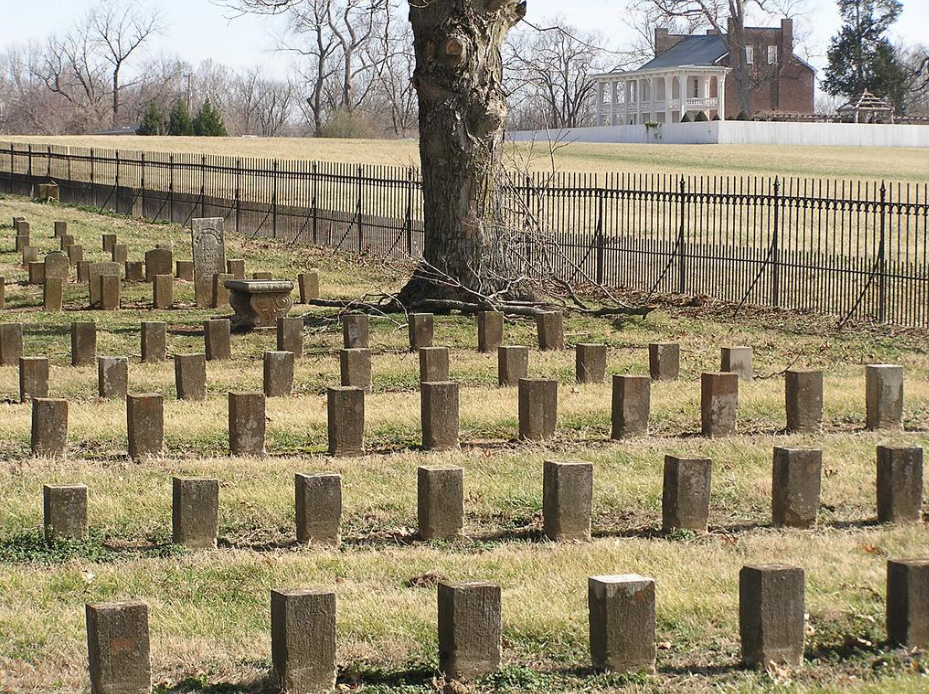
After the battle was over John donated two acres of land to be used as a cemetery for 1,500 of the soldiers. Carrie maintained a book of the dead, carefully cataloging the name of each dead soldier so they could be remembered. She wrote letters to their families and made daily walks in the cemetery grounds in her mourning clothes. She became the subject of a NY times bestselling novel in 2005 by Robert Hicks called the “The Widow of the South.”
[Photo: Confederate Cemetery, Carnton Plantation in the background"]
John Rodgers and Margaret Daughtery’s daughter Ann Phillips married Felix Grundy (1777-1840). Felix was a criminal attorney whose success drew large crowds when he served on the defense. He served as a Chief Justice for the Kentucky Court of Appeals, a Congressman, US Senator from Tennessee and the 13th US attorney general serving under President Van Buren. He was a law partner and mentor of James K Polk.
After his death four American counties were named for him in Illinois, Iowa, Missouri and Tennessee. His wife Ann organized a charitable society in Nashville that distributed Bibles and clothing to the poor of the city. She helped to found the “House of Industry for Females” which provided a home for orphan girls and gave them marketable domestic skills as an alternative to prostitution. She is also credited with starting the first Sunday school, featuring Bible studies as well as reading and spelling classes.
Local ministers refused to let her use their churches because her classes were “a violation of the Sabbath” because “teaching was inappropriate for a Sunday.” Sunday school, they claimed was “a scheme of the devil to capture the youth of the city.” Three years later they relented and Sunday school became acceptable. When she died in 1847 her obituary made no mention of her remarkable accomplishments. Instead she was “Mrs. Grundy, widow of the late Honorable Felix Grundy, a lady universally respected and beloved.”
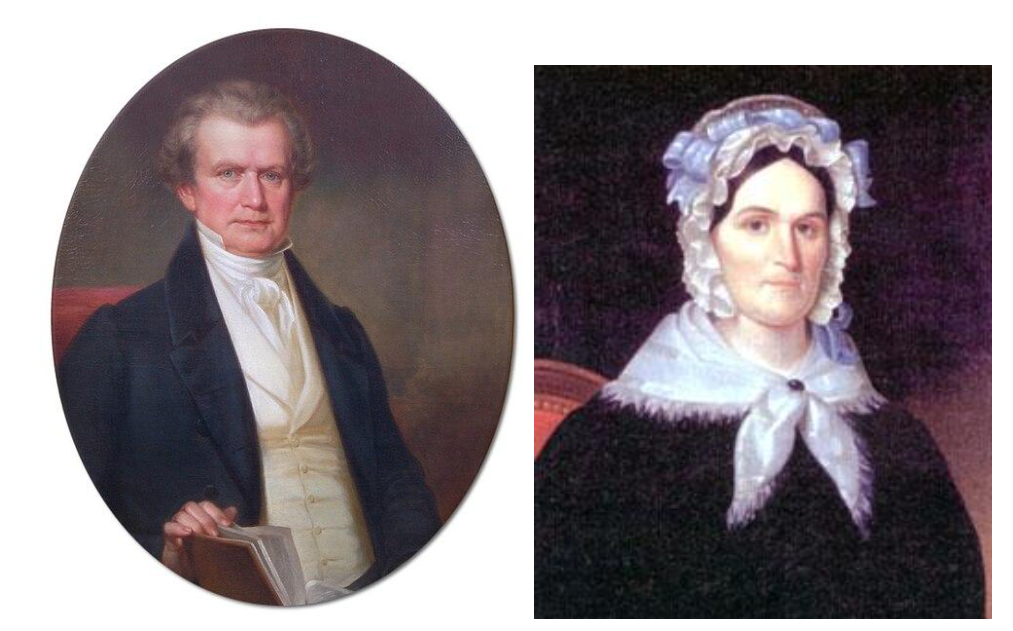
[Photo: Felix Gundy and his wife Ann Phillips Rodgers]
John Rodgers and Margaret Daughtery’s daughter, Mary Eleanor, married Dr Stephen Chenault, who descended from a French Huguenot family that settled in America near Yorktown Virginia in 1701. Stephen fought with General Jackson in the Battle of New Orleans in the War of 1812. After having seven children the family moved to Missouri and two more children were born. Stephen died in July of 1862. This is the first time the name Chenault appears in the family tree. Later it appears as the middle name in two of my ancestors so he must have left quite an impression on them.
John Rodgers and Margaret Daughtery’s first born son William Caldwell Rodgers (1771-1856) was my 4th great grandfather. His story is told in a separate blog.