John Edward Cobb, Jr. (1924-2003)
My Father, married Bettie Anna Tillitt
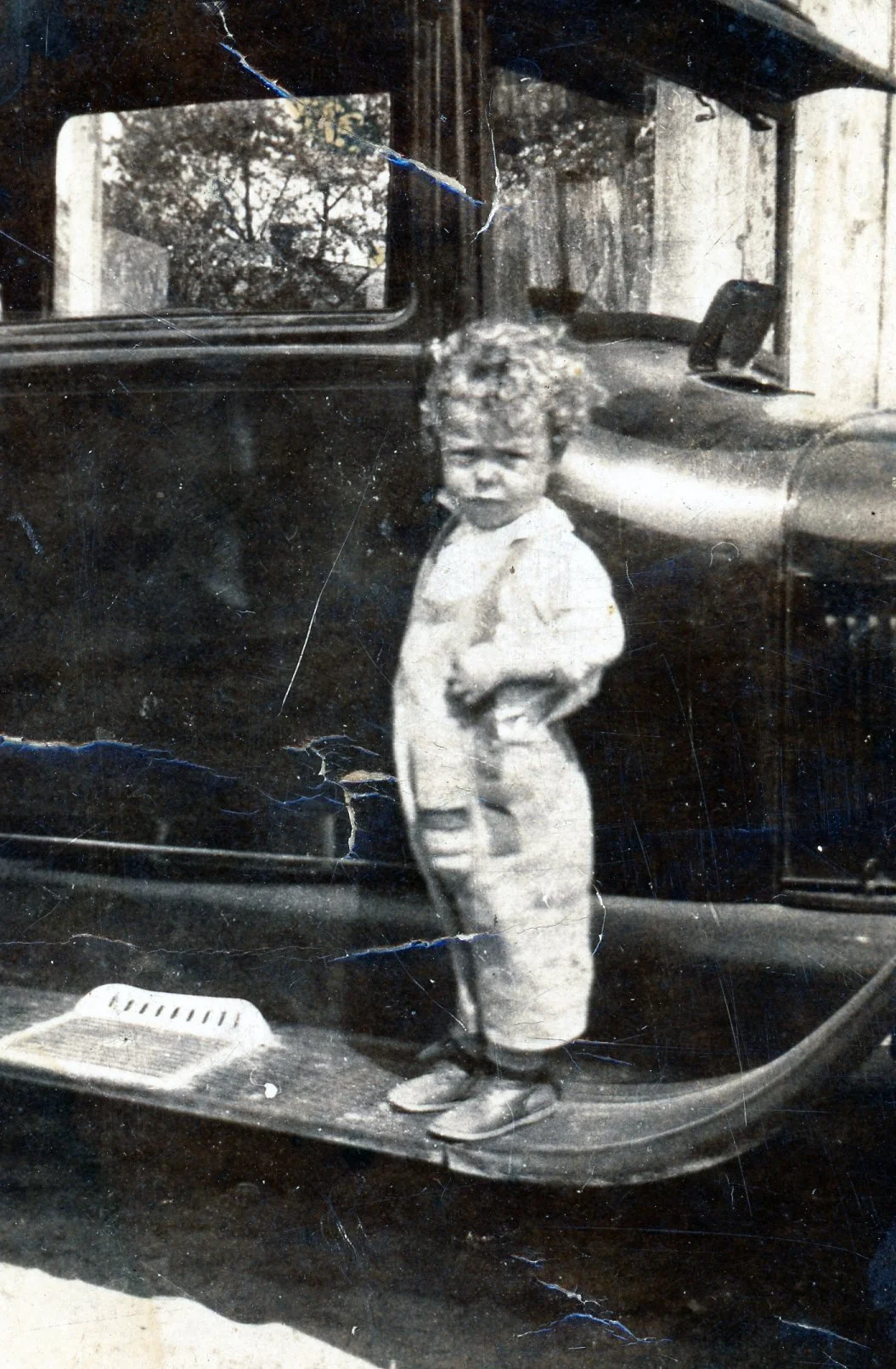
John (“Jack”) Edward Cobb, Jr, the son of John Edward Cobb, Sr and Francis L Ricks, was born on January 7, 1924 in Wallace, North Carolina. As the first born child and only son, he was a shoo-in for favorite child status in the family. Neither of his parents had a college degree, and they never owned their home, but they both worked hard to provide for Jack and his two sisters, Martha and Mary Ann.
When the company store his father managed was closed down in 1928, the family moved further south to another small town called Russellville, in South Carolina. Jack had a goat drawn cart that he loved to ride and spent much of his youth with a fishing pole in his hand. As an industrious elementary schooler, he could be seen around town peddling peanuts to make a little money. He briefly fell from grace when he was caught with his pants down relieving himself after stealing a watermelon from a local farmer.
[Photo: John Edward Cobb, Jr Age 3 in 1927]
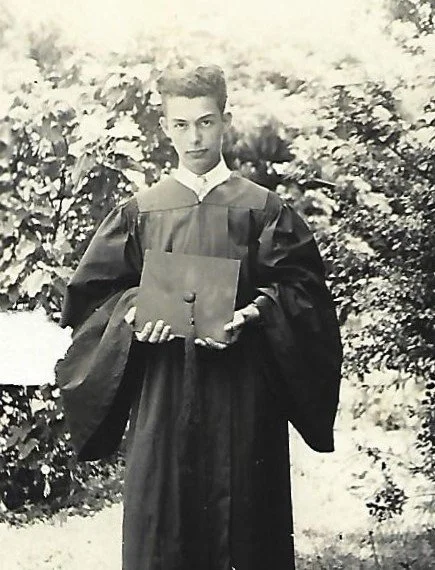
As a teenager Jack worked at one of the sawmills owned by his father’s boss. In January of 1940 he celebrated his seventeenth birthday. Four months later in May, his father was diagnosed with terminal colon cancer. In June, Paris fell to the German army and Auschwitz took its first prisoners. That September Jack was scheduled to attend The Citadel, the Military College of South Carolina. Sadly, his father did not live long enough to see his son step onto the campus to don his cadet uniform. His determined mother had no intention of letting this unfortunate turn of events prevent her son (or later her daughters) from going to college. Jack settled into college life and struggled with his chosen field of study, chemistry. Fifteen months later, in December of 1941, the Japanese dropped a bomb on Pearl Harbor. America was at war.
[Photo: Jack at High School Graduation 1940]
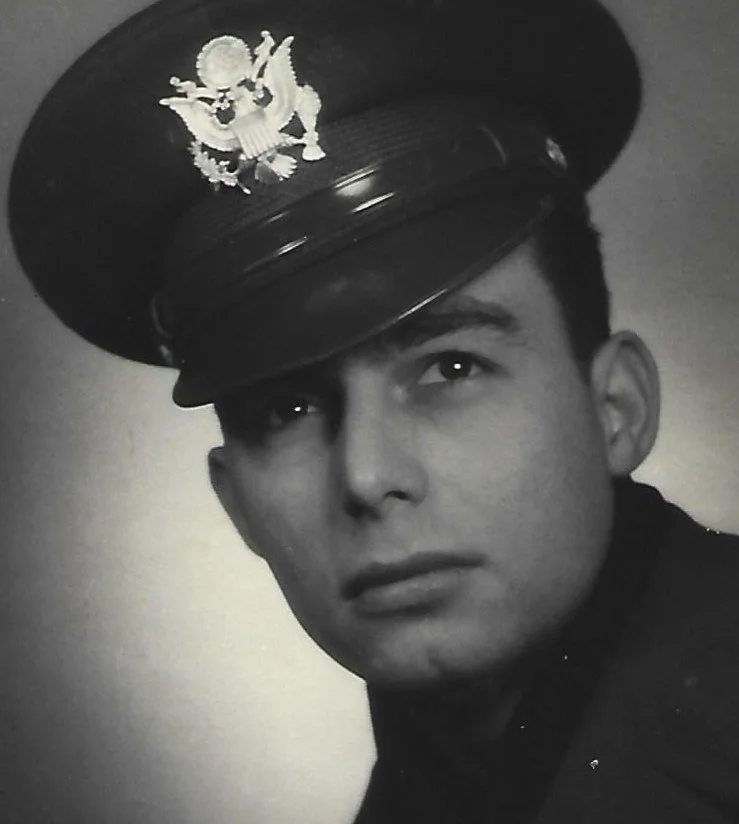
College life was short lived. In the spring of his junior year, in 1943, the entire class of ‘44 was called to active duty. The President of the college objected because he felt the cadets should be allowed to finish their military training, but the government was desperate for junior officers and ignored his pleas. Jack, along with his classmates, were sent to “90 day wonder” officer candidate school and emerged as 2nd lieutenants.
[Photo: The Handsome Lieutenant Jack Cobb]

Jack landed at Omaha Beach in 1944 as part of the 84th Infantry Division. Thirteen men from the Citadel lost their lives on that blood stained beach. Fortunately, my father was not among them. His group was one of the last Divisions to land but the first Division to march to the Elbe River, near Berlin, where the American and Russian armies converged to launch the final mortal blow to Germany.
{Photo: Lt Jack Cobb, lower left, “a shave and a hot meal” and ready to cross the Rhine River in 1945]

Jack served as a rifle platoon leader in three campaigns including the Battle of the Bulge in Belgium, where in the bitter cold winter in December of 1944 Adolf Hitler launched his last great offensive action of the war. The Bulge was the largest and bloodiest single battle fought by the United States in World War II. Jack received two purple hearts for wounds he received during battle - one in the arm at the Bulge in Belgium in January 1945 and one to the neck while leading his platoon across the Elbe River in April 1945. The American army swept in from the West and the Red Army advanced from the East and combined forces to crush the German capital in Berlin. On May 7, 1945, Germany surrendered.
[Photo: The Battle of the Bulge 1944-1945]

In February of 1946 Jack was assigned to the office of the judge advocate division in Germany to assist in the investigation of war crimes. He was released from service in September of 1946 and returned as a veteran student with the remnants of the rest of the class of ’44 to complete his college degree. Losses to this class of students were among the highest of any class in the history of the Citadel, whose cadets fired the cannon that started the Civil War. Jack brought back souvenirs from the war – a Nazi flag, a set of antique dueling pistols that he “liberated” from a German soldier, and an intense pride that he had served his country in its time of need. General Douglas MacArthur said it best:
“Duty. Honor. Country. Those hallowed words reverently dictate what you ought to be, what you can be, what you will be. They are the rallying point to build courage, when courage seems to fail, to gain faith when there seems little cause for faith, to create hope when hope becomes forlorn.”
[Photo: Jack standing in front of the ruins of Hitler’s home after the war]
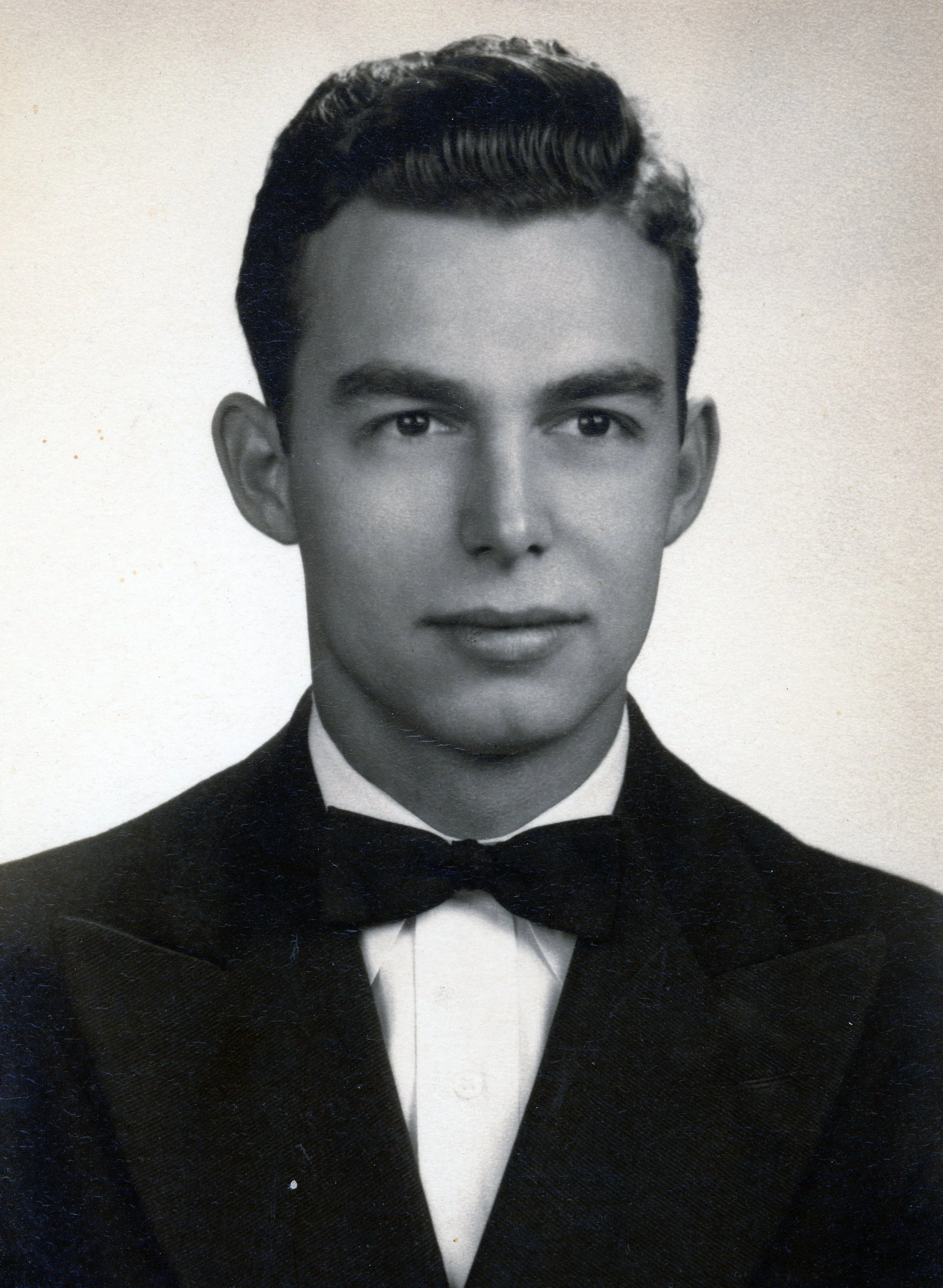
During World War II to remind men what they were fighting for, servicemen hung up postcards of “pin up girls” like Betty Grable and Jane Russell on their walls. As a lark a small women’s college in South Carolina held a “pin up man” contest in February of 1947. All of the contestants were war veterans. In a yellowed newspaper clipping stuffed in a box of mementoes I stumbled on a newspaper article announcing that Jack Cobb, then a senior at the Citadel, had been the third place winner in this contest. The article quoted Jack as saying he liked to travel (an odd choice as his only travel at that point had been while fighting in the war), that he liked to rhumba (if you had ever seen him dance you would know this could not possibly be true) and that he was 5 feet eleven inches tall (more than three inches taller then he actually was). Dad always had a great sense of humor. He was nominated by a young woman who said he was “just plain good looking and had a brain to go with it.”
[Photo: Jack Cobb’s College Graduation 1947]
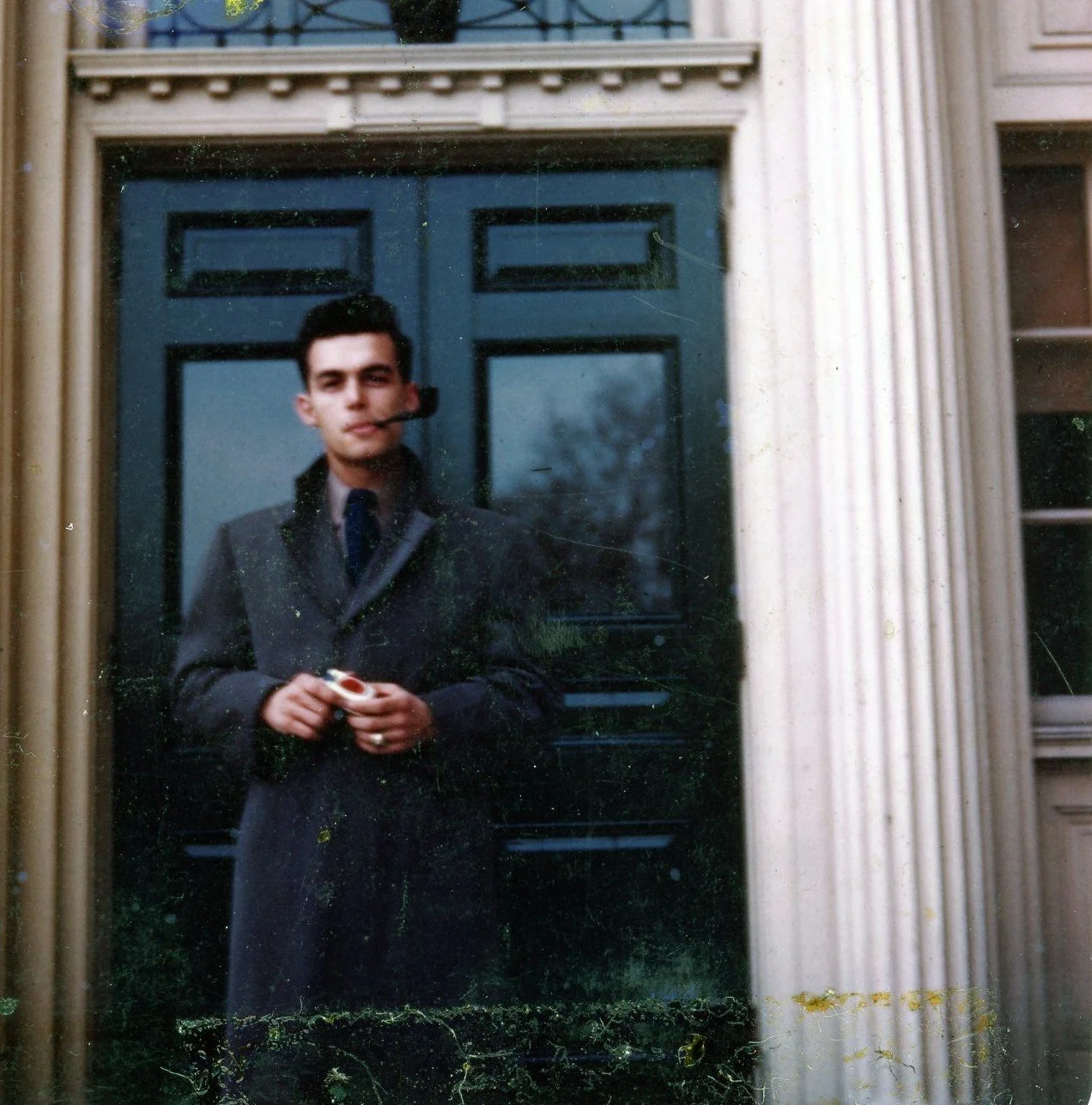
Jack went on to get his master’s degree in organic chemistry at the University of New Hampshire. His best buddy from the battlefields of Europe, Everett Lashley, was also a student there. Jack invited his sister Martha to New Hampshire on a ski trip and introduced the two of them. Sparks flew and later the two got married.
I’m guessing he thought the pipe was chick magnet. (He was probably right.)
[Photo: Jack in front to the Charles James Hall of Chemistry at UNH in 1948]
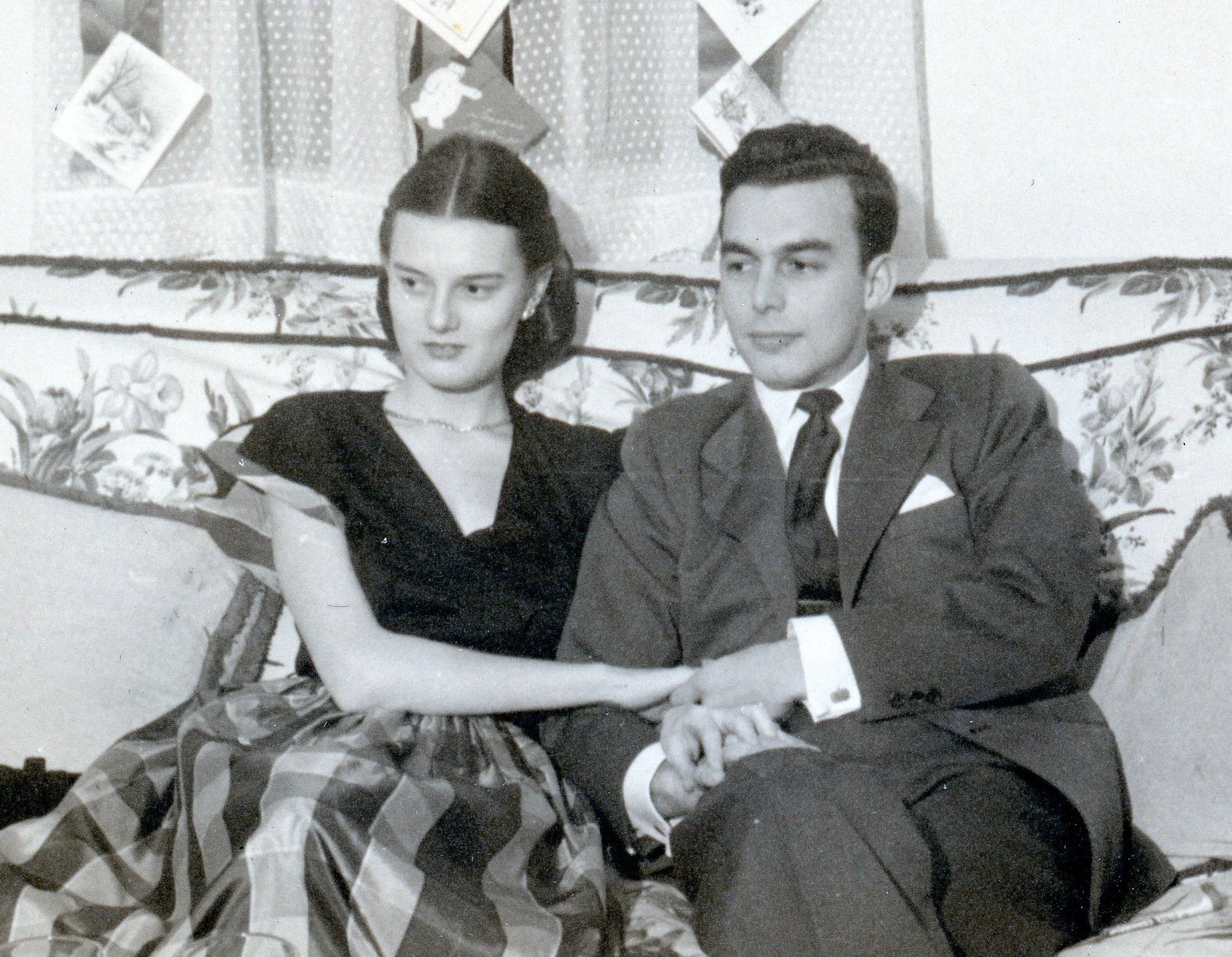
After he graduated in 1948, Jack landed a job as a technical rep for the Du Pont Company in Wilmington, Delaware where he fell head over heels for a beautiful 21 year old lab technician, Bettie Anna Tillitt, who succumbed to his charms. At the age of 25 on June 11, 1949 he married her, and the couple moved into a one bedroom apartment on the outskirts of town. It was here they bought a boxer named Champ. Champ became so attached to Jack that when they went to the beach, Champ would become agitated and try to “rescue” Jack by dragging him out of the ocean by his bathing trunks.
[Photo The newly weds in 1949]
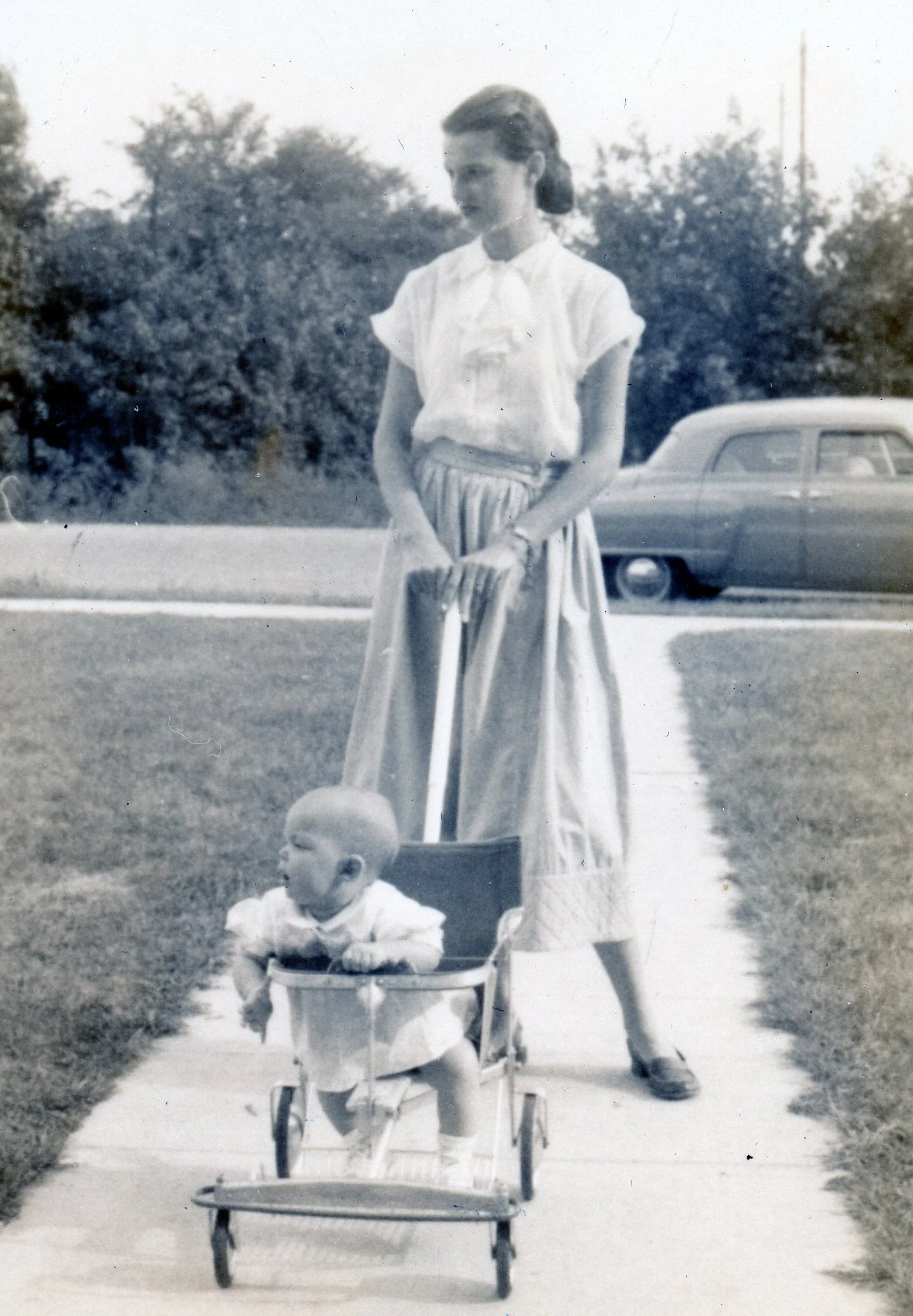
With two salaries Jack and Bettie were able to afford a three bedroom house in New Castle, Delaware and their first child, Katharine, was born there in February of 1951. She was named after one of Jack’s old girlfriends. Bettie was so non-confrontational she didn’t object.
[Photo: Bettie with daughter Kathy in 1951]
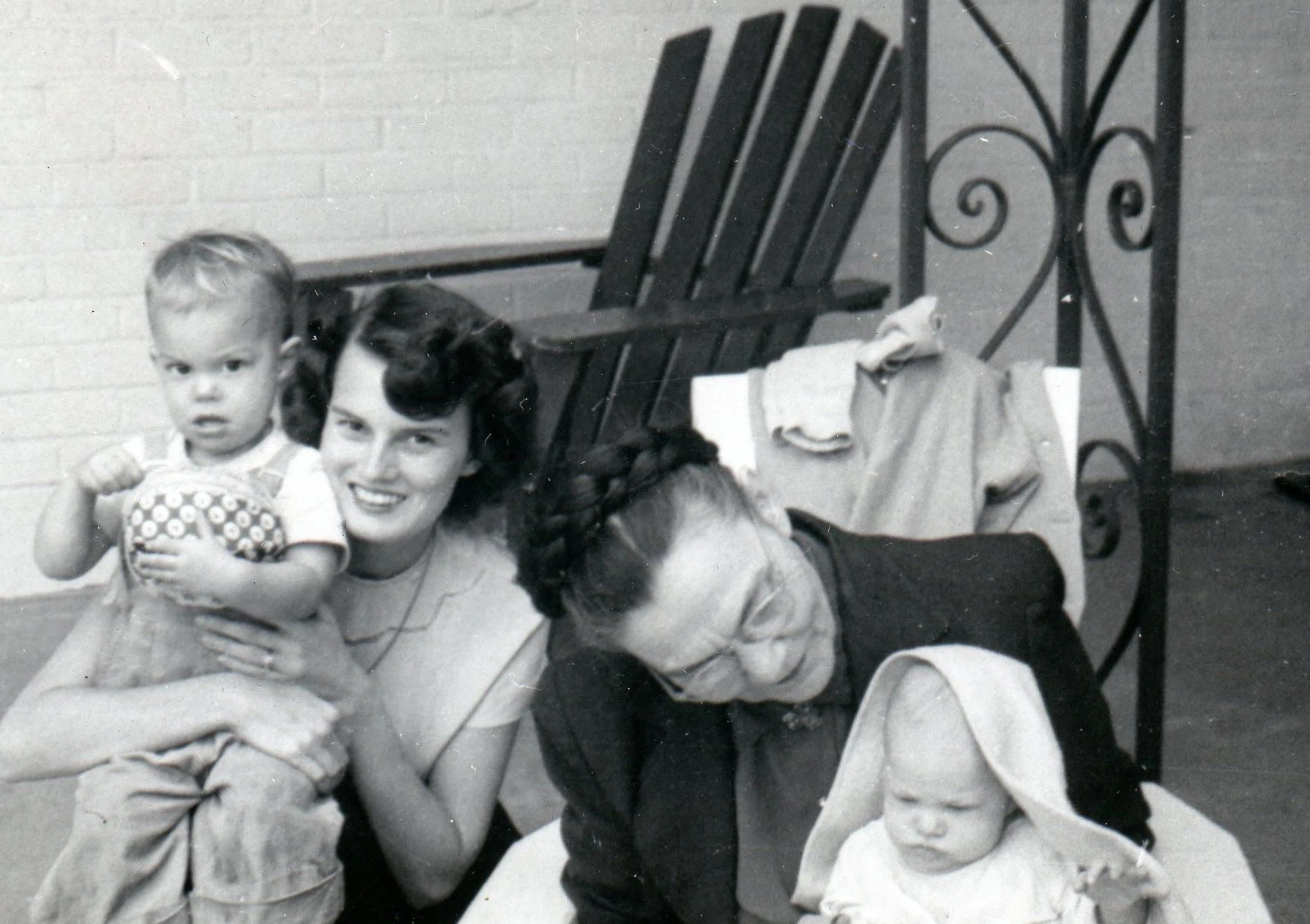
Shortly after Jack was called into active duty and together they began the nomadic life of a military family. First to Fort McNair in DC, then on to Maryland and in 1952 to Fort McClellan, Alabama, where their second child, Patricia, was born. In August of 1954 Jack was assigned to the post war clean-up effort in Korea.
[Photo New baby Patricia with Kathy, Bettie and Grandma Rosa Tillitt.]
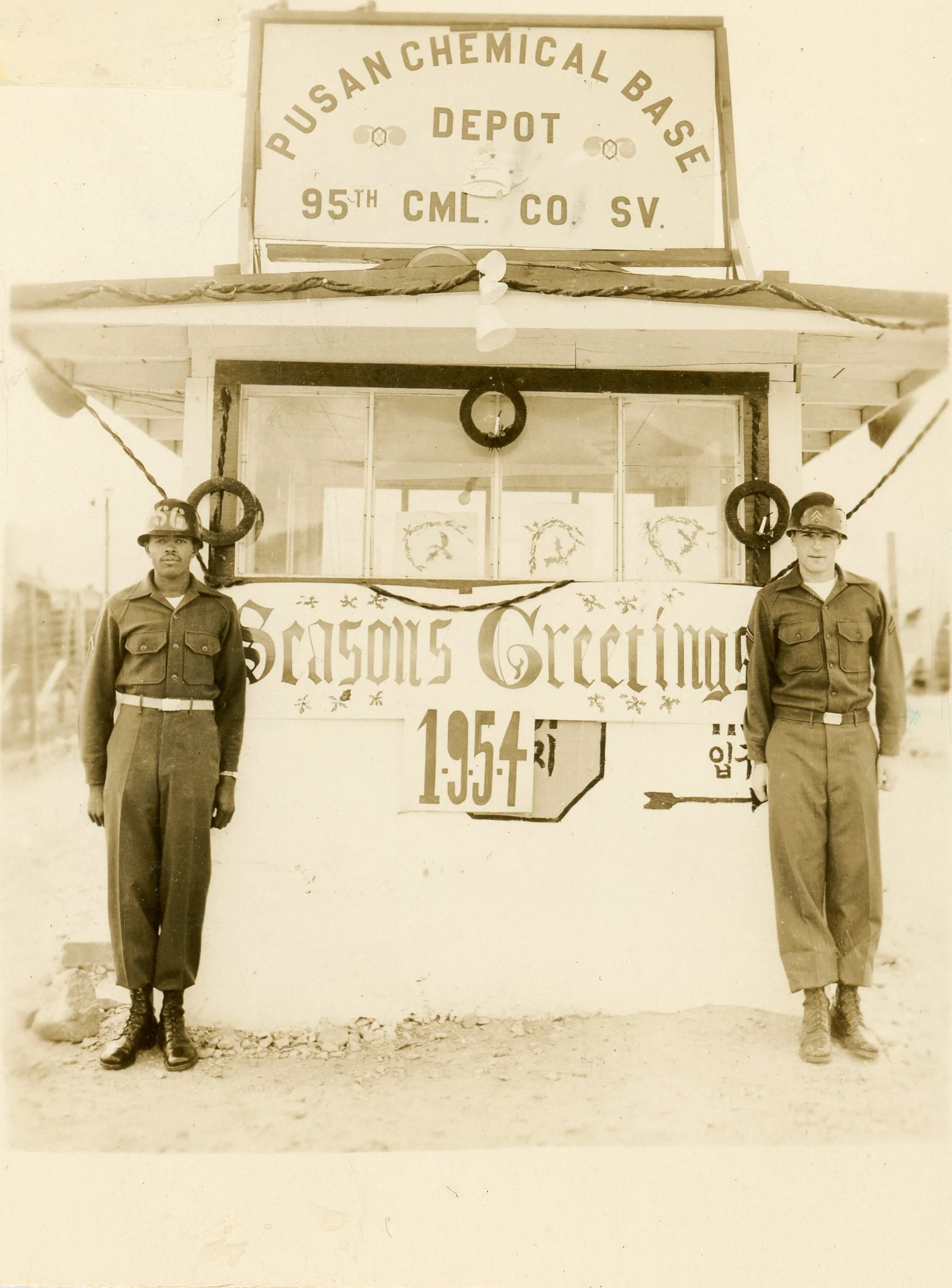
Although it was never officially declared a war, the “conflict” was very destructive. According to some reports, 25% of the pre-war population of North Korea was wiped out during the conflict. The ceasefire was signed in 1952, but it took a year for the American troops to be withdrawn. The aftermath was a hell hole for both sides of the divided country.
When Jack boarded the plane for his Korean tour of duty, his pregnant wife and two daughters moved in with his mother-in-law in Durham, North Carolina. The Red Cross tracked him down to notify him that his wife gave birth to their son, John Edward “Eddie” Cobb, III. After a miserable year in Korea, Jack was given a more rewarding tour in Japan where his family was allowed to join him.
[Photo: Guard Station at the Entrance to the Military Base in Pusan Korea in 1954]
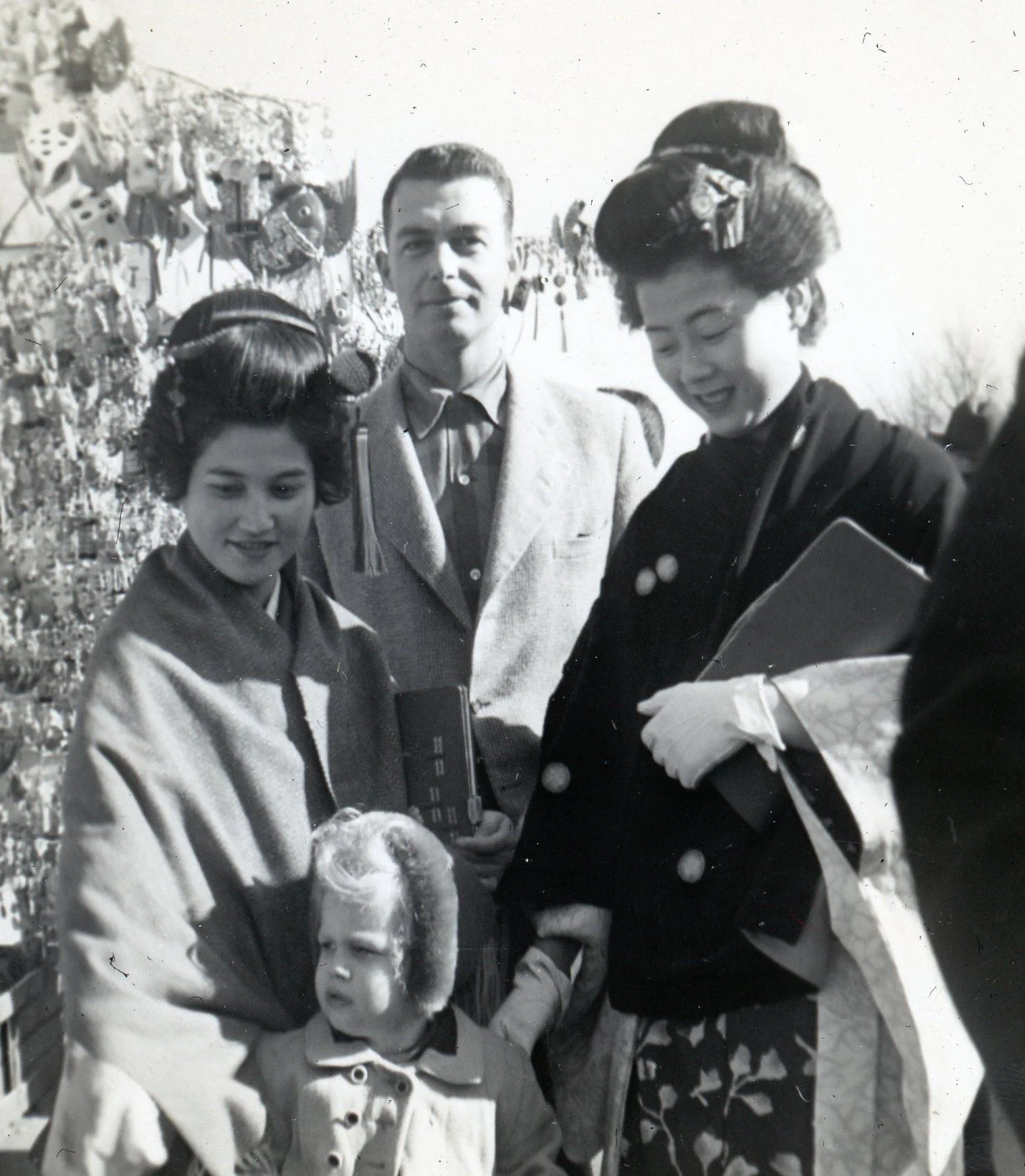
Despite the devastating war that Japan had endured, by 1956 they were remarkably friendly and welcoming to westerners.
[Photo: Jack in 1956 with daughter Patty and two Japanese women who, much to her dismay, were fascinated by her blond hair and ruffly underwear. ]
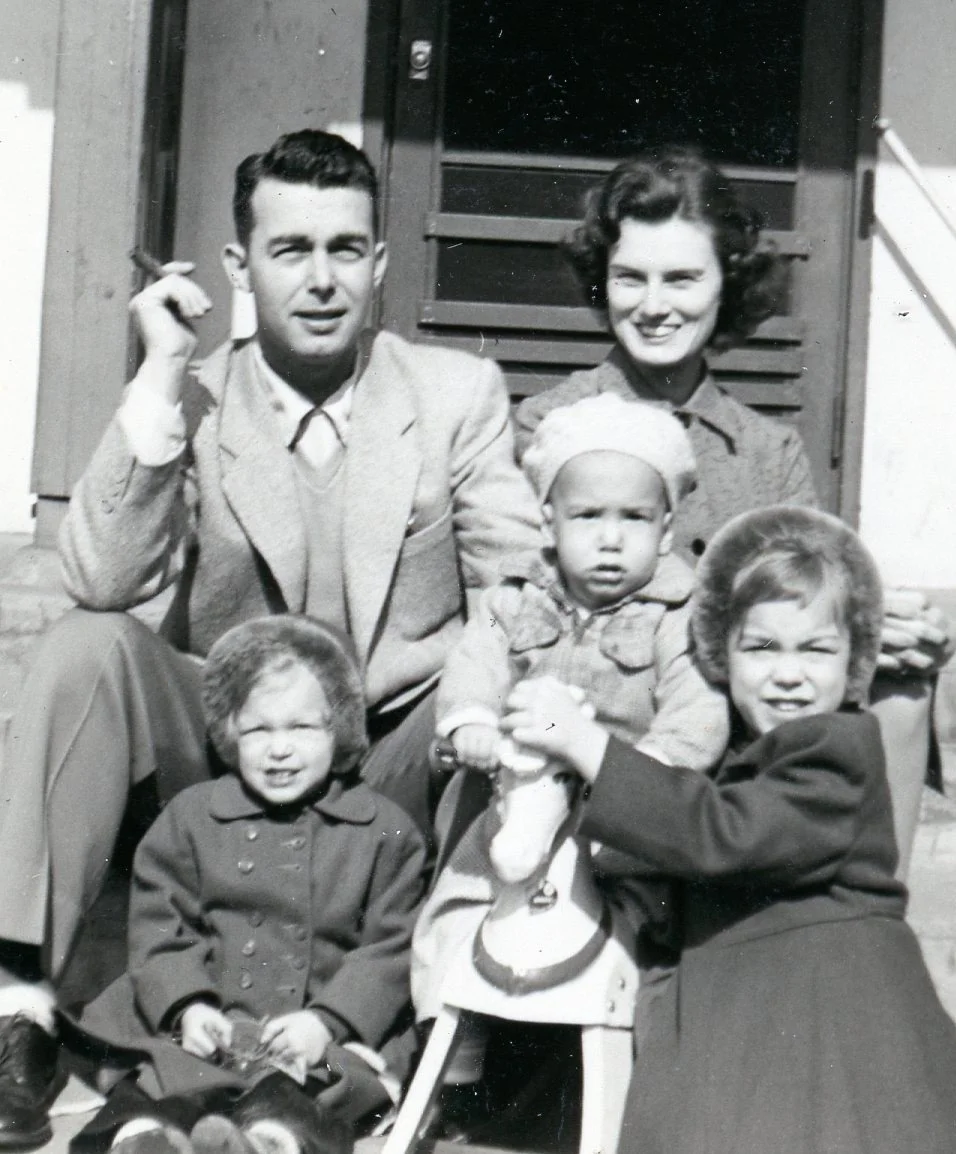
The family lived frugally on his meager military salary but compared to most of Japan they lived in “high cotton.”
[Photo: Family photo in front of their humble abode]
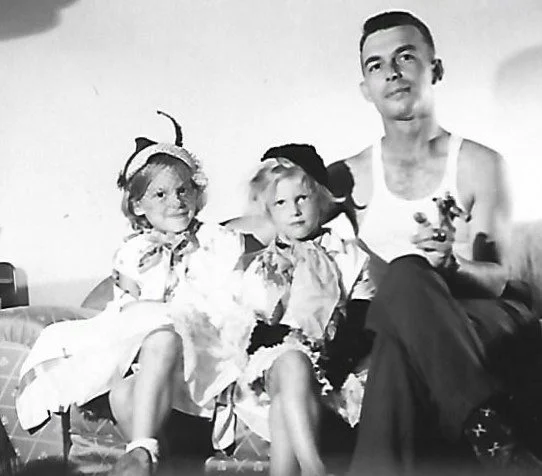
After Japan, Jack was then transferred to San Marcus Texas to attend flight school where he learned to fly to supplement his family’s income.
[Photo: Jack with his daughters in 1957 in San Marcus Texas]
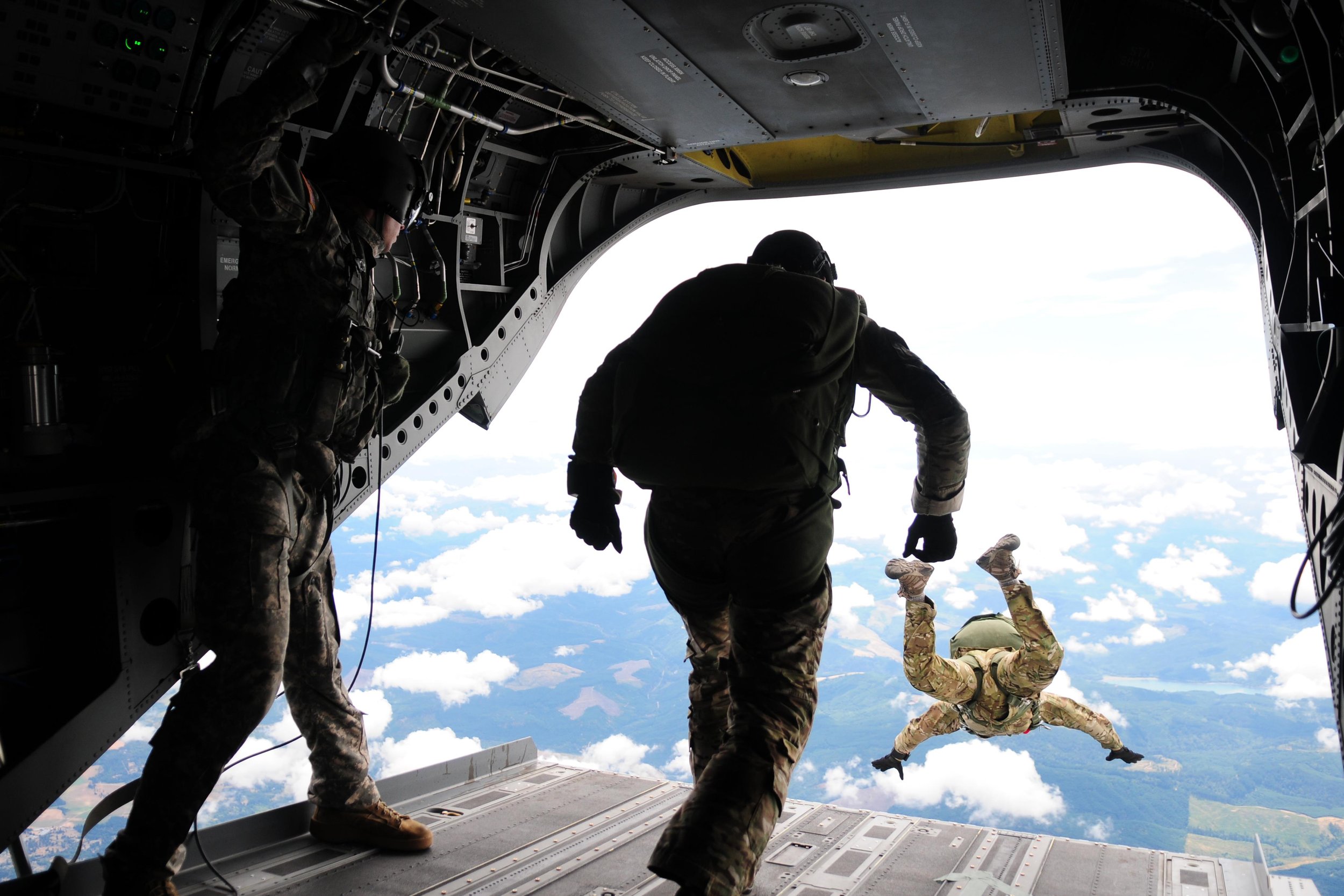
In October of 1957, the family loaded up their belongings once again and trailed behind Jack to transportation school in Fort Eustis Virginia, then off to St Louis Missouri, Fort Leavenworth Kansas, back to Fort Eustis, off to the rigorous parachute jump school in Fort Benning Georgia, and then helicopter school in Mineral Wells Texas. Jack had a second assignment in Korea and then rejoined his family in Alexandria Virginia to serve at the Pentagon. While at the Pentagon he would periodically disappear to work in an undisclosed location mysteriously he called “under the rock.” Much later when the spot was declassified, I learned it was a secret supersized 113,000 square foot bunker carved deep into the mountainside beneath a famous West Virginia spa resort. It served as a cold war fallout center for top military operations and Members of Congress. I chuckled to learn the location was exposed after three decades by the Washington Post (of course) and is now (don’t you just love America) a tourist attraction.
[Photo: Paratroopers take the plunge]
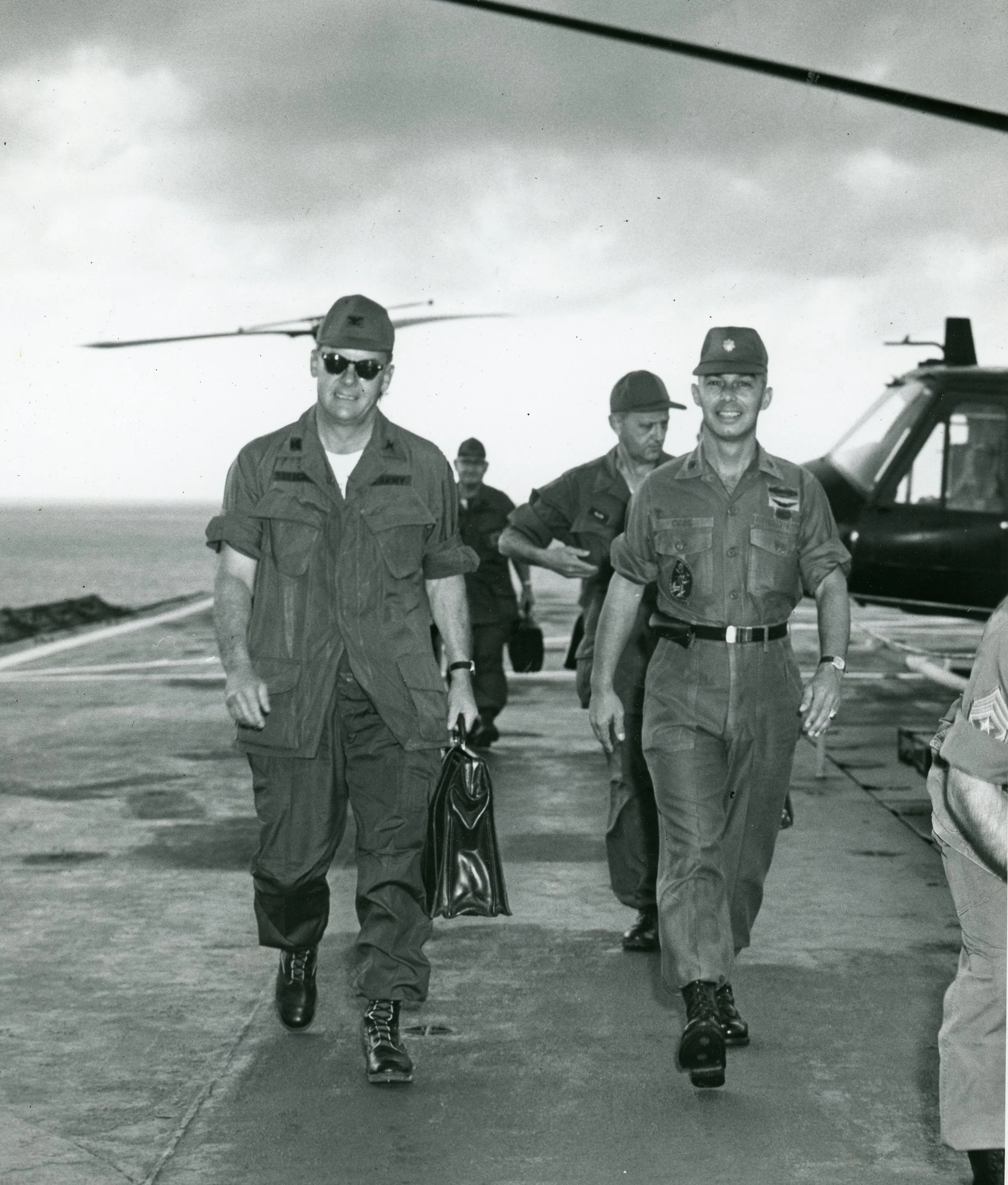
In 1967, Jack was assigned as the Commander of the Army’s First Seaborne Battalion and Facilities Commander of the USNS Corpus Christi Bay, an aircraft carrier positioned in the waters near Saigon during the Vietnam War. There he witnessed the Tet Offensive (a series of North Vietnamese attacks on more than 100 cities and outposts in South Vietnam.) His anxious wife was left at home to manage life with three teenaged children. She had reason to be nervous - while in Vietnam he received an air medal for participating in over 25 aerial missions over hostile territory.
[Photo: Far right - Jack on his aircraft carrier in Vietnam in 1967 ]
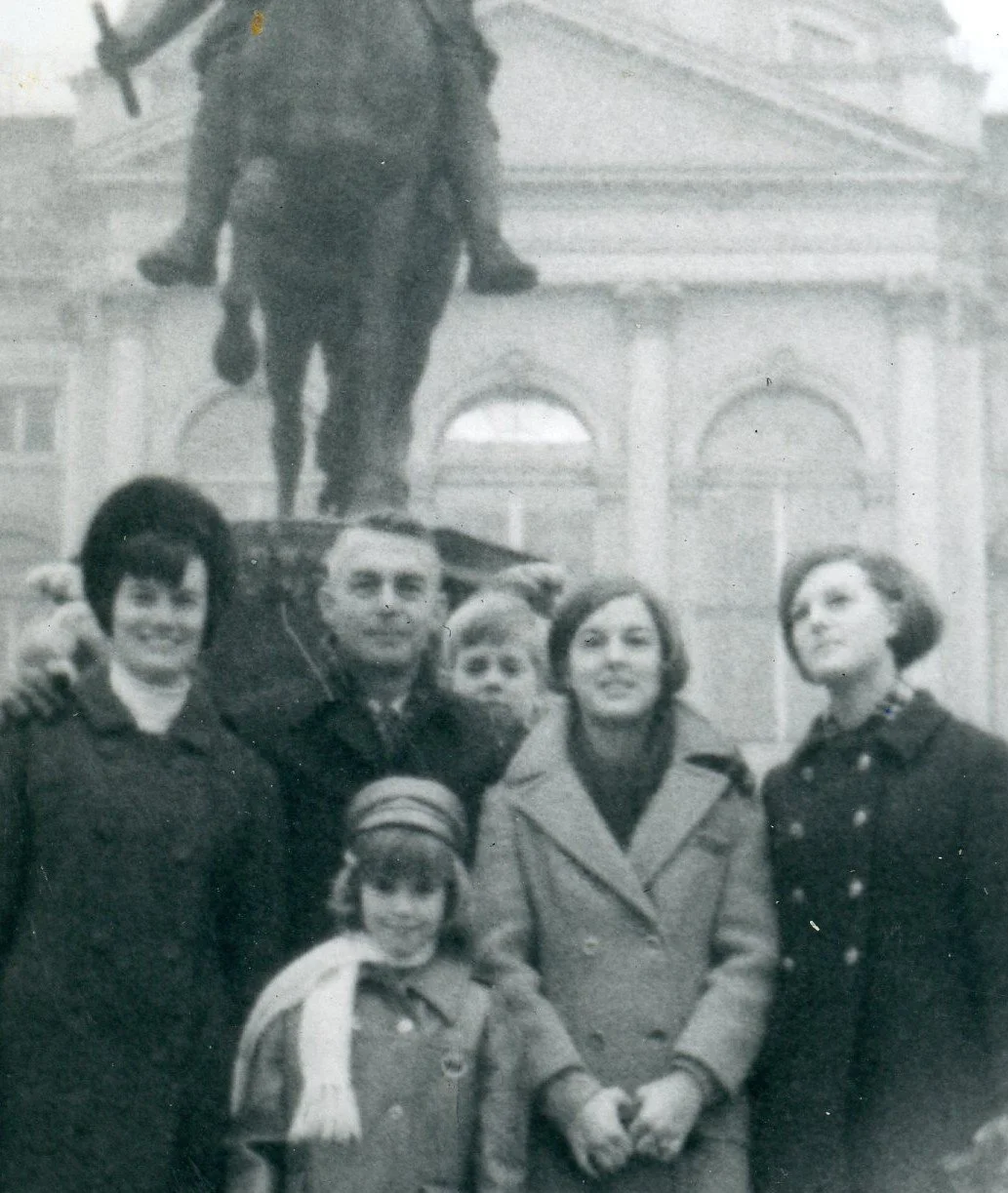
In 1968, he was rewarded for his contributions with a choice assignment in Heidelberg, Germany, the US military headquarters for Europe. There his teenaged children enjoyed travel most Americans never have the opportunity to experience and much to my astonishment for the first time the thrill of living in a place with no drinking age. His last assignment was back at the Pentagon as Assistant Director of the National Military Command Center and Senior Logistician. Somehow, amidst all the chaos of military travel, when we were young he’d somehow manage to find a way to get our family together for beach vacations in South Carolina.
[Photo: Bettie, Jack, Patty and Kathy in center row in Berlin Germany in 1968]
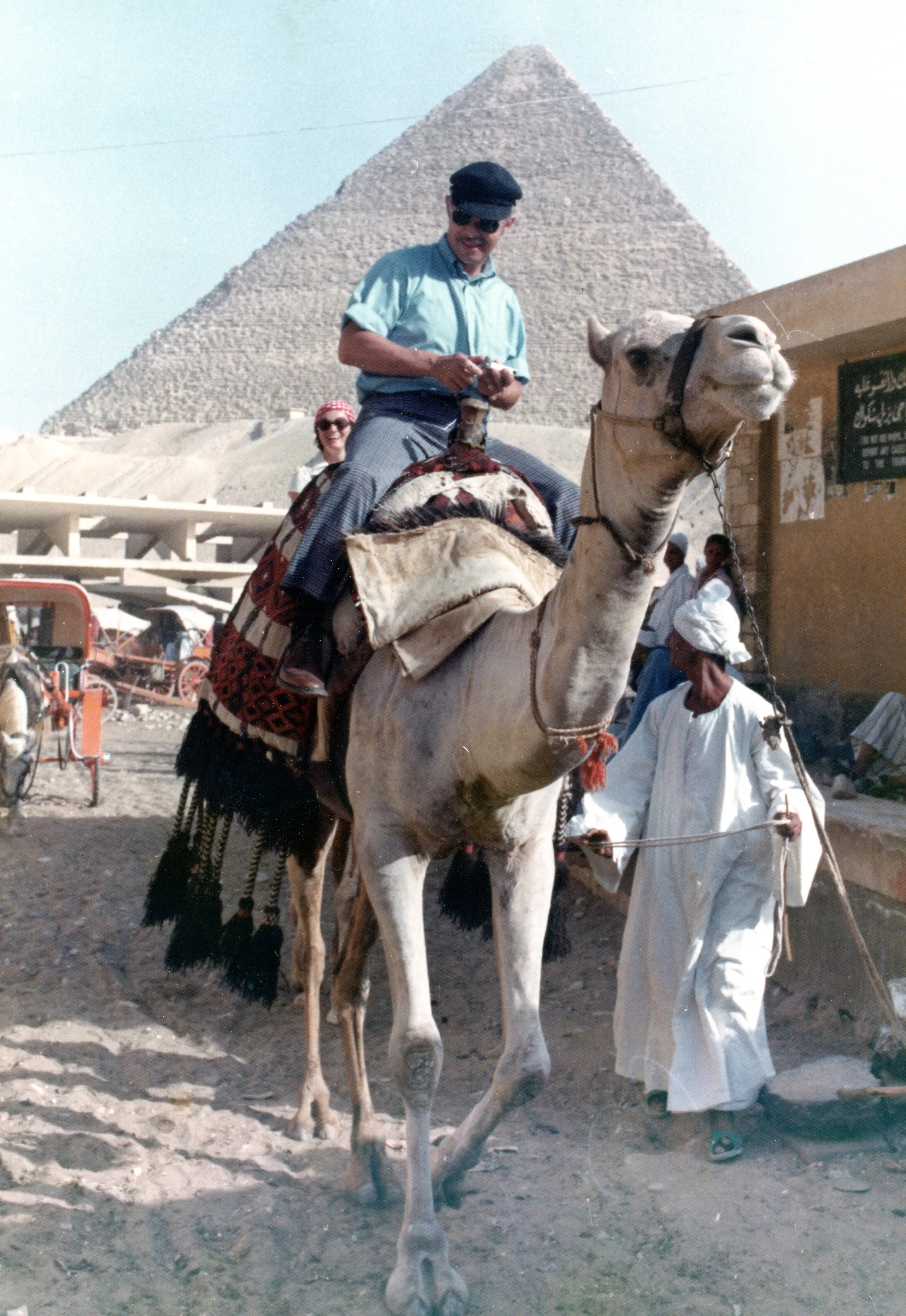
Dad retired from military life as a full Colonel at the age of 55 in 1974. He filled his passport with stamps from all the exotic places he and Mom visited. He built a nice home on a steep hill on Tatum Drive with a swimming pool overlooking, much to his delight, a retired army general’s house. His neighborhood contained many other retired officers who formed, not surprisingly, a well-run neighborhood watch program complete with roving cars and a radio command center. He did volunteer work for “meals on wheels” and was an avid tennis player. He was wild about Redskin football games and would sit in his reclining leather chair with a redskin hat on cheering them on in a booming voice even if he were alone in the room. You could always tell which packages under the Christmas tree were from him because they often were held together with electrical tape. He wrote a series of books on his family genealogy, a how to book to help others to do the same thing and a fictional novel based on his experiences in World War II called ”War Class”. He built a small fishpond in the back yard where he joyfully fed his goldfish. He bought a condo at the Isle of Palms near his beloved Citadel College in Charleston, South Carolina to act as a magnet to reel us all back in for family vacations.
[Photo: Jack on a camel in Egypt in 1975]
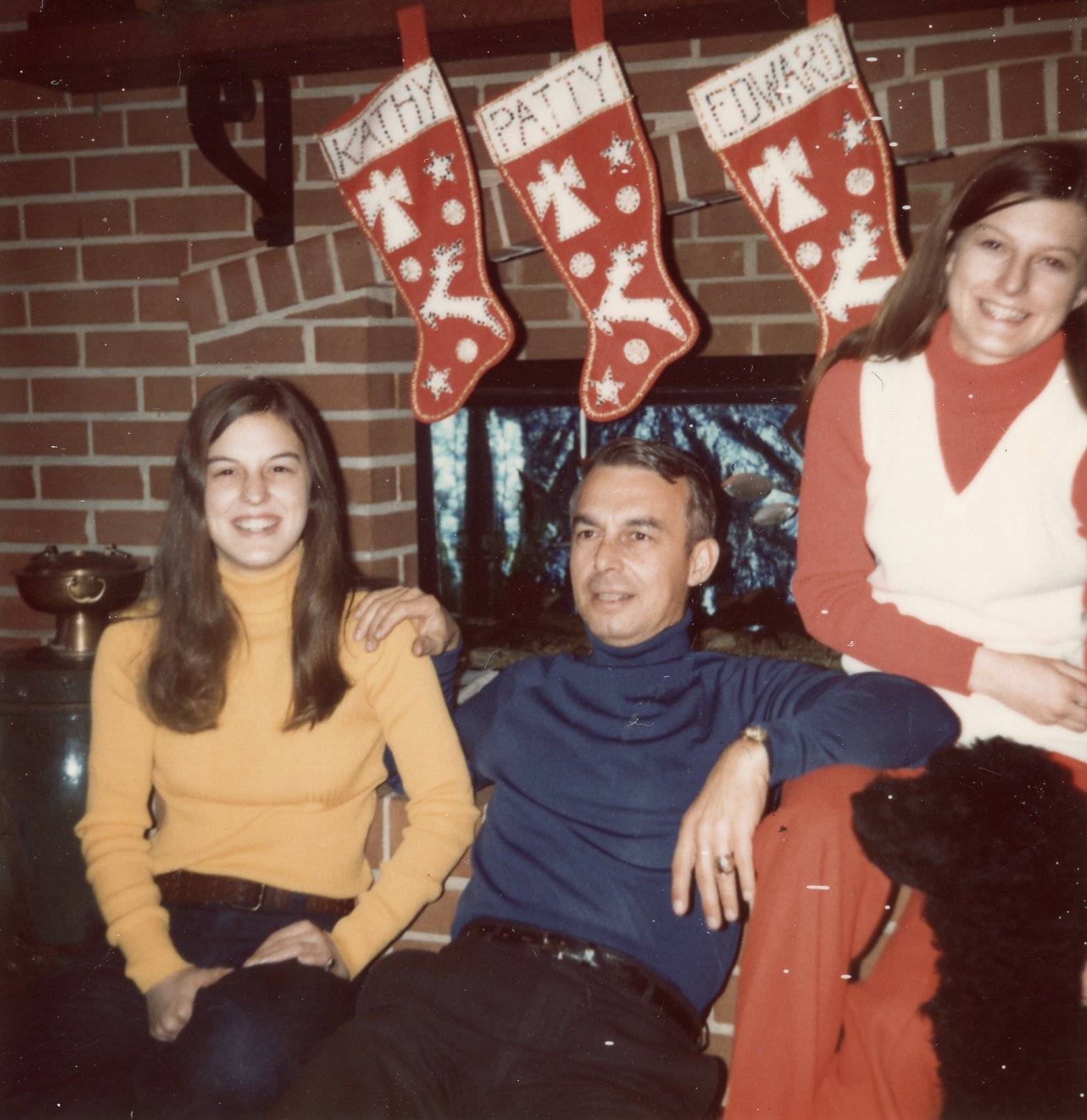
The family would erupt in heated political discussions over family dinners – father and son with staunch conservative views clashing with his oldest daughter and son-in-law with equaling intense liberal views. As a conflict averse middle child, I would wander off to the kitchen to clean dishes rather than participate in a senseless political fray that would never be resolved. No one on either side would ever be able to give an inch on their position. Despite our political differences, we all loved him dearly. His “work hard, save your money” ethic and his sense of honor were ingrained in each of us, and we were made better human beings because of it. Once he returned from vacation and thought the family silverware had been stolen. He filed an insurance claim and was paid. Two years later he found where the “stolen” silver in the house. He had hidden it to prevent its theft, only to forget he had done so. He sent the insurance company an apologetic letter and repaid them in full.
[Photo: Christmas 1975 with his daughters]
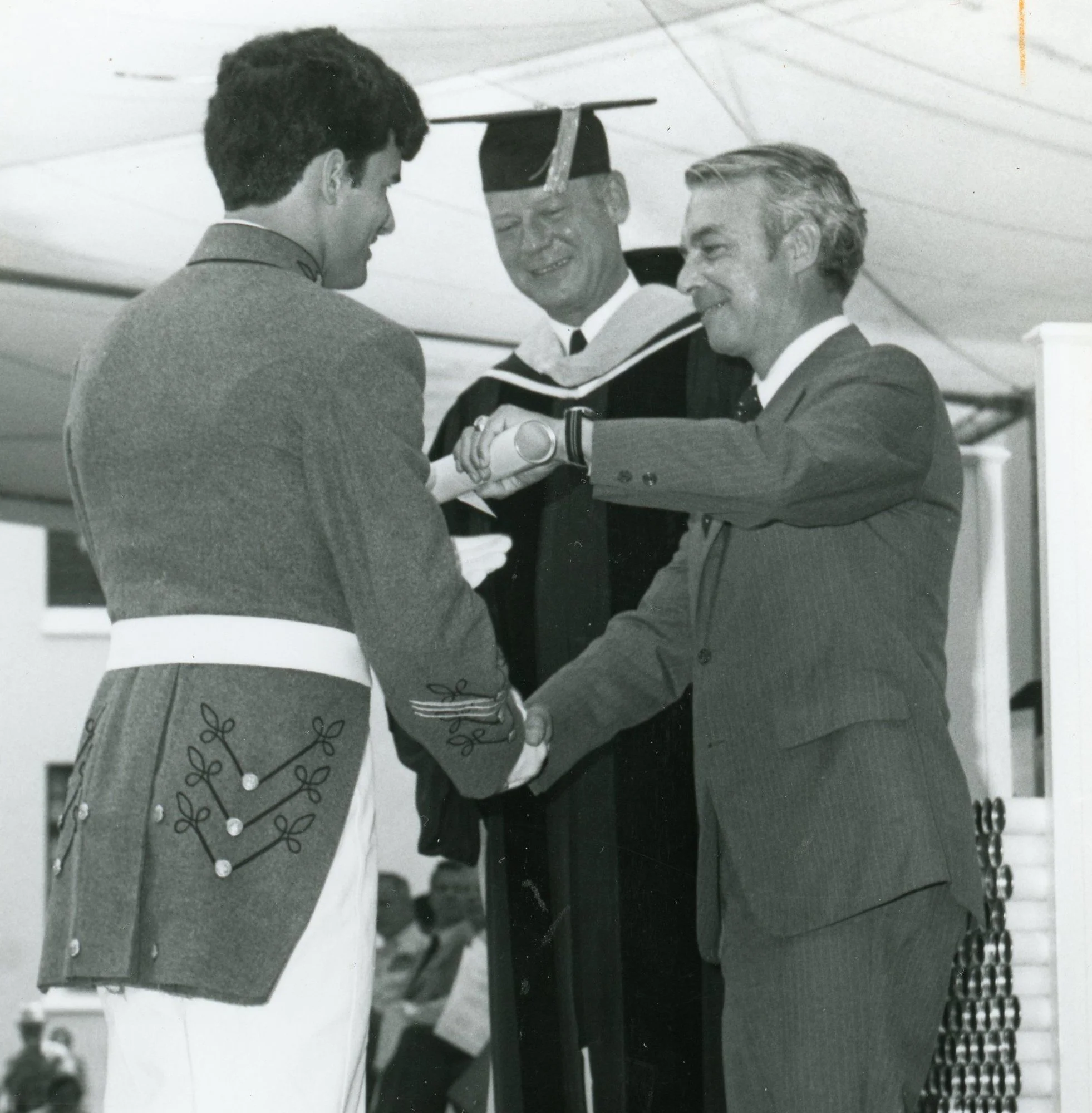
It wasn’t his nature to openly share the love he felt for his children. It wasn’t what his generation did. He never uttered the words “I love you” out loud, which made those rare letters he’d write with the coveted “Love Dad” at the end so very special. The wall in his office at home displayed framed photographs, awards and newspaper articles written about his three children. Kathy getting her law school degree. Me receiving an award for civic service from the governor of New Hampshire. Ed shaking hands with Dad as he received his Citadel diploma. He called it the “wall of fame”. It was his way of sharing the great pride he felt but couldn’t articulate.
[Photo: Dad and Ed at his Citadel Graduation 1977]
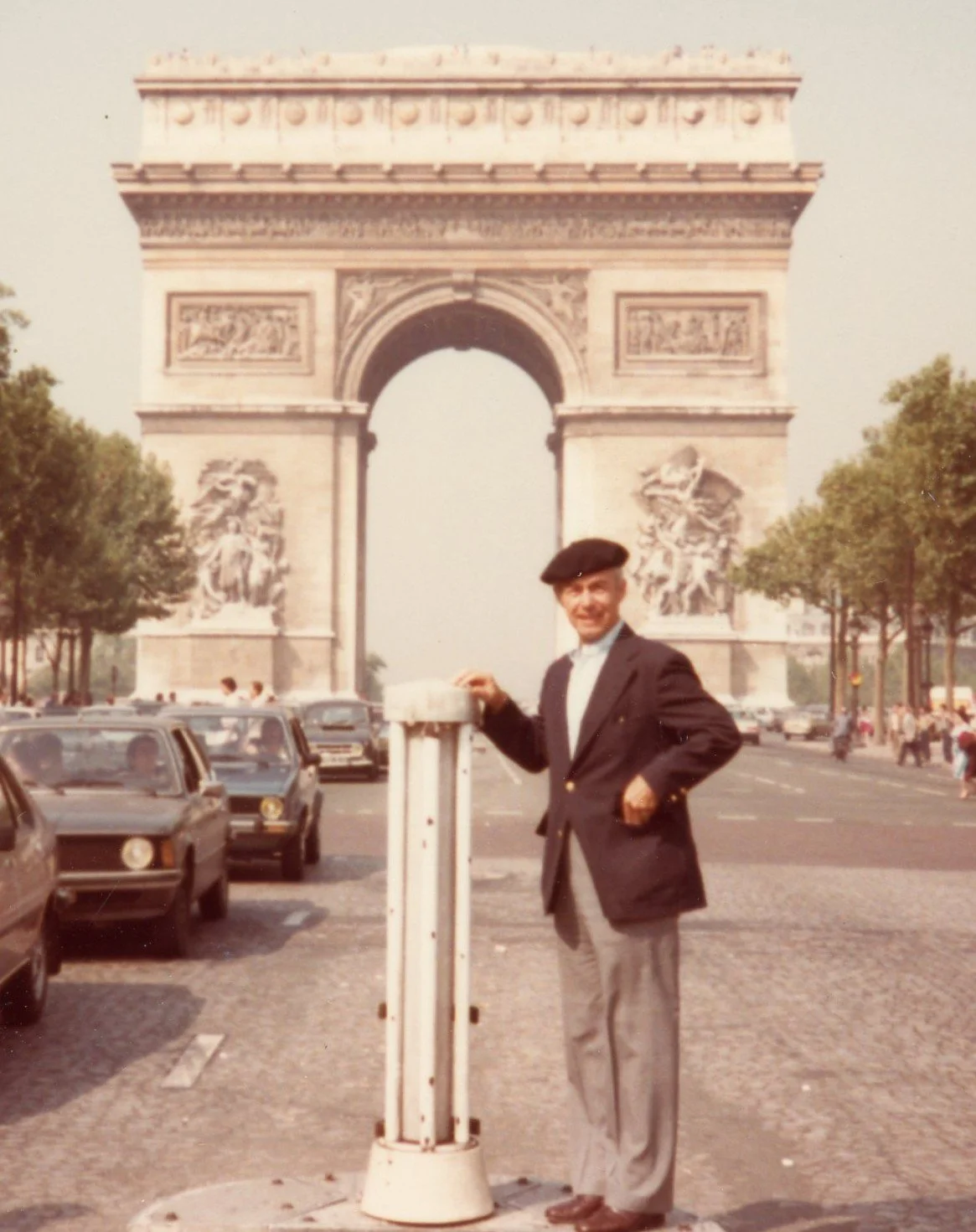
[Photo: Dad pretending he’s French in Paris in 1982]
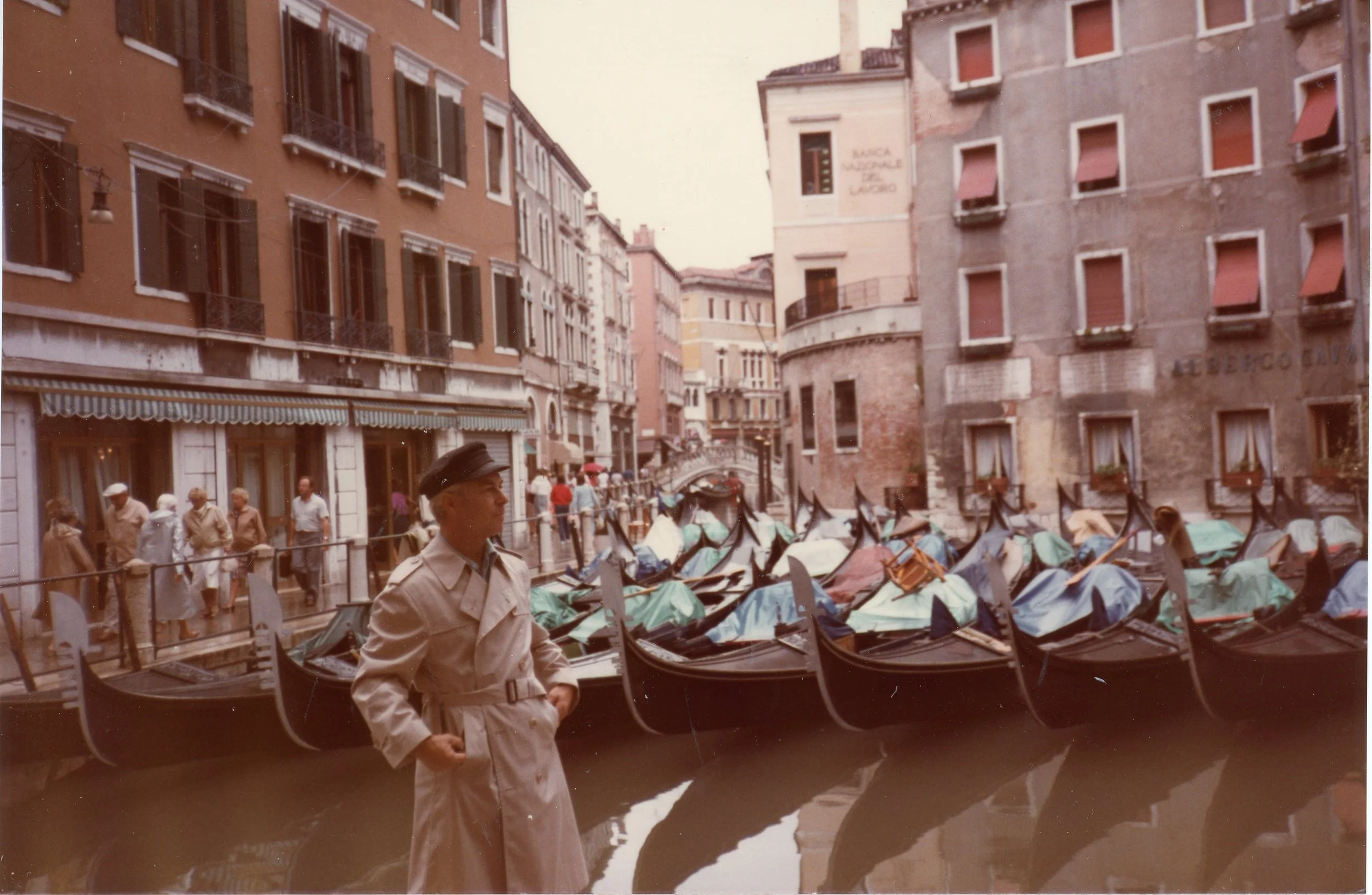
[Photo: Dad in Venice 1981]
In the 1980’s Mom and Dad continued their treks all around the world.
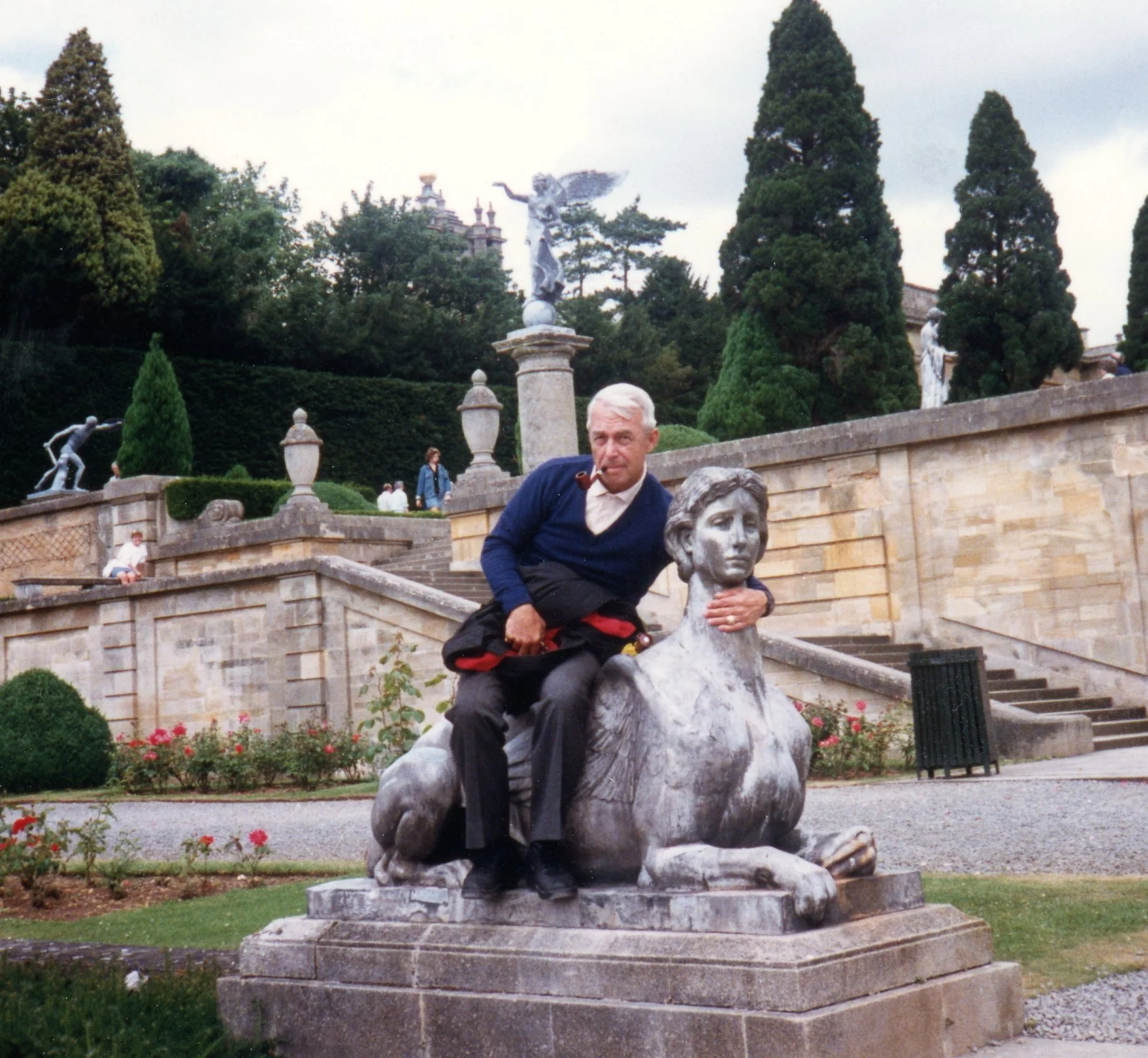
Photo: Dad being goofy in Europe in 1987

As he got older, the Colonel mellowed, the stress of work was behind him, he let go his authoritarian façade and his playful side emerged in full force. He’d don a witch costume at Halloween so he could greet neighborhood kids at the door with candy. He adored his grandchildren - he’d feign terror at the sight of a small stuffed gorilla and let them chase him around the house with it, he’d practiced ballet steps with my daughter and tolerated their raucous banging on the piano. Once he put a small saddle on his back and played bucking bronco with my young son and when his false teeth fell out mid buck we all laughed hysterically. He’d put big bright multi-colored tacky lights on his shrubs at Christmas because he knew the neighbors preferred the tasteful, tiny white ones.
[Photo: Dad dressed as a witch on Halloween]
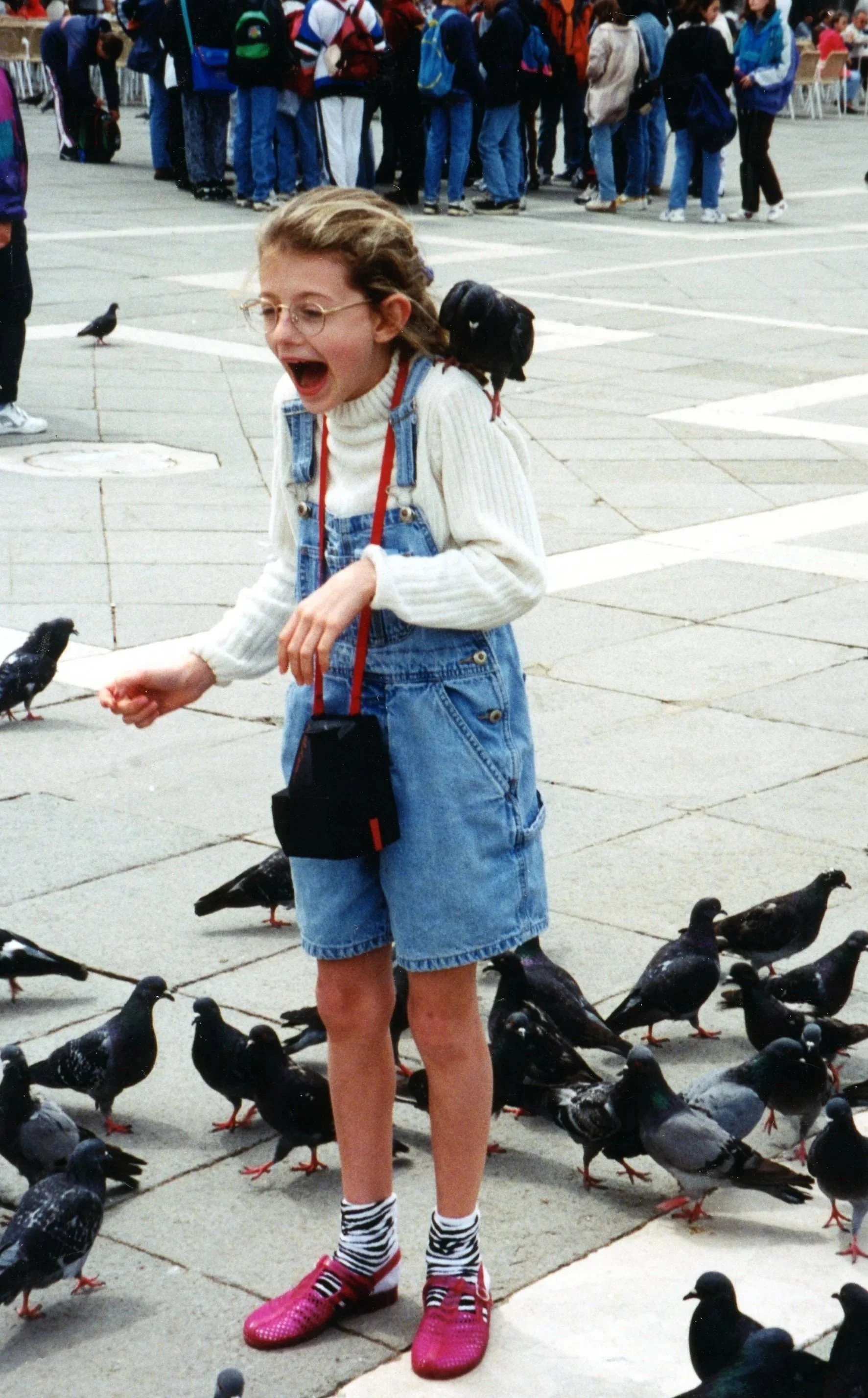
Lindsay in Italy in 1997.
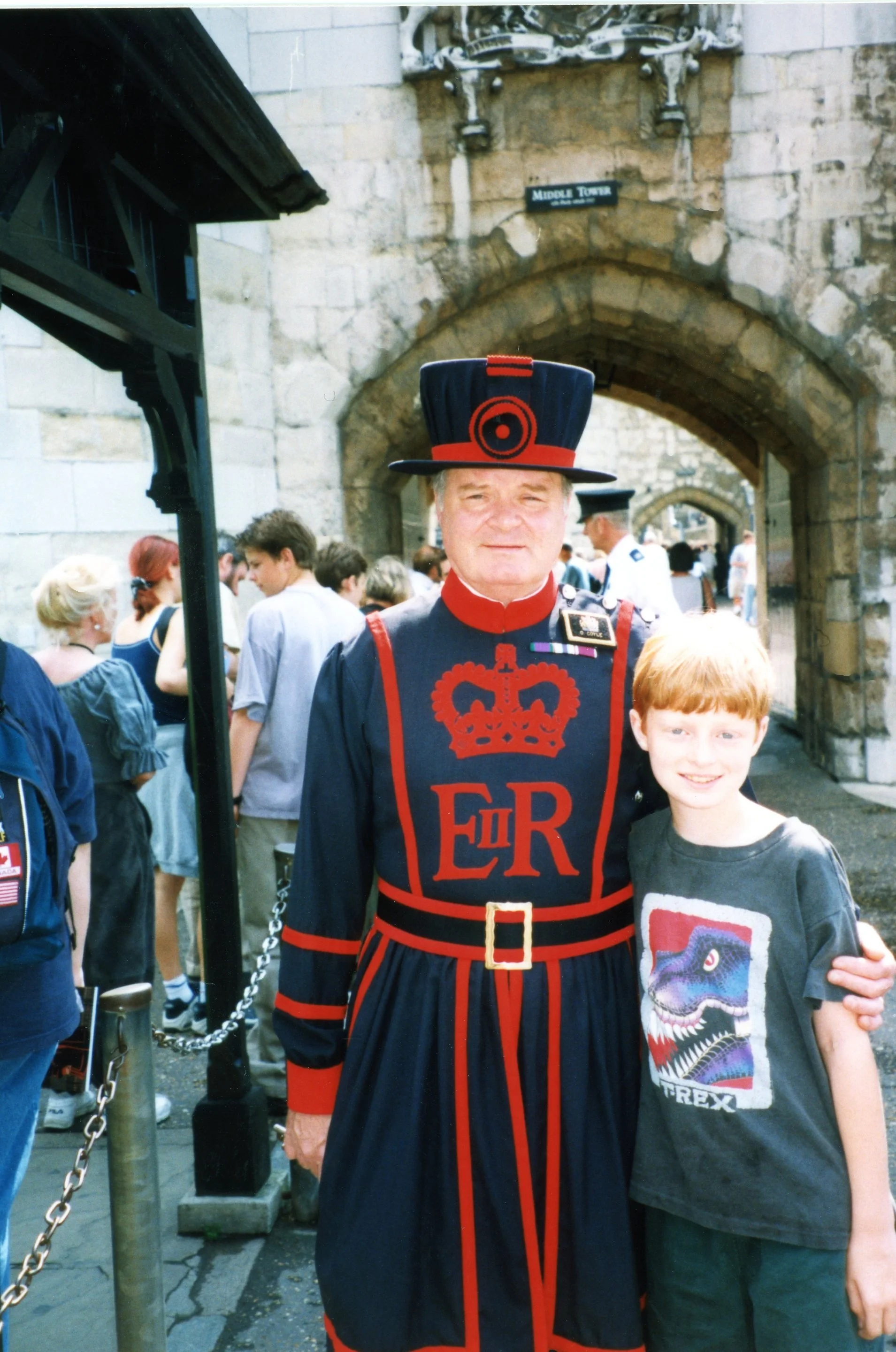
Tyler in London in 1999
Mom and Dad took their three oldest grandchildren to Europe to experience life beyond the American shoreline.

Anna at Ephesus in 2001
In 2002 his tennis game started to noticeably worsen, he became uncharacteristically clumsy and went to see a doctor. The doctor suspected it was ALS but didn’t want to tell him because the diagnosis was so gut wrenchingly horrible. One of my last memories with him was a car trip out to a place along the Potomac River where he claimed if you were patient you could see the eagles. It was a very touching thing to share that makes me tear up every time I think of it. Over the next year, the disease took its toll, and he began to slip away from us. He often quoted an old army ballad: “Old soldiers never die – they just fade away”. And that is exactly what happened. His mind remained sharp, but his body gradually failed him bit by bit.
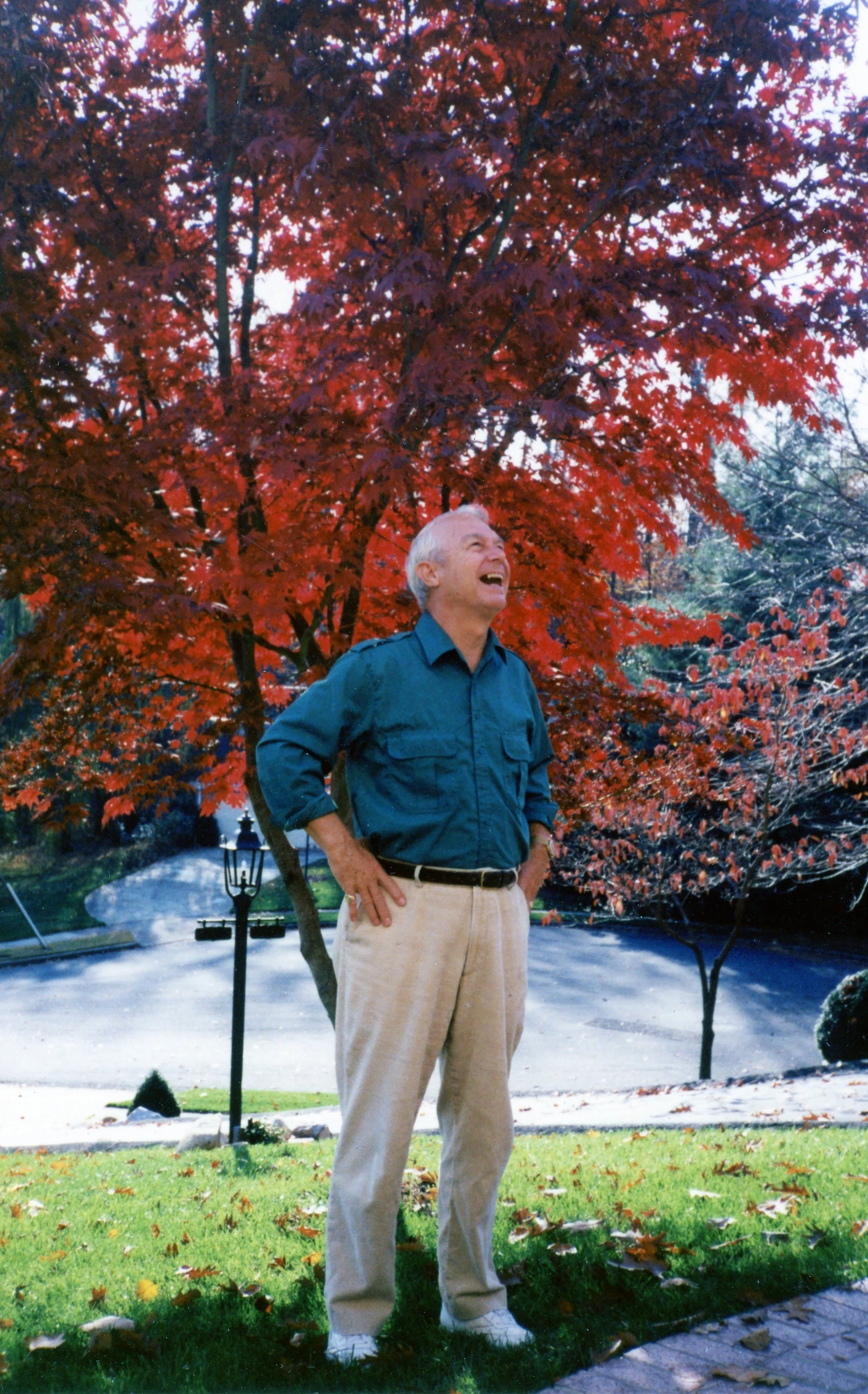
Dad died at the age of 79 on June 17, 2003. He was buried in Arlington Cemetery in a moving ceremony with a 21 gun salute, a haunting taps bugle melody only a military bugler gives true justice to, a precision folded American flag, and a well-deserved thank you for “his honorable and faithful service on behalf of a grateful nation”. He was gone but his spirit lives on in each of his children. One of his favorite expressions was “when the going gets tough, the tough get going.” We took this to heart. We are all overachievers with master’s degrees and successful careers. We are a hardy bunch, made stronger by the mercurial road trip of military life. We have all been involved in civic service. His legacy to us is a strong moral compass, a deep-rooted love of nature and a wanderlust to explore new places.
