Bettie Anna Tillitt (1927-2022)
My Mother, married John Edward Cobb, Jr
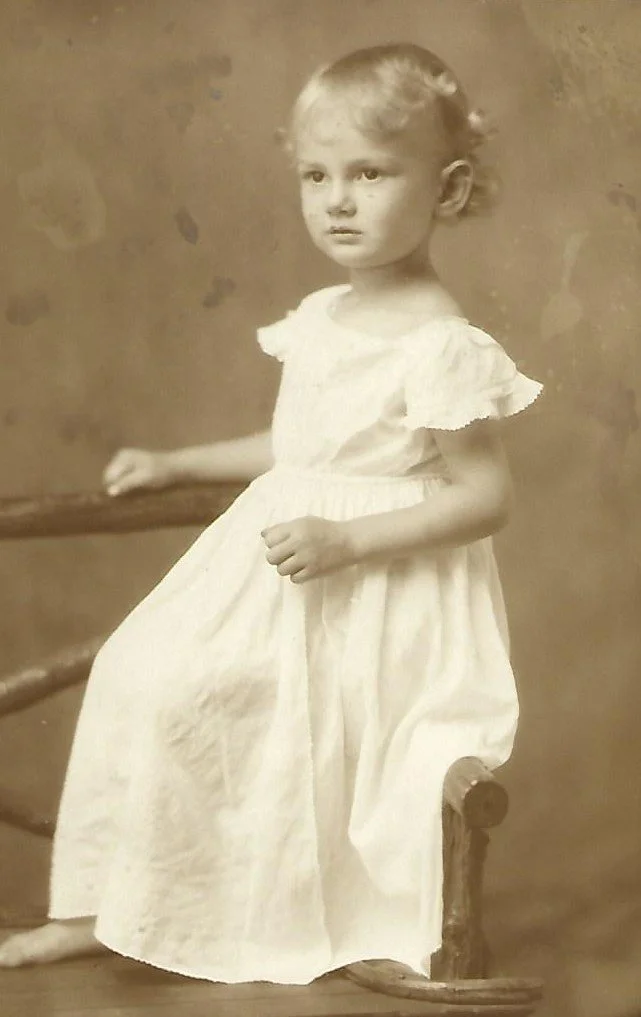
Bettie Anna Tillitt, the only child of Durant Howard Tillitt and Rosa Judson Rodgers, was born in the spare room of their family home on the 17th day of the 7th month in the year 1927 in Andrews, North Carolina, a quiet town in the foothills of the Great Smoky Mountains. Her mother was 34 years old, and her father was 44. She was named for her father’s mother, Bettie Ferebee Sanderlin, and her mother’s mother, Anna Leticia Hearne. Her mother wanted more children, but her father felt he was too old to add to their family.
Bettie Anna enjoyed a privileged life. Her mother was a schoolteacher, and her father was an attorney and the mayor of the town. The family had a maid, who also functioned as a nanny, a yard man and a laundry woman. Bettie Anna recalled that there was one family who was better off than they were – she knew this to be the case because they had a “powder room” in their house whereas Bettie Anna’s house only had one bathroom and that family’s maid wore a uniform and theirs did not. In exchange for her services the maid was paid a whopping $3 per week.
[Photo: Bettie Anna Tillitt Age 3 1930]
When Bettie Anna entered first grade the country was under the dark grip of the Great Depression – kindergarten and 12th grade was eliminated and the school year was cut down from nine months to eight. But for the most part she was not directly impacted by the economic slowdown. The summer after her first year of school, she took a train ride alone to visit her mother who was teaching summer school in Cullowee, North Carolina. Her father pinned her destination on her dress, but she took it off after she boarded the train because: “I knew where I was going!”
One of her favorite past times was the Little Orphan Annie radio show and in the evenings the Amos and Andy show. Despite its small population (less than 2,000 people) the town had a movie theatre and Bettie Anna and her friends shelled out ten cents each for a chance to watch Shirley Temple movies. The town had a public cement swimming pool that had wood around the edges. It leaked and had to be refilled often. Bettie Anna didn’t use the pool very often because she spent her summers with her Aunt Bess splashing around in the river behind Bess’s house. Visits with Aunt Bess were a blast because they tooled around town in Bess’s rickety old Model T Ford, went shopping, called on friends, went to the beach, and had their hair done at the beauty parlor. Life with Bess was full of laughter.
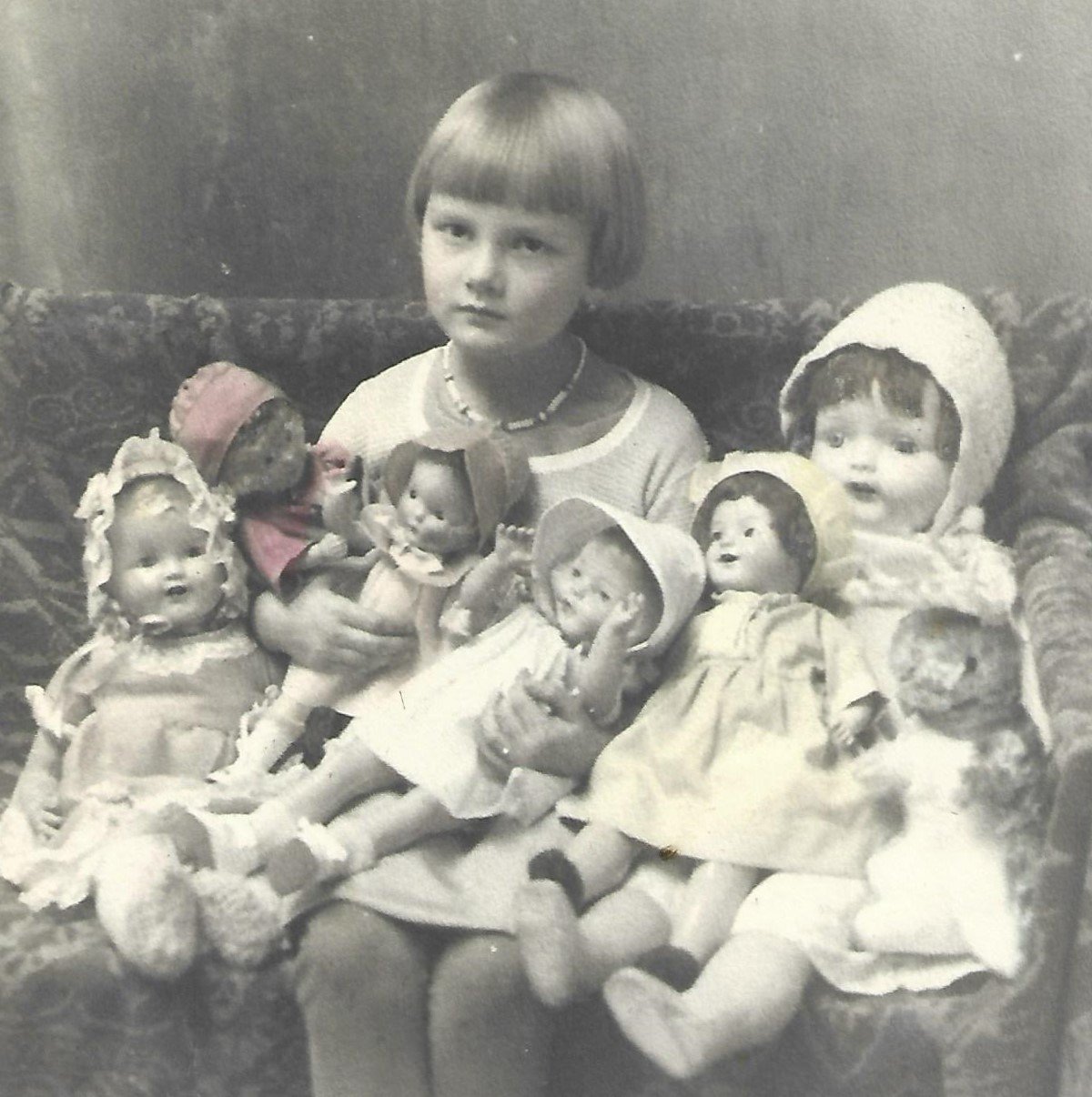
[Photo: Bettie Anna Age 7 with her favorite dolls]
In the mid 1930’s her father worked on the successful democratic North Carolina gubernatorial campaign committee for Clyde R. Hoey and Bettie Anna remembers being present at one of Franklin Roosevelt’s speeches. She was thrilled when Hoey won because she got to attend the inauguration and her mother let her wear knee socks instead of the long cotton tights she hated.
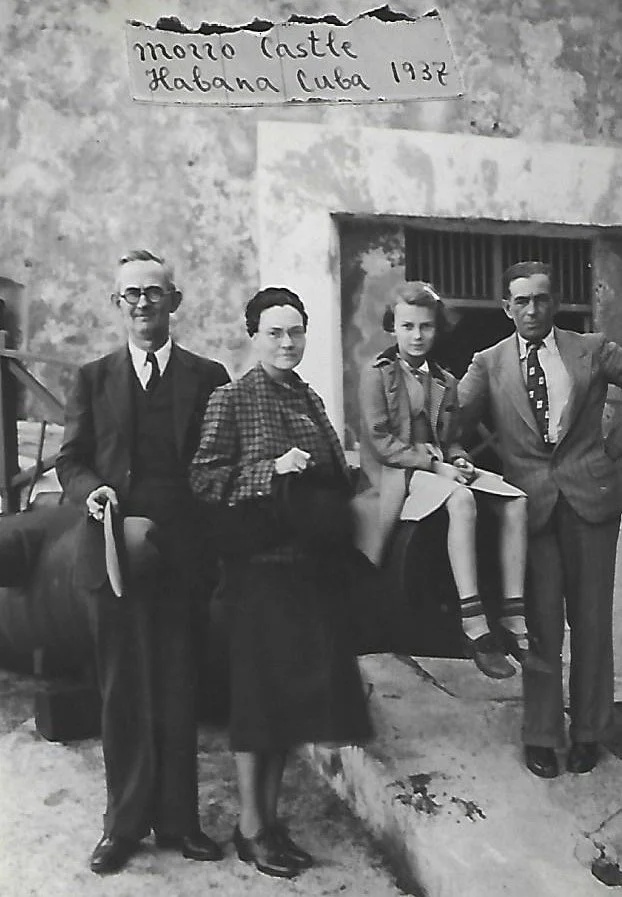
When she was nine years old Bettie Anna accompanied her parents on a trip to Havana, Cuba --her first trip to a foreign country. She was awed by the luxury of traveling in the Pullman car where the dining car boasted china, linen, crystal and finger bowls with floating lemon slices. During her ride through Florida she saw groves of orange trees and date nut palms for the first time. Her father hired a taxi driver who took them around Cuba to see the sights every morning, and at night they sat on the terrace of their hotel and listened to an all-girl orchestra. Bettie Anna developed a crush on the shoeshine boy that polished her father’s shoes, and she dreamed that one day she would return to Cuba and play in the band while the shoeshine boy watched and listened.
[Photo: Tillitt Family in Cuba]
When Bettie Anna was fourteen she went with her mother to Nashville, Tennessee where her mother attended summer school to complete her master’s degree. When her mother reunited with an old boyfriend, Bettie Anna was thrilled at the prospect of having a “new daddy” but unfortunately the relationship did not last the summer.
One day in 1941 as Bettie Anna and her mother were walking home from church, Doc Davis, the town’s pharmacist rushed out of his store to tell them some terrible news: Japan had attacked Pearl Harbor. None of them had any idea where Pearl Harbor was. The next day they tuned in to the radio to hear President Roosevelt’s famous “Day of Infamy” speech. The small town of Andrews took this unfolding of events very seriously. They had air raid drills at which time everyone had to close their curtains to black out the lights so the Germans could not find them if they flew over. Gas was rationed, and so were sugar and shoes. Skirts were shortened so material could be used for uniforms, nylon stockings were impossible to get so women used eyeliner pencils to draw lines down their legs to mimic the look of the real thing.
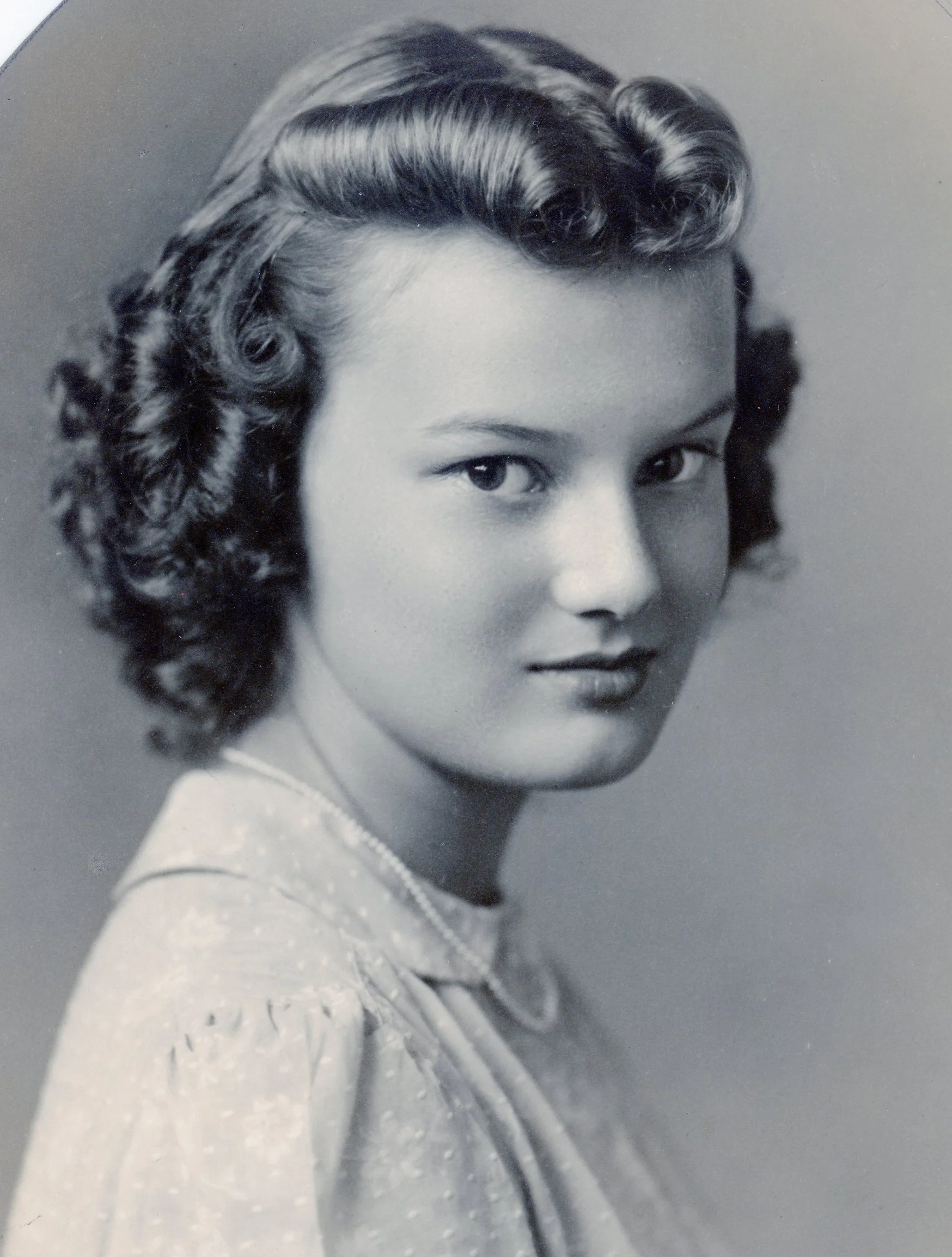
{Photo: Bettie Anna as a young teenager]

Bettie Anna had a high school boyfriend named Lonnie Turnipseed, and as a token of his affection he gave her his ID bracelet (all the boys had them and all the girls wanted one). Lonnie visited Mexico and bought her black market stockings, but they were mismatched and didn’t fit right. When he graduated he went off to join the navy. His first paycheck was $3, and he gave one dollar of it to his mother and one dollar to Bettie Anna. On Bettie Anna’s dollar bill he signed “Love Lonnie”. Later in life, Lonnie became a missionary in Hong Kong.
In 1945, the year the Japanese surrendered, Bettie Anna started college. Her mother had to drop her off at college one day early because of a work commitment (her job always came first, lamented her daughter). To compensate for not being there when all the other mothers arrived, she bought Bettie Anna a much coveted pair of slippers. Bettie Anna wanted to be like everyone else, and no-one at college was called by their first and middle name so she dropped Anna and became just Bettie. The long distance did not bode well for her romance with Lonnie. They split up amicably and he asked her to return the bracelet.
[Photo: Bettie Anna’s High School boyfriend Lonnie Turnipseed]
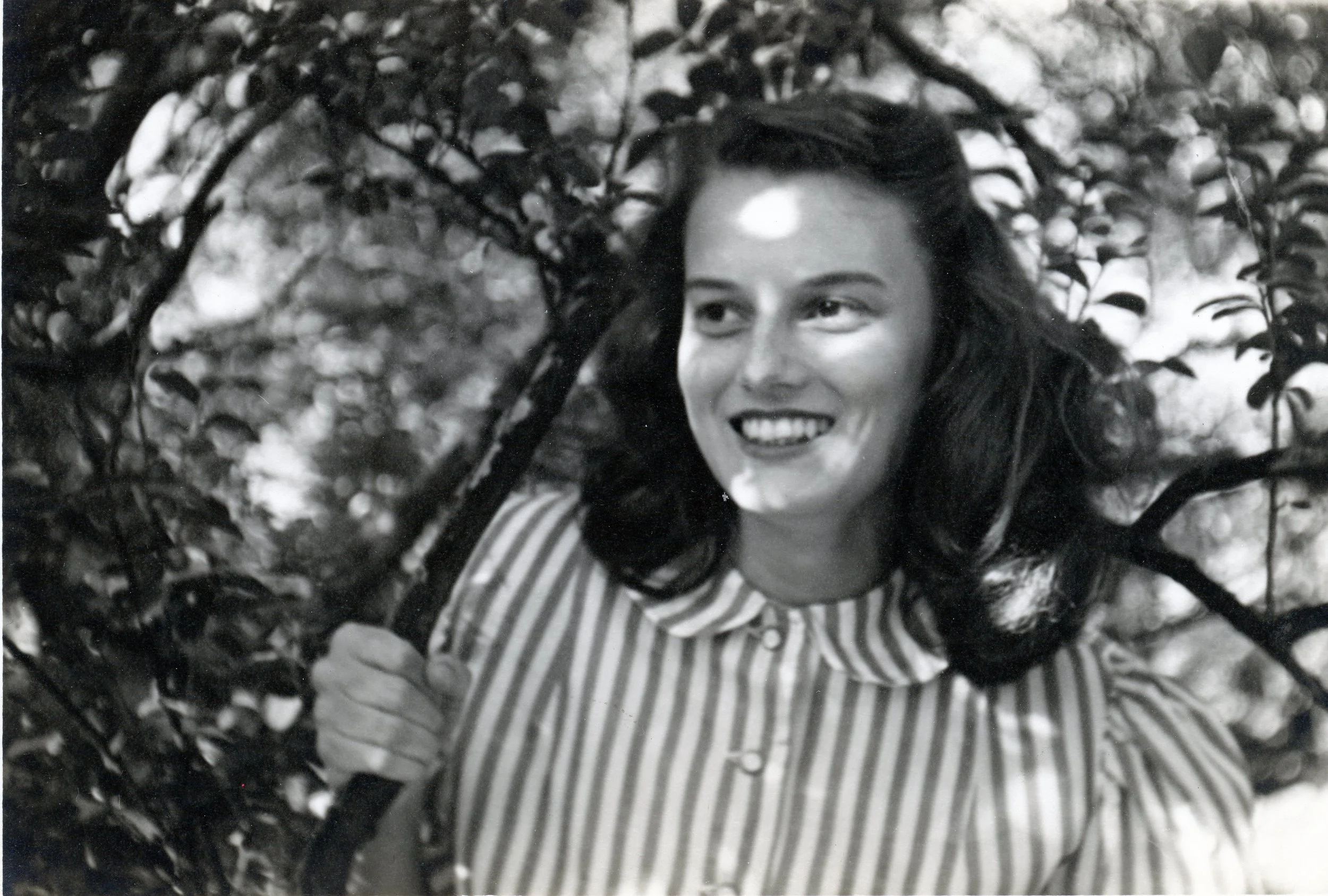
For the first two years Bettie attended the Women’s College in Greensboro, North Carolina and then transferred to the University of North Carolina at Chapel Hill her junior year (she couldn’t attend sooner because they had no girls dorms). She majored in chemistry because she thought it would help her get a job. Her ever generous Uncle Gordon helped her mother pay the cost of her college education. College was strict in those days -- you had to be in your dorm room by 7:30 PM and at 11:00 it was lights out. No men were allowed in the dorm. If Bettie studied late she used a flashlight under her covers. Once she recalls her strict dorm mother berated her for not wearing stockings to church.
[Photo: Bettie at UNC in Greensboro in 1946]
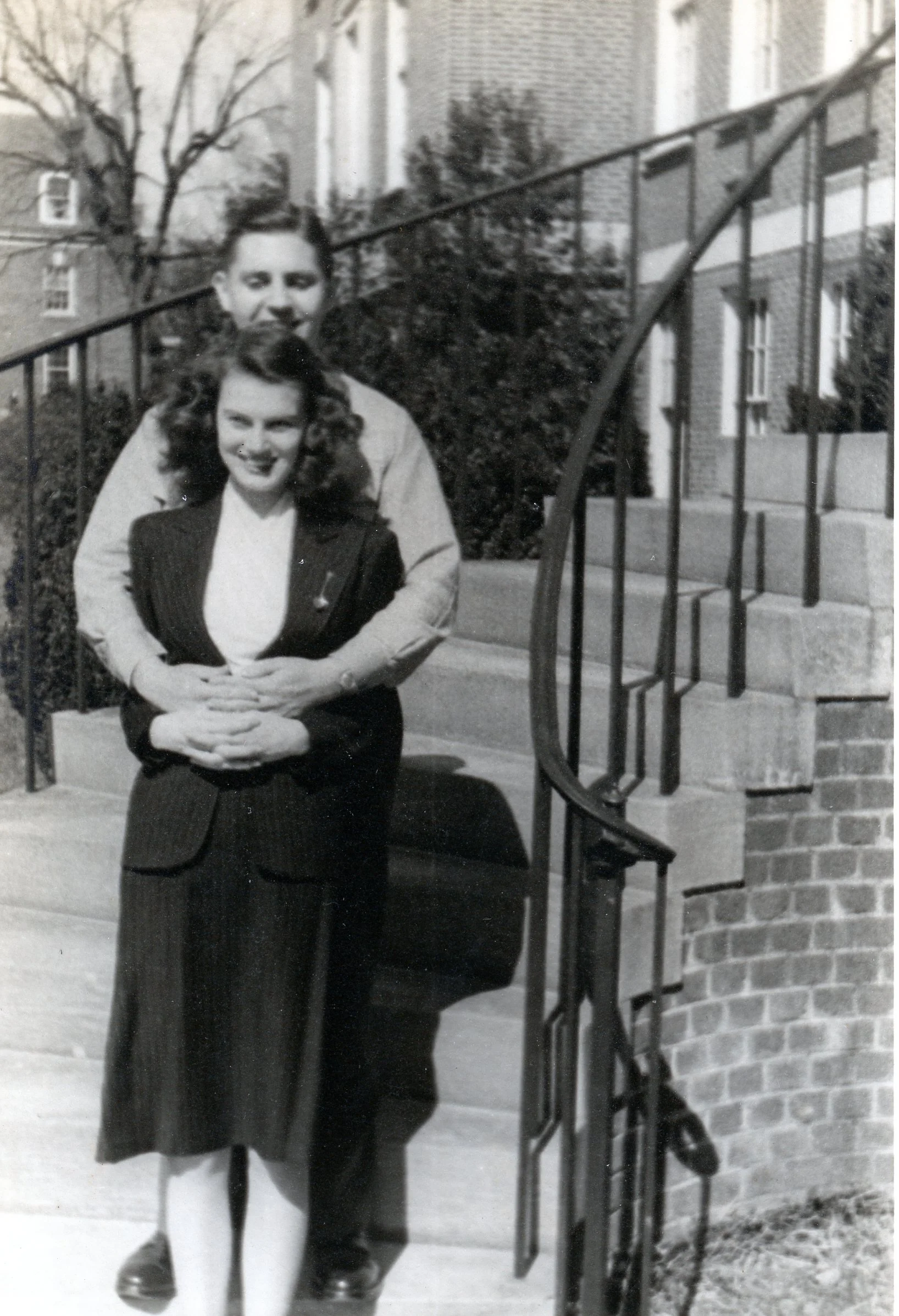
At summer school between her freshman and sophomore year Bettie fell in love with Morris Jenkins (“Jinx”). Jinx was a marine in the officer candidate program at Chapel Hill. His military service had been deferred until he completed college. He would drive to visit her every weekend and the boarding house where he stayed liked him so much they stopped charging him rent. She was eighteen when he proposed to her, but their marriage plans were dashed because he was Jewish, and she was Protestant. His parents said they would disown him if he married a gentile, and her mother told her she would cut off all of her college tuition and housing payments. Although they stopped seeing each other when he did eventually marry someone else, he sent her a wedding invitation that said, “I will never stop loving you.”
[Photo: Bettie and Jinx in 1946]
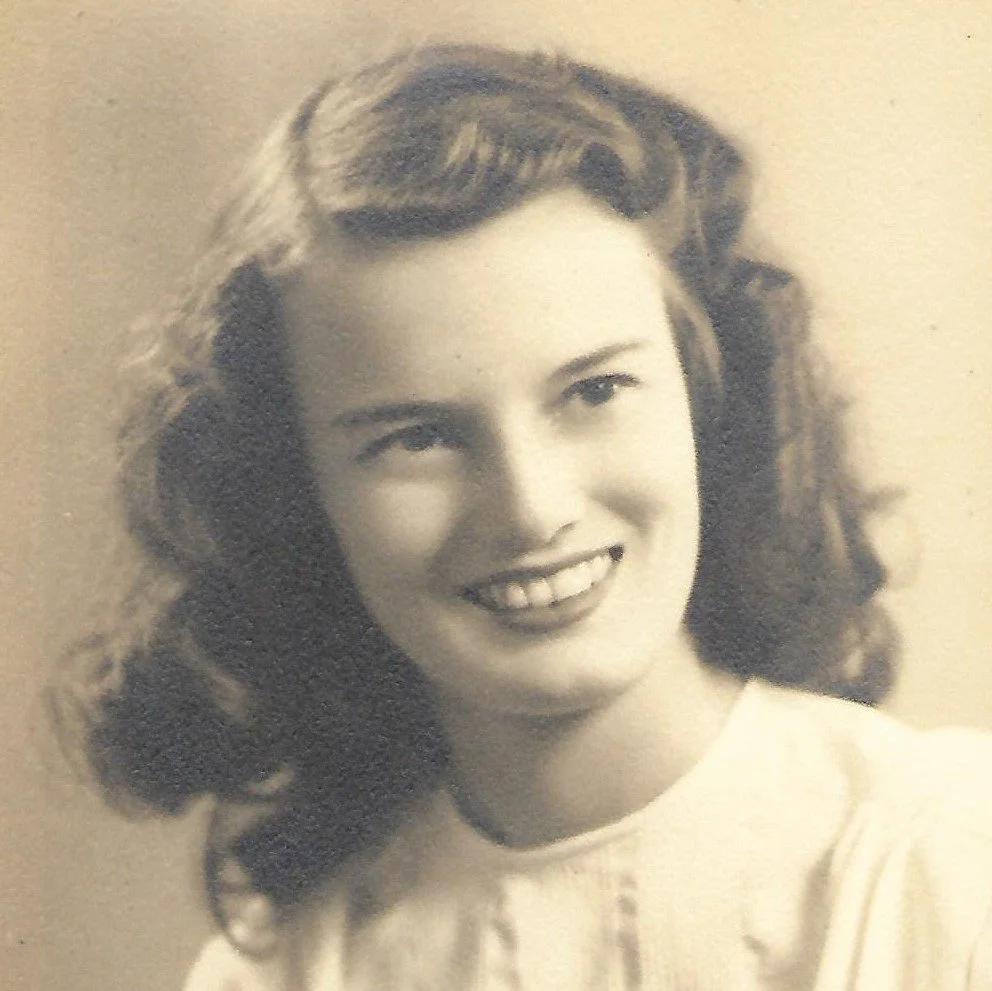
After the war, young soldiers trickled back home from the war and attended college paid for by the GI Bill. After Jinx, Bettie dated a young man named Tommy who had been a fighter pilot. Her last year of college, she dated Jack Swift, who had been a bombardier. Swift had aspirations for medical school, and proclaimed he was only interested in a wife who was a nurse. The relationship ended when Bettie graduated. (He became an orthopedic surgeon, married a nurse, had six children and lived in a house he humorously called “Bone Acres”.) Her Uncle Phillip (Aunt Bess’s husband) had promised that if she didn’t smoke or drink in college, upon graduation he would reward her with a fur coat. She kept her side of the bargain and so did Uncle Phillip.
[Photo: Bettie from her UNC Chapel Hill Year Book Photo]
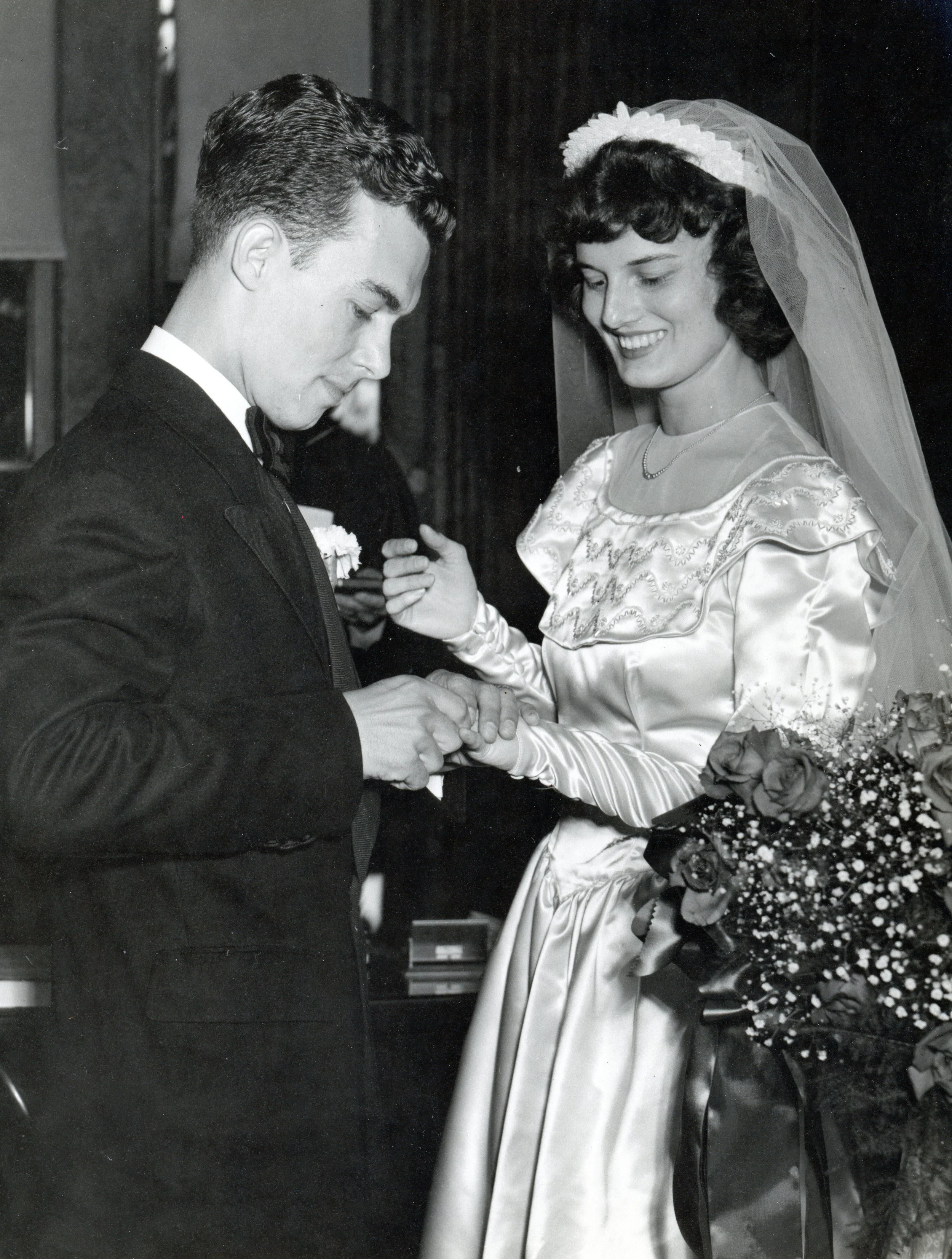
After having to work her way through college, Rosa was adamant that her daughter would not have to do so. After college Bettie got her very first job working for DuPont in the nylon research department for $300 a month. While working there she met John Edward Cobb, Jr (“Jack”), who worked as a technical representative for DuPont. He asked her out for lunch and was so smitten by her that he proposed to her in the parking lot of a fancy restaurant called the Old Mill a month after they started dating.
She saw her first commercial television set when she was on a date with him in the fall of 1948. Two months later at Christmas he gave her a wedding ring and she celebrated with him by having her first alcoholic beverage – a Manhattan. The couple wasted no time, nine months after they met, they married on June 11, 1949. She was 21 and he was 25. He owned a tan mercury convertible and with their combined salary (he made $60 per month more than her) they were able to pay off the car loan. They settled down to married life in a one bedroom apartment on the outskirts of Wilmington, Delaware.
[Photo: Bettie and Jack tie the knot in 1949]
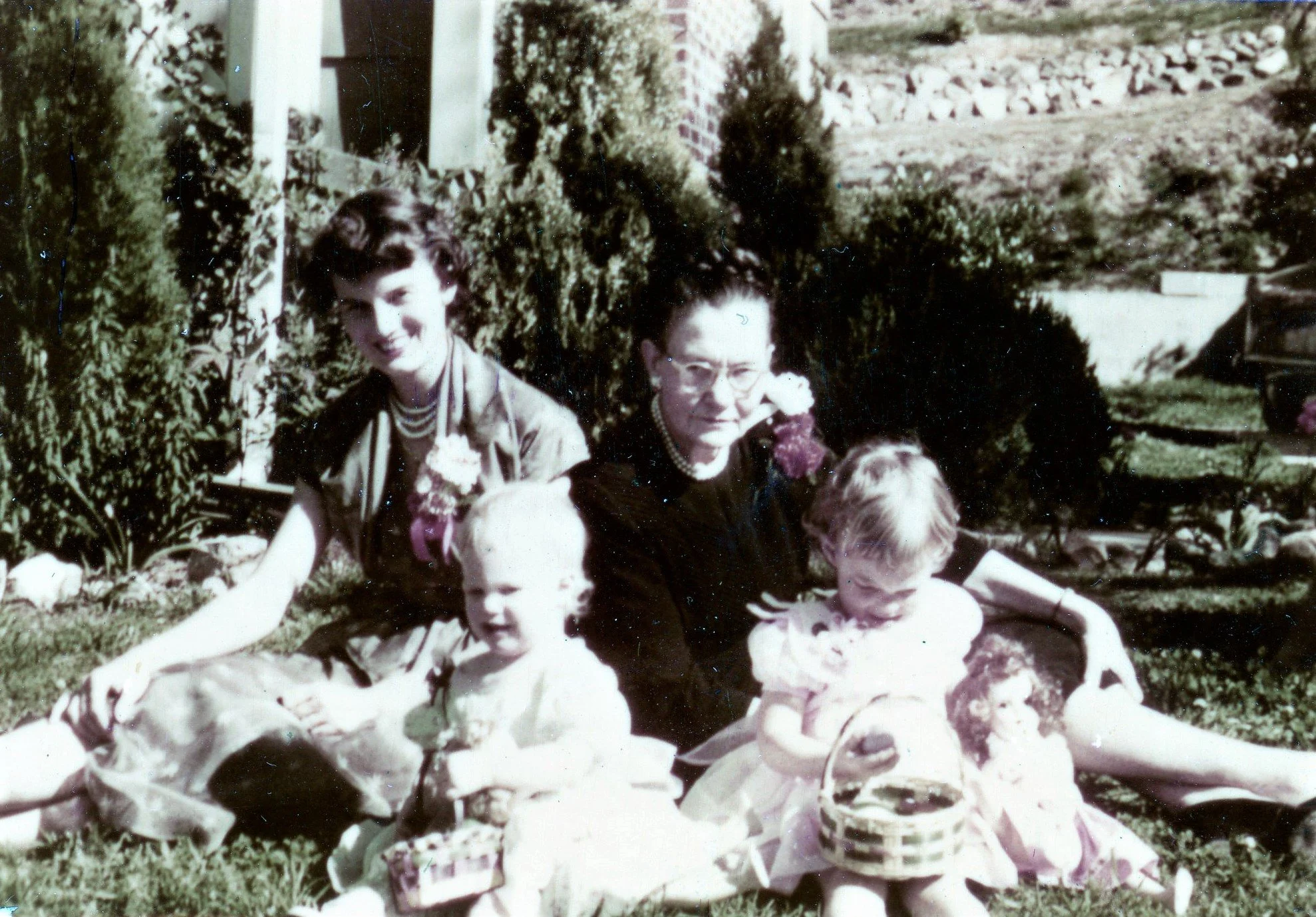
A year later, the couple bought their first house in New Castle Delaware for $9,995 (priced under $10,000 to allow veterans to obtain “no down payment” loans). Jack had stayed in the army reserves after his service in World War II and was called back into active duty when the Korean War started. Bye-bye DuPont and hello military wife. The army assigned Jack to a job in Maryland and every day he would commute 50 miles back to Bettie who was pregnant with their first child and wanted to stay in Delaware to be close to her obstetrician. Bettie gave birth to a baby girl, Katharine Tillitt, and when the baby was four weeks old, Bettie joined her husband in Maryland. The army assigned Jack to another post (Fort McClellan, Alabama) where their second daughter, Patricia Grant, was born. Patricia was named after Jack’s cousin, Mary Grant Spivey. The Spivey family had taken in Jack’s father and brother Tom when they were orphaned.
[Photo: Bettie, Grandma Rosa Tillitt, Patty, and Kathy celebrate Easter in 1954 in Anniston, Alabama.]
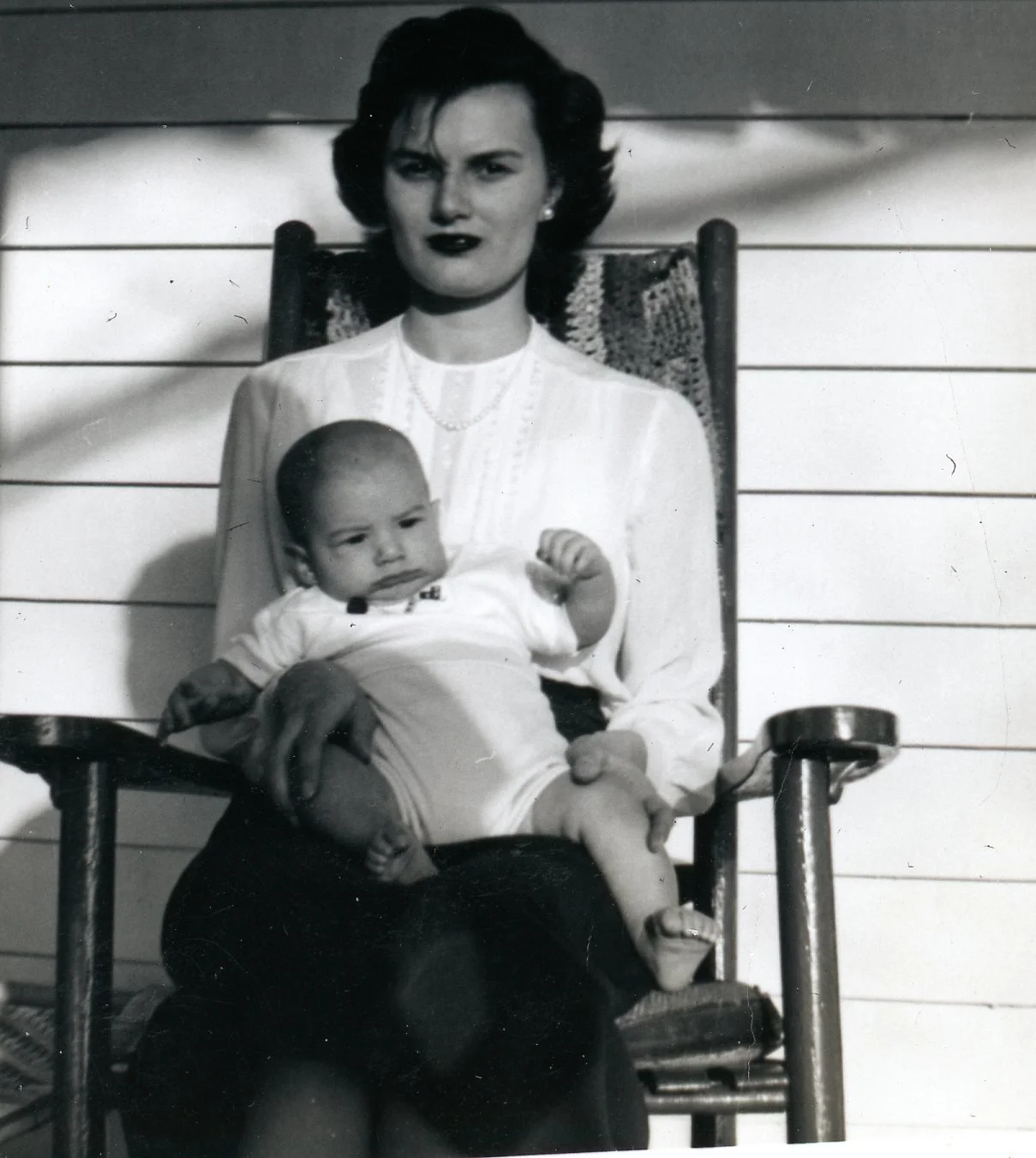
Bettie was pregnant with their son, John Edward Cobb III, when Jack was sent to Korea in September of 1954. The family moved in with Bettie’s mother Rosa in Durham, North Carolina where little Eddie was born. Five days later the birth announcement reached Jack via the Red Cross. Jack sent a postcard back from Pusan, Korea which read: “Happy to hear about the new son - He’s going to have a rough go of it with two sisters.” Bettie was an only child but Jack had grown up with two sisters so he knew just what his son was in for.
[Photo: Bettie with Eddie in September of 1954 in Durham, NC]

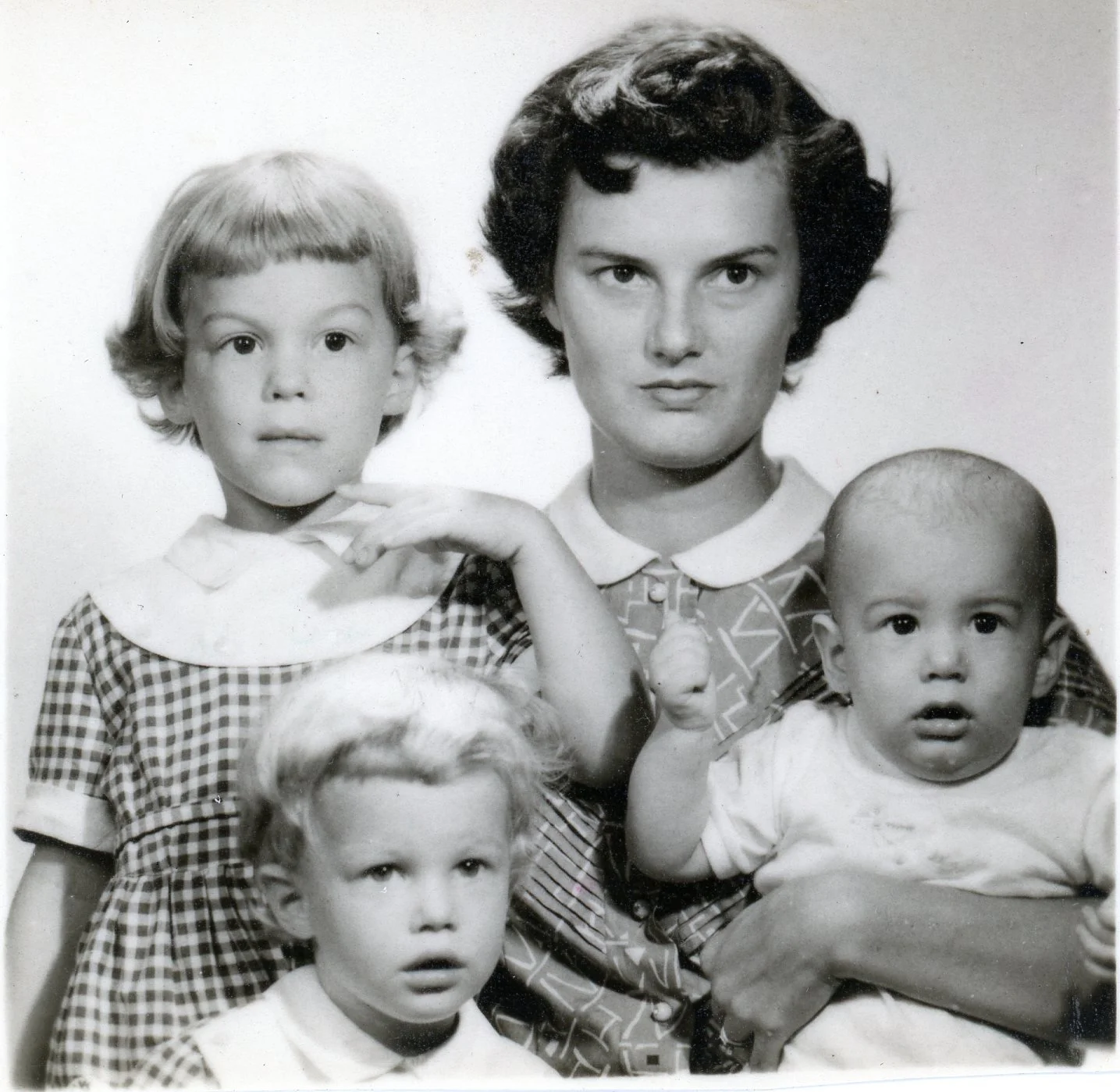
Jack’s next army assignment was Japan. He flew back to North Carolina, loaded his wife and three youngsters under the age of four into a station wagon and drove them across the country to San Francisco where they all boarded a military ship for the sixteen day journey to Tokyo. What a nightmare that must have been.
[Photo: Family Passport taken before journey to Japan. ]
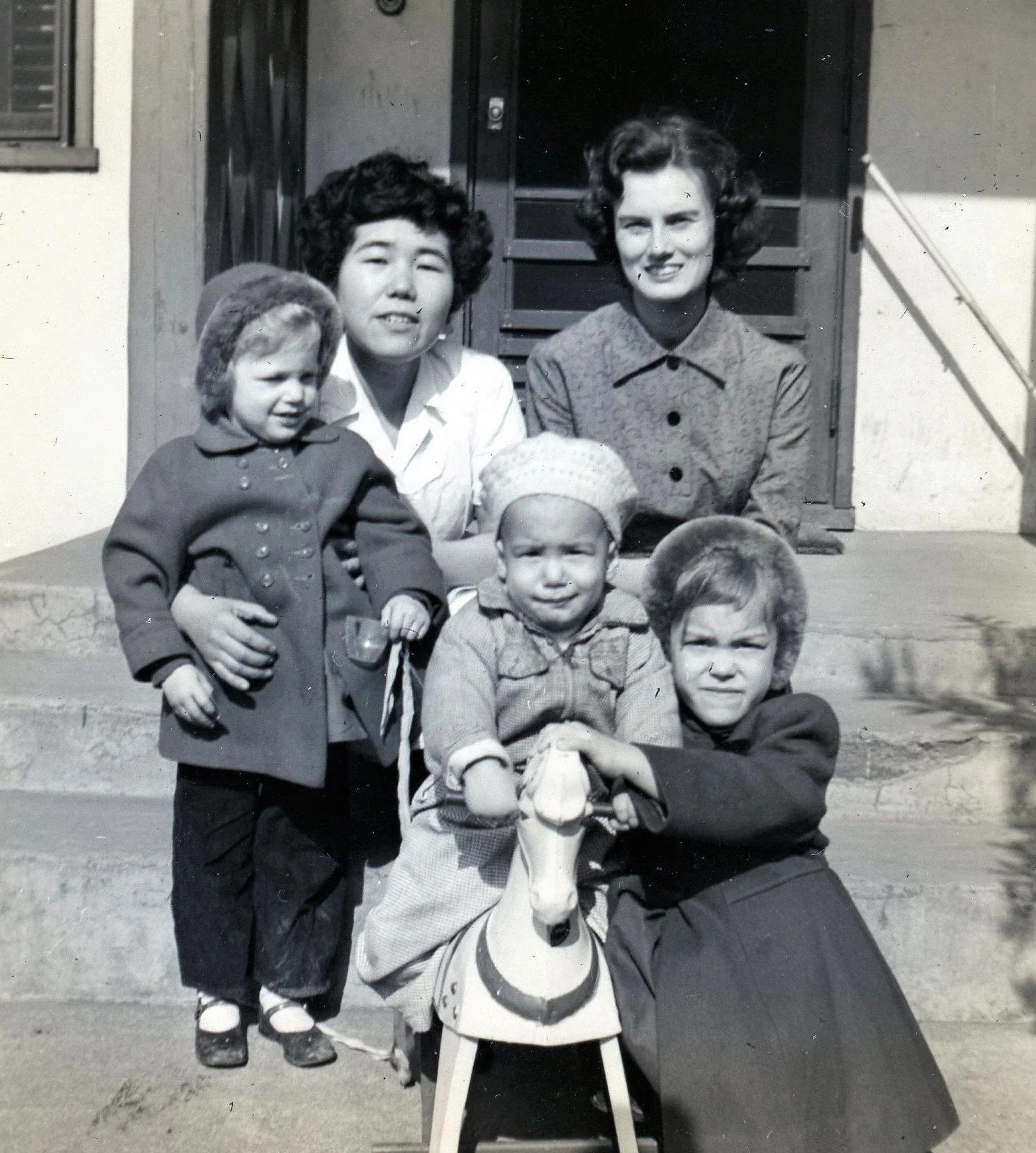
Life in Japan was made easier for Bettie because she hired a live-in teenaged Japanese maid named Sheishiko who worked six days a week for $27 per month. Japanese revere male children and Sheishiko spoiled Eddie so much, Bettie thought he was out of control. In Japan the family experienced its first earthquake. The maid scooped up Eddie and stood in the doorway while the building shook to protect him and ignored Bettie and her daughters. Fortunately, no one was hurt.
Bettie tried to make life as normal as possible. Once she took her children to a Japanese movie theatre that was featuring “101 Dalmatians” however except for the musical score, the movie was shown in dubbed in Japanese.
[Photo: Family photo with Sheishiko in 1956]
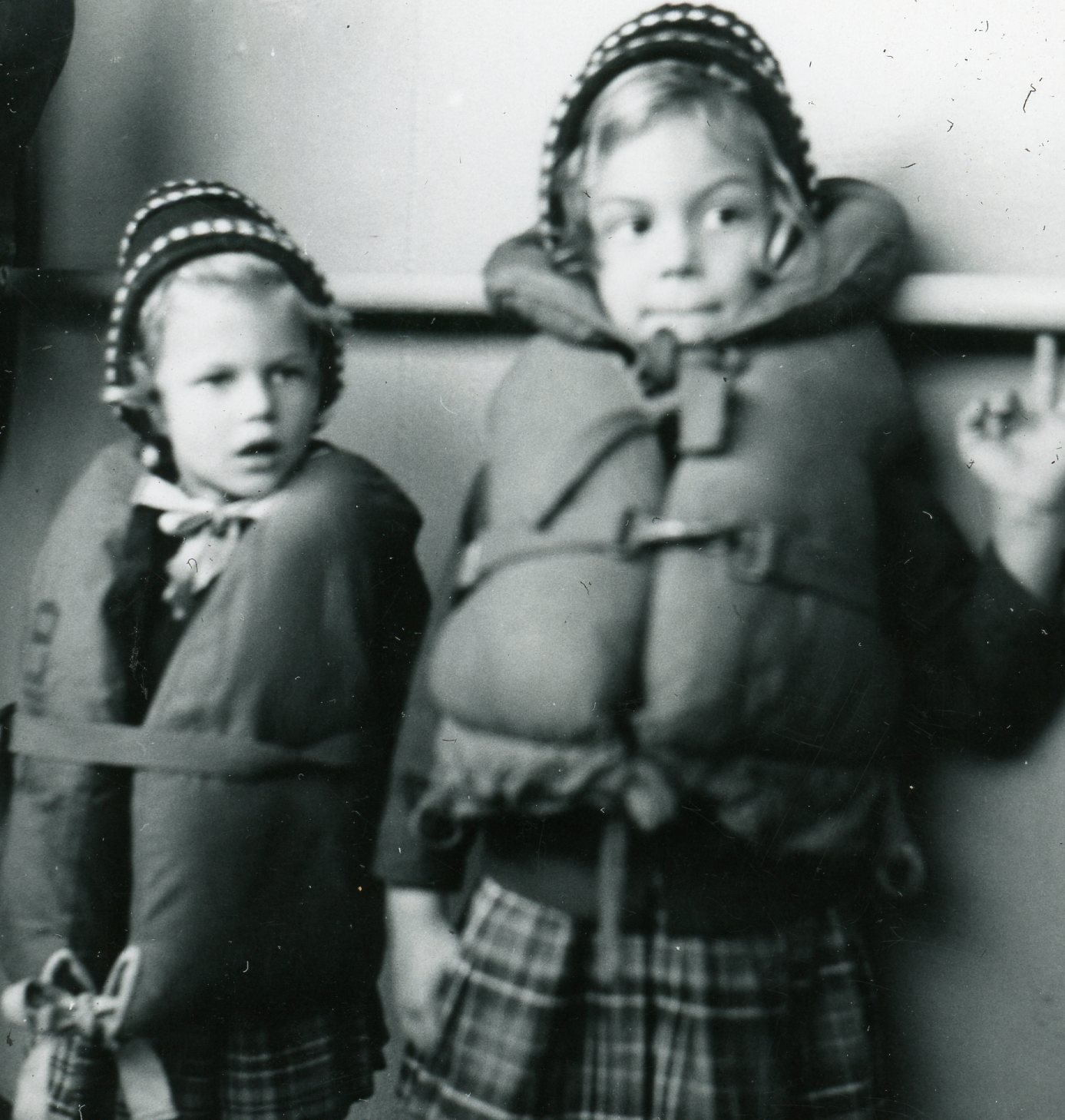
The Family left Japan in 1956, the military ship was not designed for children so they had to wear adult sized life preservers during the mandatory safety drills on deck.
[Photo: Patty and Kathy the military ship Morton in 1956]
In the fall of 1956 it was off to San Marcos, Texas for six months and then six months in Ozark, Alabama so her husband could train to be a pilot, followed by a one year stint in Fort Eustis, Virginia for transportation school. In January of 1958 it was off to St Louis, Missouri and in September of 1959 Fort Leavenworth, Kansas.
Life on military bases during the cold war meant her children had to participate in practice evacuation drills. In the event of an attack by the Russians they were taught to hide under desks, and they had lockers at school with scratchy military blankets and Hershey candy bars in case they had to remain in shelter for a longer period of time. Army wives were told in case of attack they could not depend on their husbands who would be busy protecting the country. It was their job to take care of the family and fend for themselves.
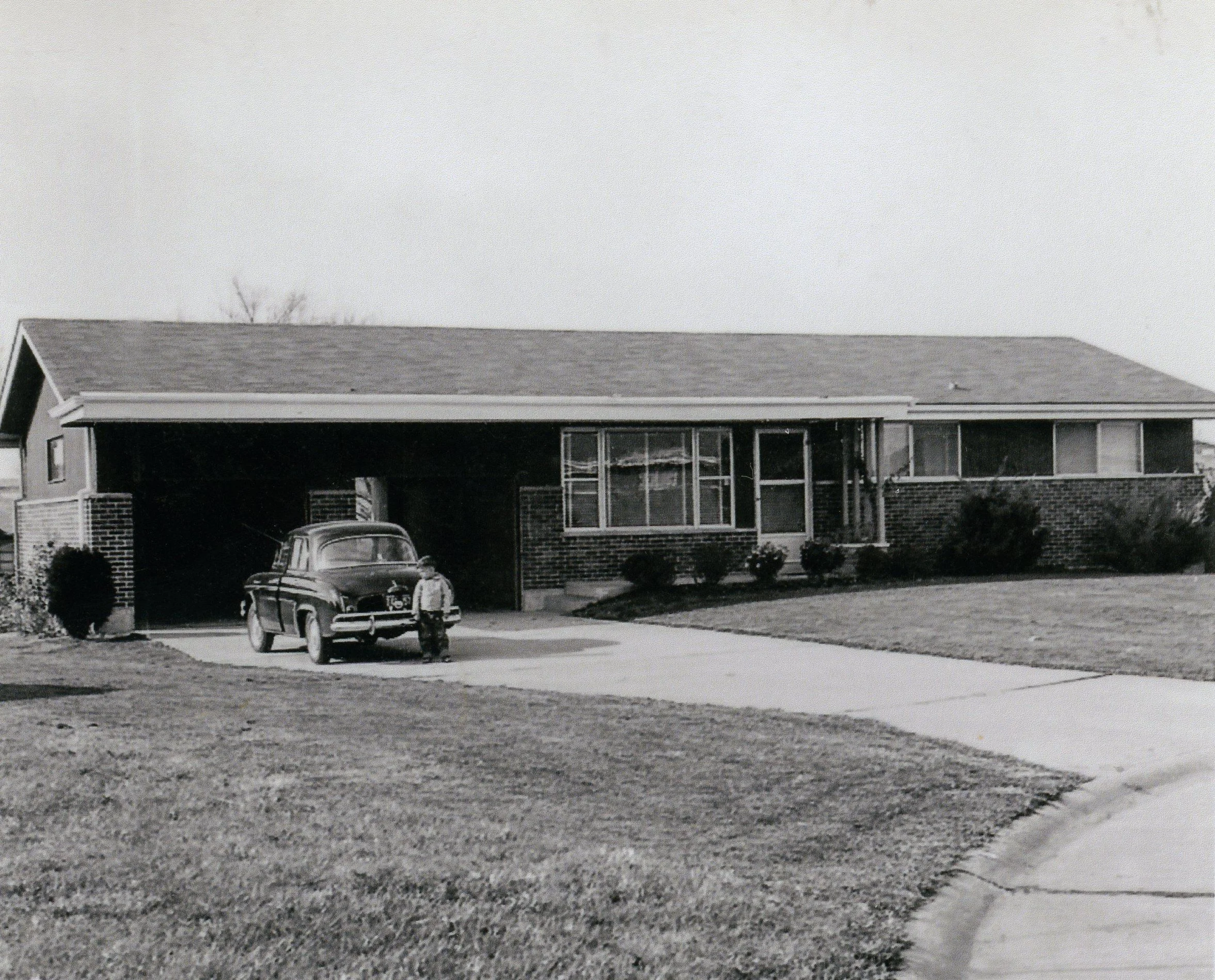
[Photo:Cobb family home on 9923 Cambria Court, Louis, MO in 1958]
In 1960 Jack was transferred back to Fort Eustis, Virginia where they bought a home off base in Denbigh, Virginia. One week after they bought the house, a hurricane swept through the area. Bettie told her children to take their pillows and blankets and sleep downstairs in the living room where it would be safer. In the middle of the night the tree outside her daughters’ upstairs bedroom snapped in two. Her son had nightmares about the storm and days later was found sleepwalking down the halls repeatedly saying, “a hurricane came, and it boomed down the trees and it boomed down the leaves….”
In the summer of 1963 the family was back in Texas for three months, this time Fort Wells, so Jack could learn to fly helicopters. Always packing, unpacking, making friends, losing friends, no control over the next destination, no possibility of having her own career. Many wives could not withstand the pressure, but Bettie was very resilient.
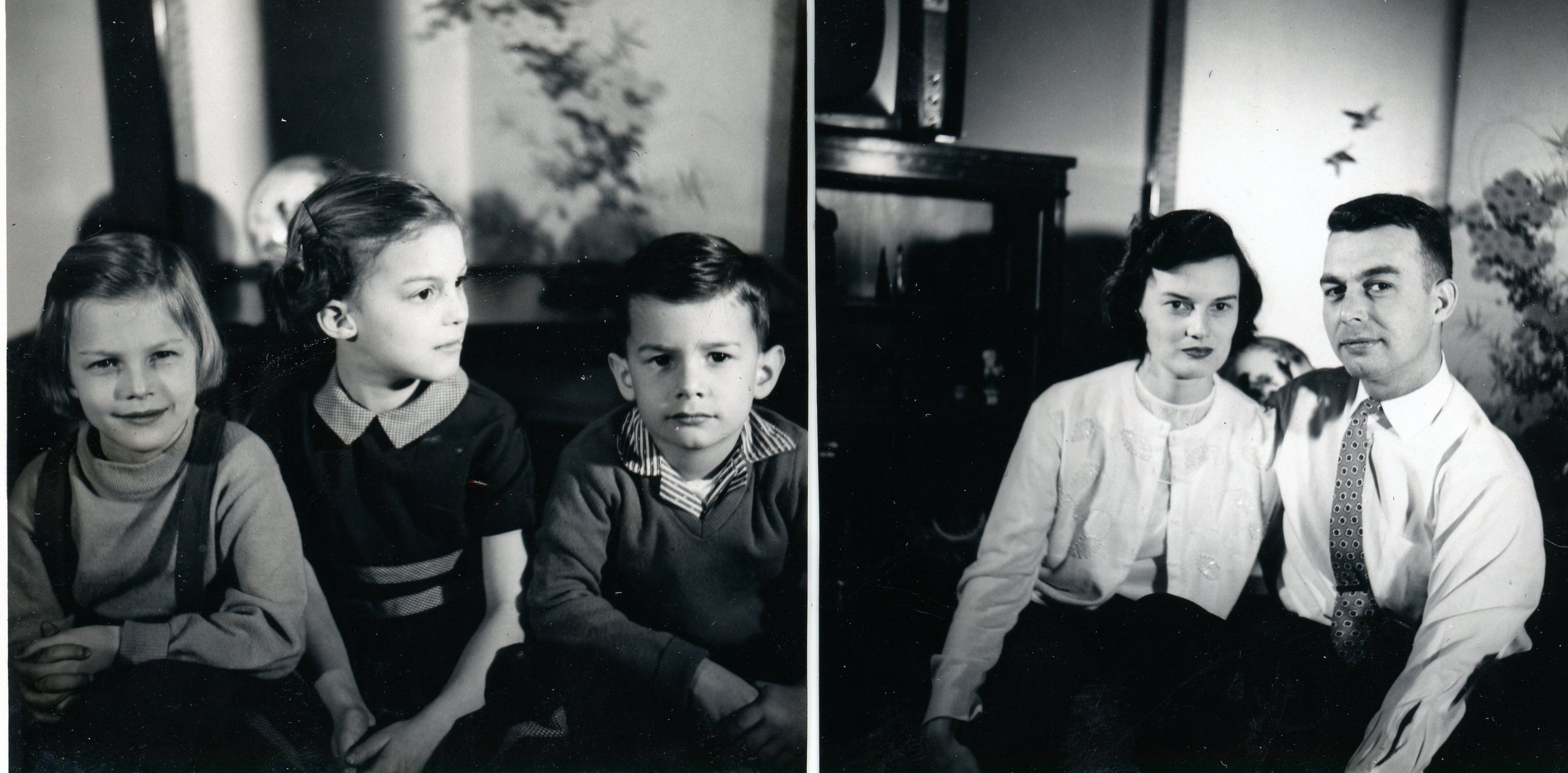
[Photo: Cobb Family in Fort Leavenworth, Kansas in 1960.]
Army wives were also encouraged to do volunteer work so they would not interfere with their husband’s career. Bettie became a troop leader for the campfire girls and also did volunteer work in hospitals as a “Grey Lady.” She decided to try to get back into the work force but her fifteen year old chemistry skills were outdated, so she took a typing course to develop office skills. She never learned to type very well but the company kept her on as a typing teacher at $2.00 per hour. This job ended when her husband was given a new set of military orders.
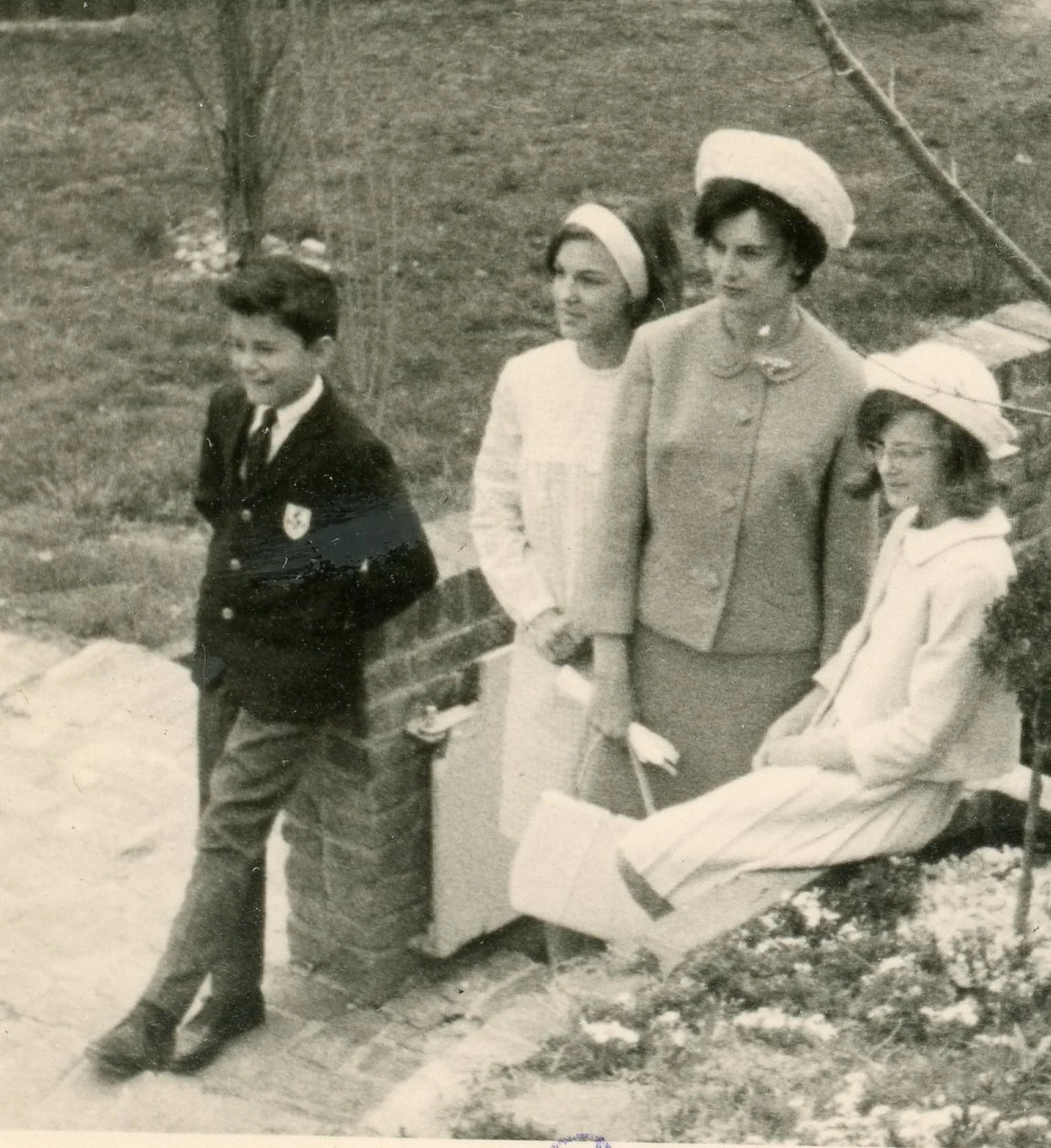
In November of 1964 Jack was assigned to the Pentagon and the family moved to the suburbs of Alexandria, Virginia. Two and half years later he was sent to Vietnam. Bettie was left alone to care for three teenaged children. Her husband came home from the war in the summer of 1968 and as a reward for his efforts was given a choice assignment in Germany.
[Photo: Bettie and her children at their home in Stratford Landing, VA in 1965]
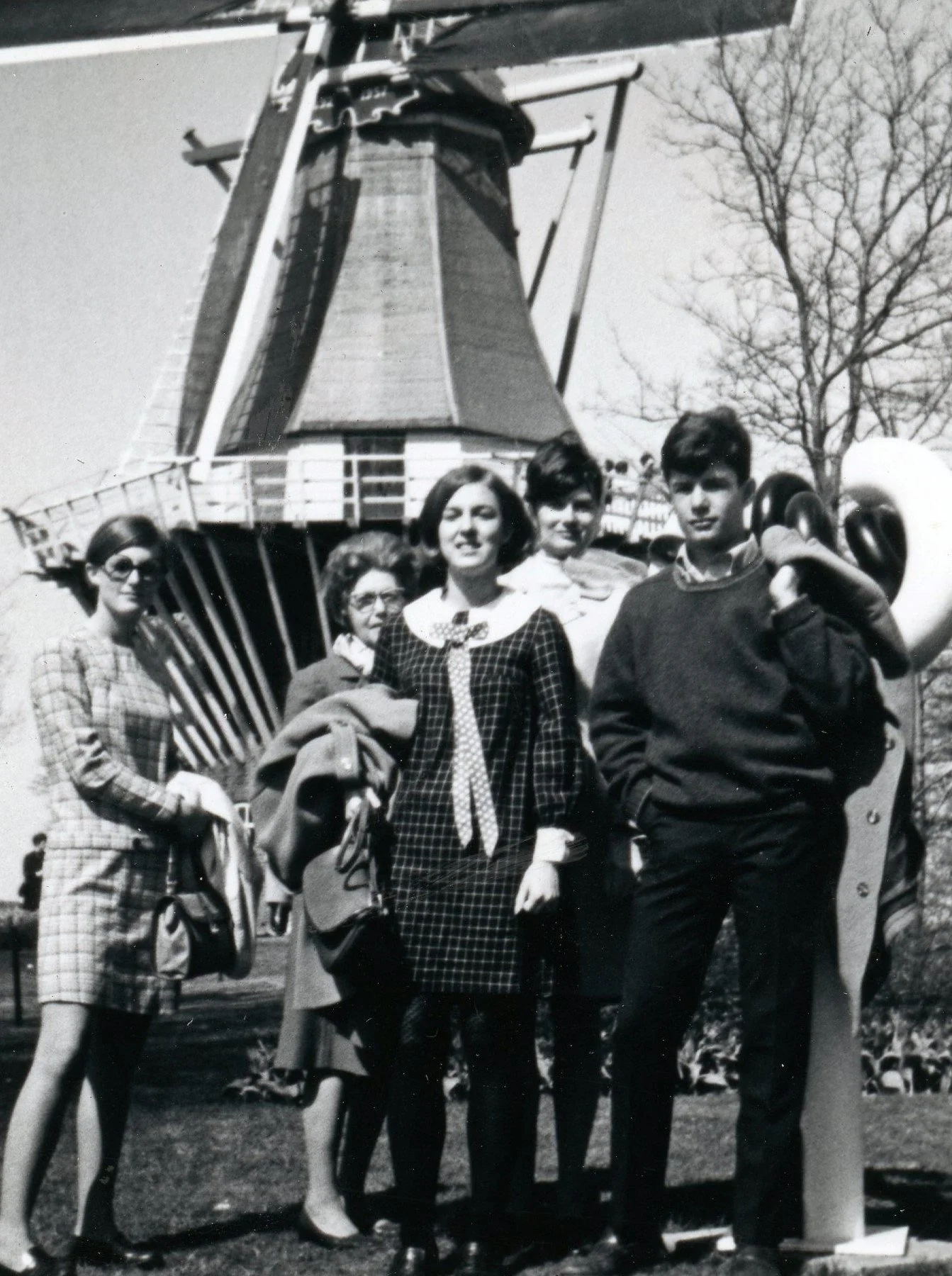
Jack was assigned to work in Heidelberg, Germany. Instead of traveling on a military ship, this time the the family traveled in style across the ocean on a beautiful ocean liner. The accommodations on a military post were pretty basic but Bettie took full advantage of travel opportunities with her family all over Europe.
[Photo: Bettie with her three children and mother-in-law Fannie traveling in the Netherlands in 1969]

Unfortunately his Heidelberg tour of duty only lasted a year. In 1969, it was back to America to West Springfield, Virginia. A year later they bought land and built their “forever home” with a swimming pool on Tatum Drive in Alexandria, Virginia.
[Photo: Bettie and Jack’s “forever home” on Tatum Drive]

Bettie attended some career placement seminars and decided she wanted to be a librarian. She started working part time in a library and in 1970 they awarded her a scholarship to get her master’s degree in library science. Jack retired in 1974 but Bettie, who thoroughly enjoyed her job, continued to work as a full time reference librarian at the Martha Washington Library until 1991.
After retirement she wrote two books on her family genealogy and did volunteer work for nearly 30 years as a docent for the Smithsonian Institute at the American History and the Natural History Museums, where she once gave a tour to Chelsea Clinton. Her volunteer work was interrupted in March of 2020 when the Covid-19 pandemic encroached on all our lives. She was always a fountain of fascinating bits of information about every US President and their wives.
[Photo: Bettie at the Martha Washington Library in 1979]
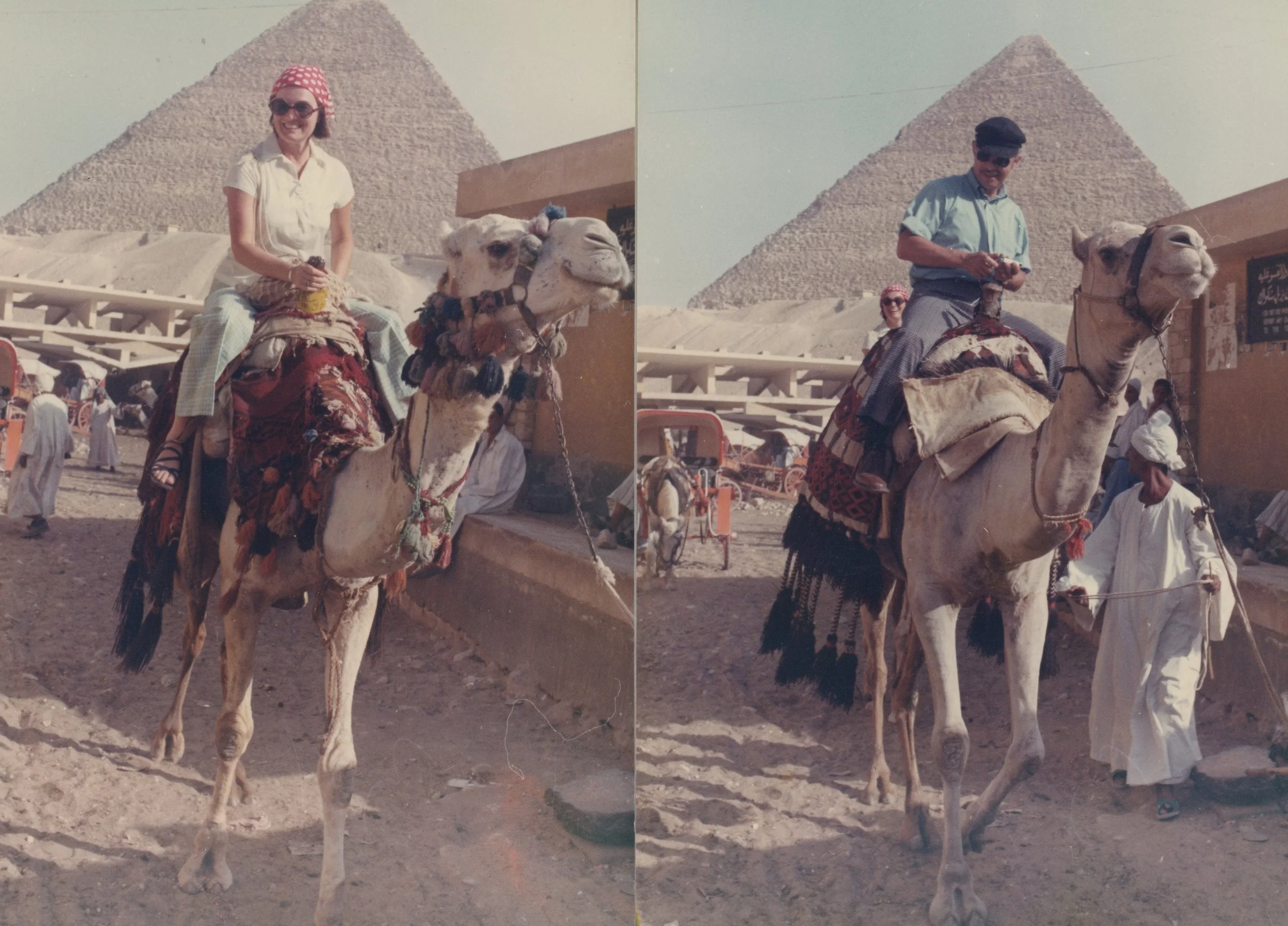
Photo: Bettie and Jack in Egypt 1975]
Bettie traveled all over the world to a staggering number of places. She rode camels in Egypt, elephants in India, gondolas in Venice, canal boats in Amsterdam, river cruises in France, train rides on the Orient Express. The list goes on and on. To share their passion for travel, they traveled together with each of their three oldest grandchildren to Europe to expose them to different cultures and food and people and historical sites.
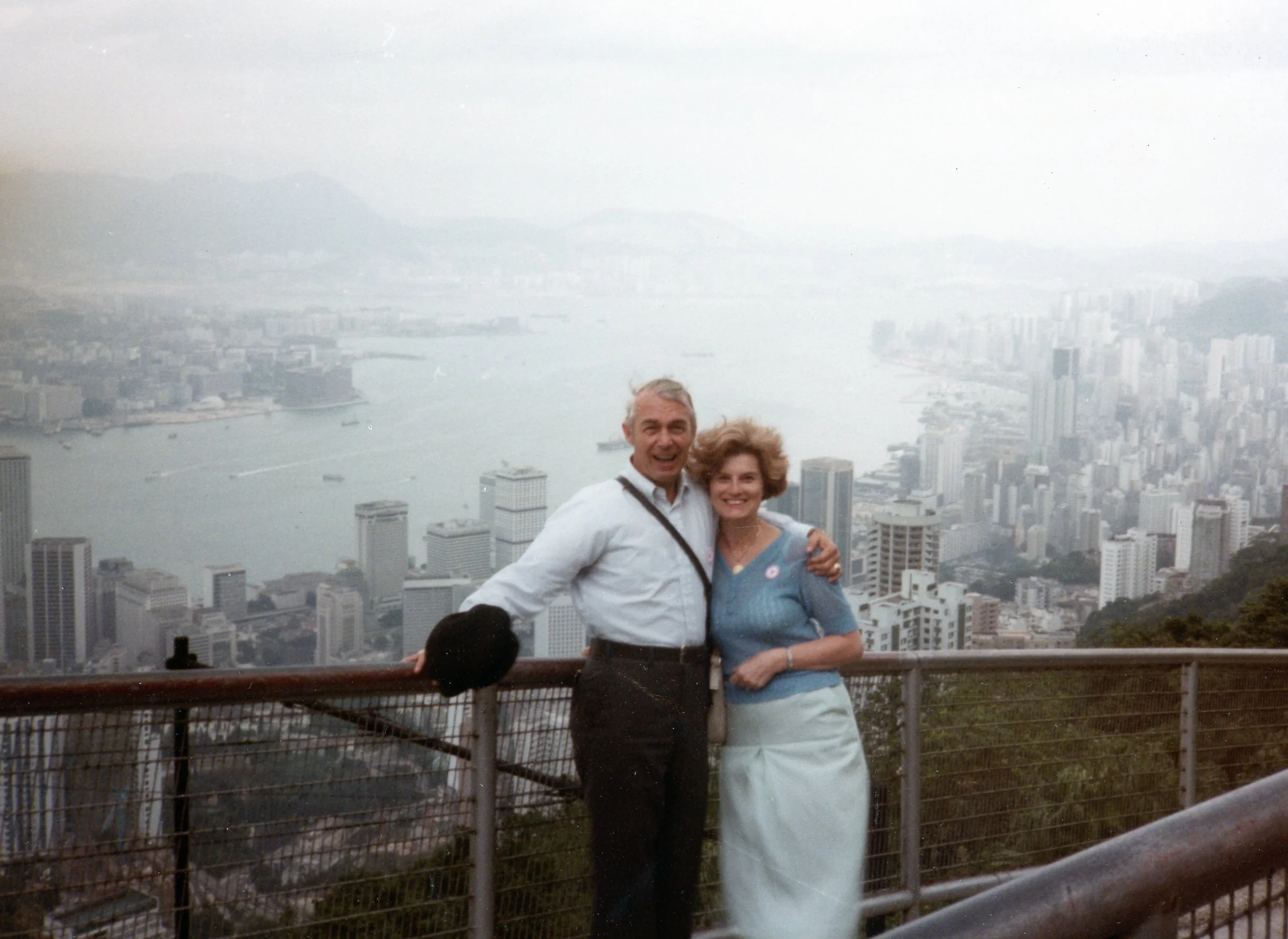
[Photo: Bettie and Jack in Victoria Peak in Hong Kong in 1981]
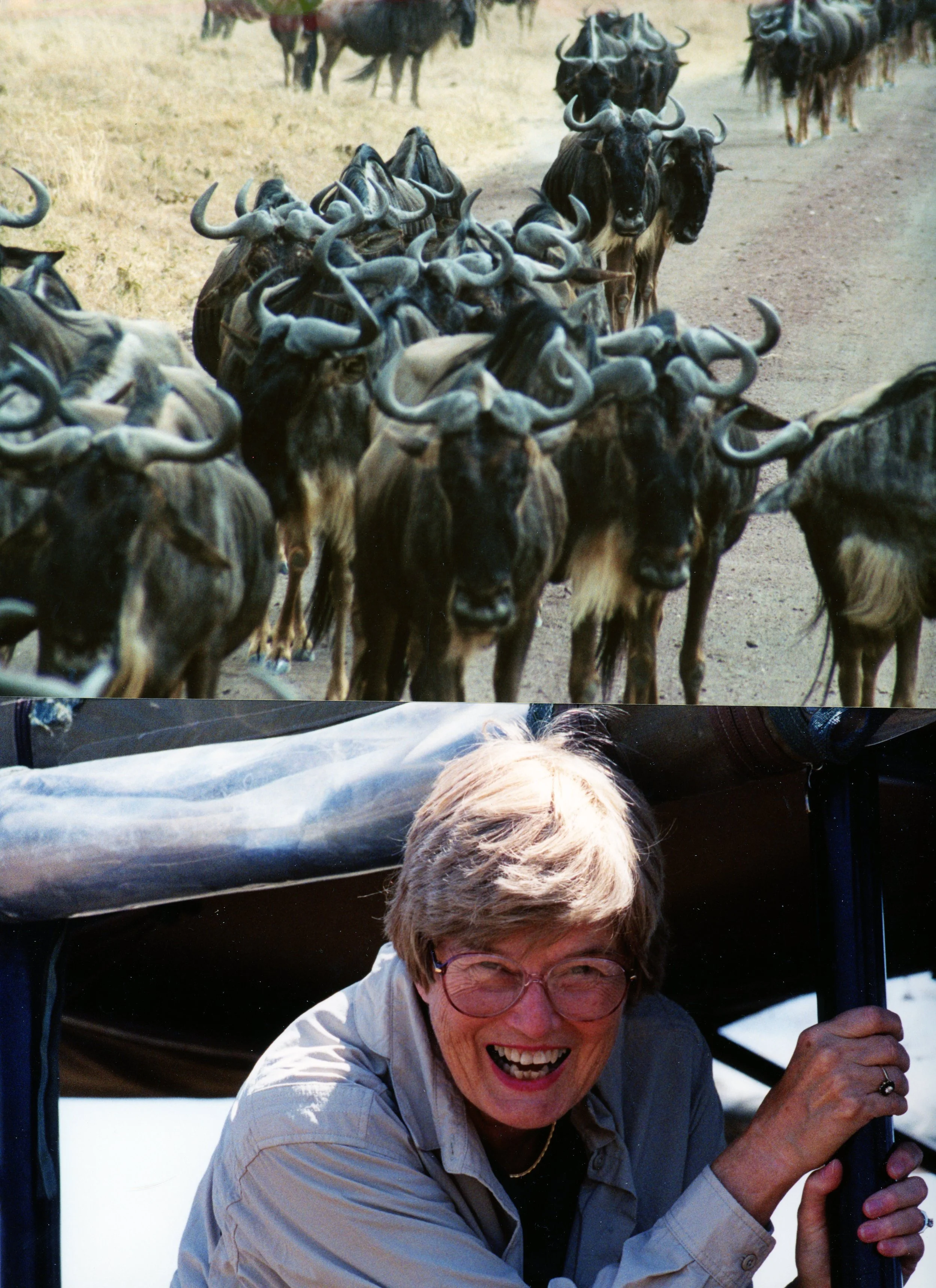
In 2000 Bettie went to Africa during the annual mass migration in the Serengeti with her daughter Paddy. The two of them took a balloon ride and upon landing had a quite memorable champagne brunch in the midst of herds of roving wildebeests and zebra.
Bettie continued to do volunteer work at the Smithsonian and travel despite the fact that she had had three hip operations, had broken her femur bone, her collar bone and several ribs, and had survived sinus cancer, breast cancer and skin cancer. She didn’t let these temporary setbacks interfere with her zest for life.
[Photo: Balloon ride during the Serengeti Migration in 2000]

When Jack was diagnosed with ALS, they sold their home and bought a beautiful condominium in a high rise building in the City of Alexandria with stunning views of the city.
They had been married for 54 years when he tragically died in June of 2003. It was a devastating loss but with the same resiliency that marked their nomadic military life together, my mother bounced back and is an inspiration for those of us that are lucky enough to be part of her family.
After Jack died Bettie continued the family tradition of taking grandchildren to Europe.
[Photo: Carlyle Towers in Alexandria]
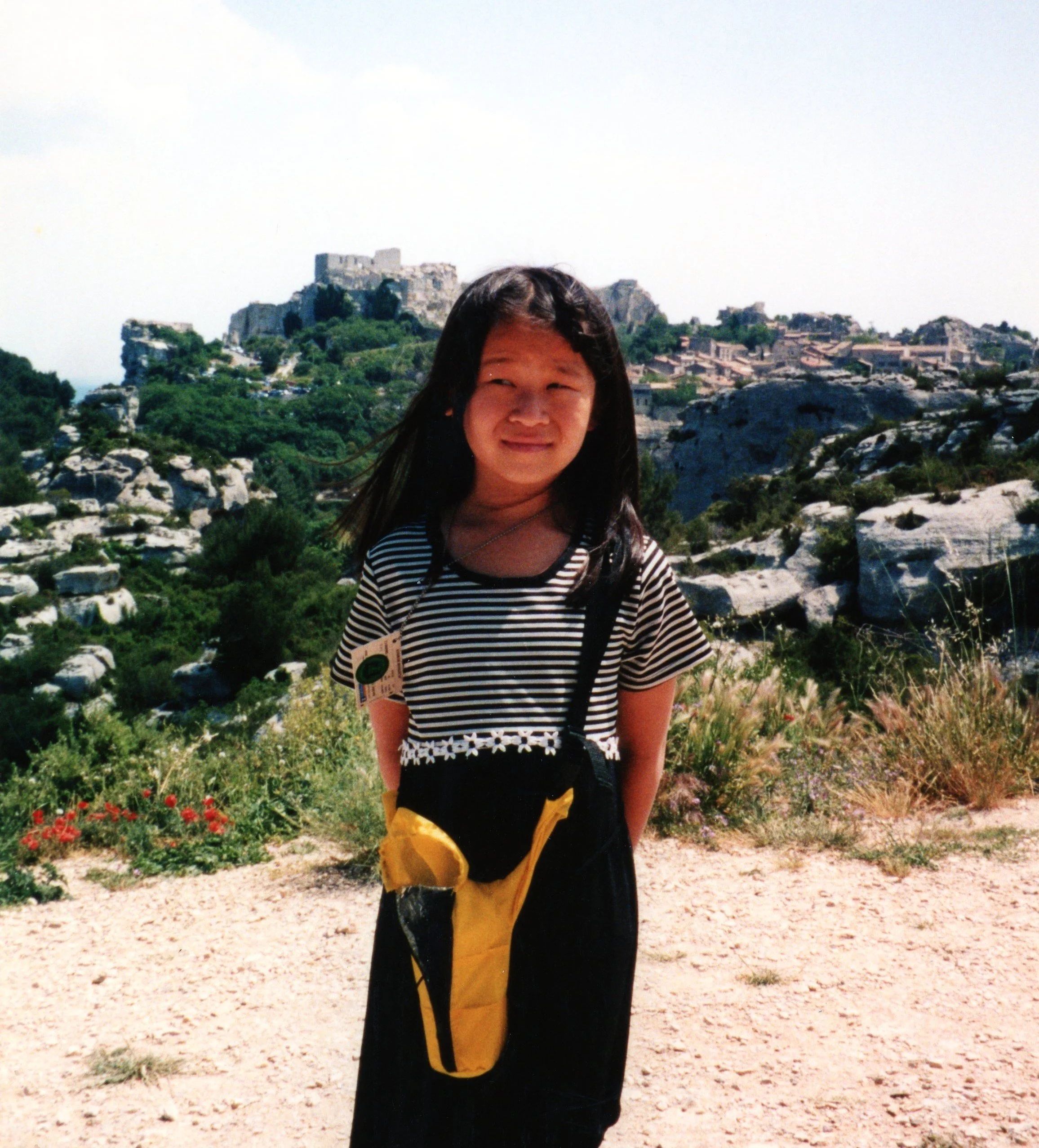
[Photo: Emily in Italy in 2004]
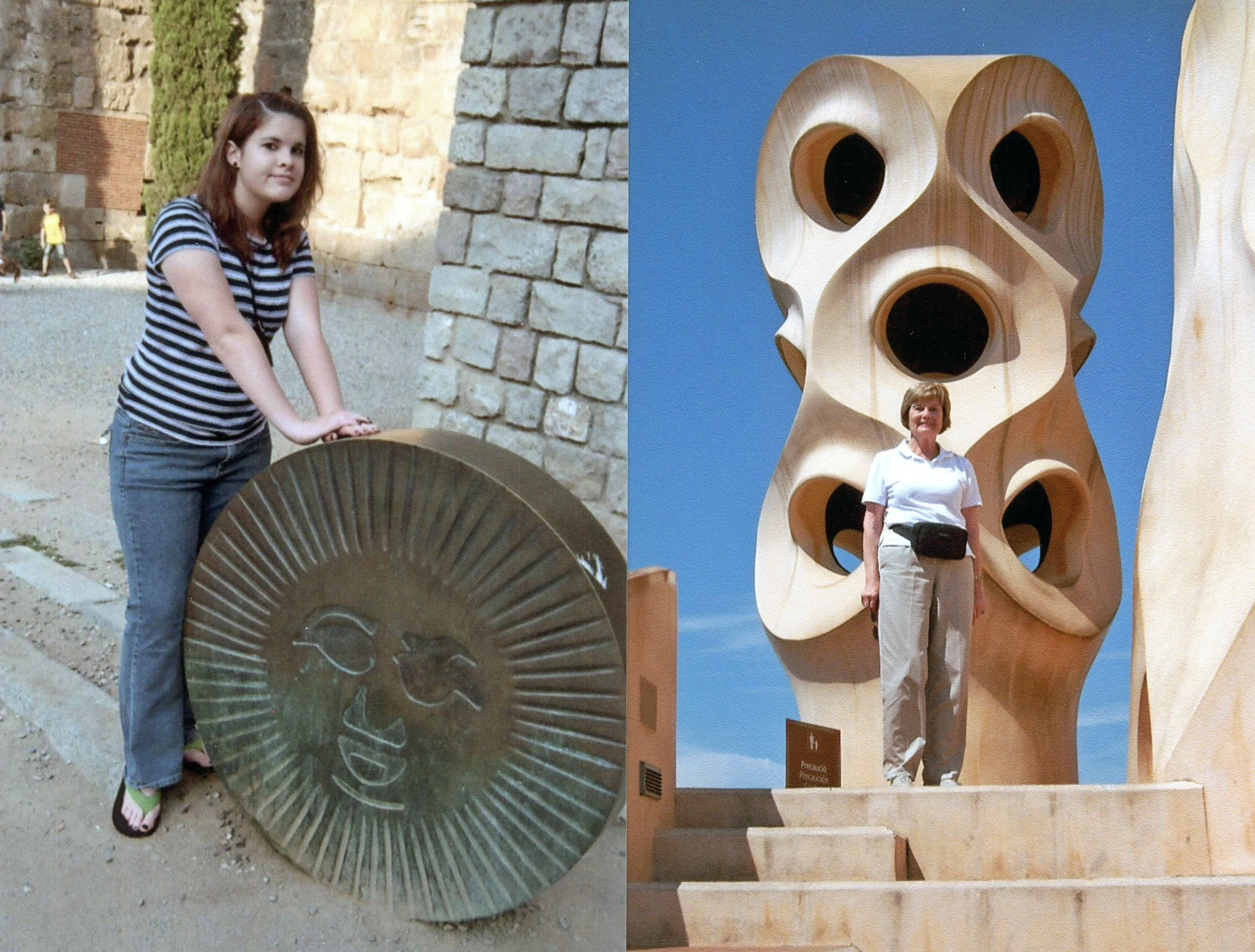
Here are photos of Bettie’s trip to Europe with her three youngest grandchildren.
[Photo: Olivia in Spain in 2010]
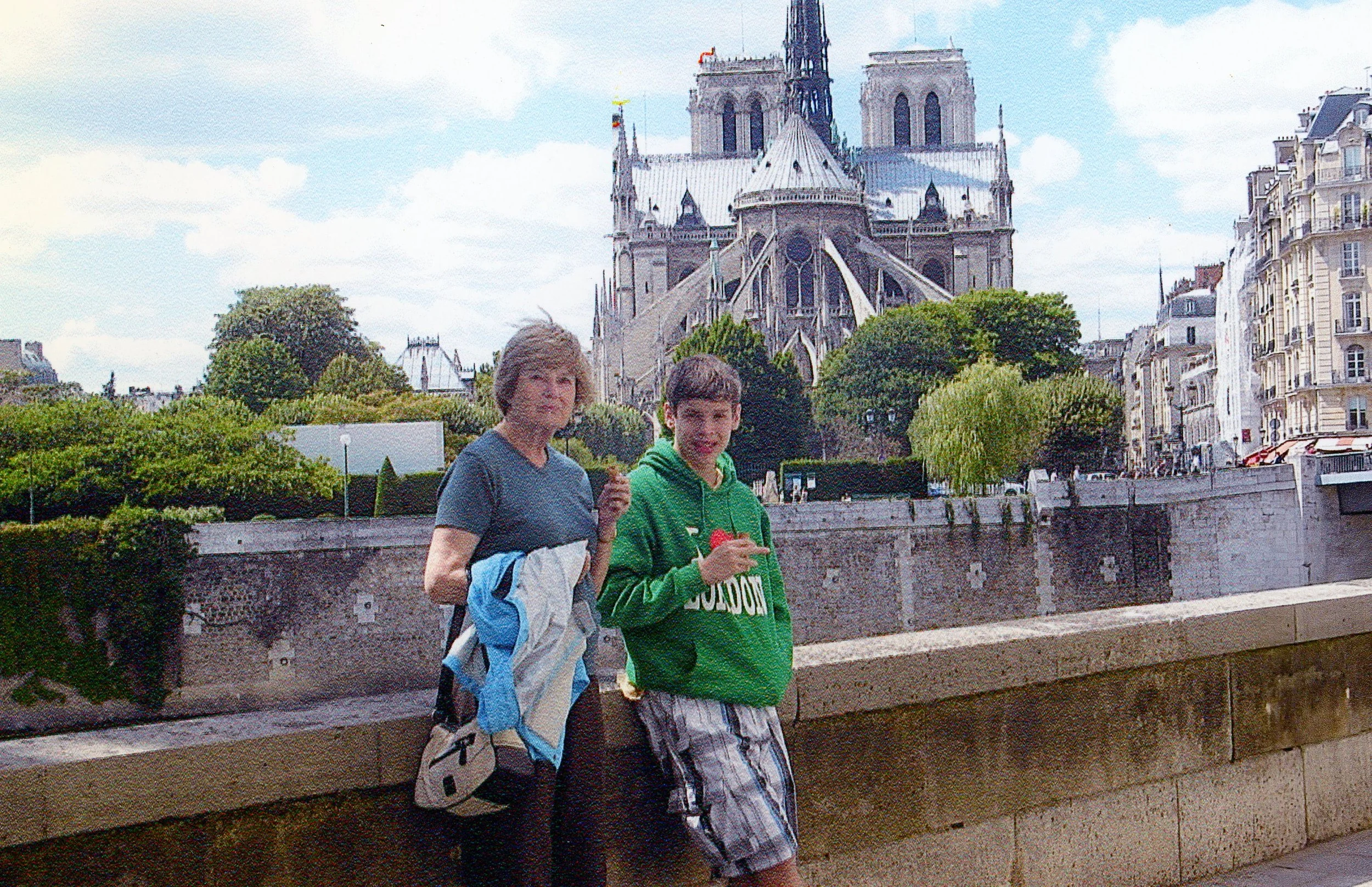
[Photo: Kevin in London with Bettie in 2011]

Hands down, Bettie’s favorite time of year was Christmas when all her children and grandchildren would travel from all over the country to her home to celebrate. She’d start months in advance with detailed lists of what she bought for whom to be sure no one got slighted. Out would come the dancing Santa, each family member’s special Christmas tree decoration, and the stocking for each of us that we could not open until every single person had finished our Christmas morning breakfast. Out would come the ceramic cherubs decorated with fresh evergreen and candles, the 12 days of Christmas balls, the crystal star candle holders, the red candles that the young ones liked to spit on their fingers to extinguish after dinner. The “kids table” would be retrieved out of storage so there would be room for all of us to eat and afterwards to assemble a jigsaw puzzle. She’d put on her long red plaid skirt and drag out a mountain of gifts (a few of which she’d forget to label so every year there would be a mystery gift or two). After all the gifts were opened and much discussion about what we wanted to see, we’d march off to the movie theatre. Over the years, I have only missed two of these special Christmas pilgrimages (once because I gave birth to my son on December 26th!)
[Photo: Bettie’s children at Christmas time at Tatum Drive before grandchildren arrived on the scene.]
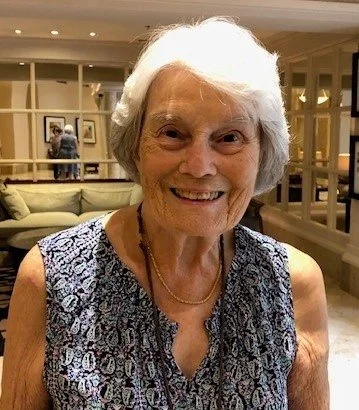
As a child Bettie led a pampered, sheltered life in the foothills of the Great Smokey Mountains, but despite all her worldwide travel and experience, she still had that cheerful child within her that greeted each day with joie de vivre and a zest for learning. When asked her if she wanted to take a trip with me, she said yes before she asked where to. A paragon of southern charm and elegance, we are all so very proud to be her children.
In the afternoon of February 19, 2022 Mom fell and fractured her hip. She was hospitalized for two days and then moved into a rehabilitation center for physical therapy and healing. She started with her usual can-do attitude. She insisted on trying to get out of bed even though she was told it was too risky. She insisted on sitting in a wheelchair so she could be wheeled out to chat with people coming in and out of the elevator. But this time she just didn’t bounce back. She lost her appetite. She was extremely fatigued. Her balance had never been great, but it got even worse. Her cognitive skills began to decline.
It was not possible for her to live alone at home, so we found a place for her to live in a beautiful retirement community called The Landing in Alexandria. The Landing promised an enriching social program with field trips to concerts and museums, in-house social events (Broadway music at the piano bar anyone?), an in-house movie theatre, a beauty salon, a stunning magazine worthy décor and three restaurants. It seemed perfect. Mom didn’t want to leave her home, but she knew it was time. On May 18, 2022, she moved to a lovely light filled assisted living apartment in the Landing, where she promptly endeared herself to all the staff.
[Photo: Bettie at 94 in 2021 in the lobby of the Carylyle Towers]
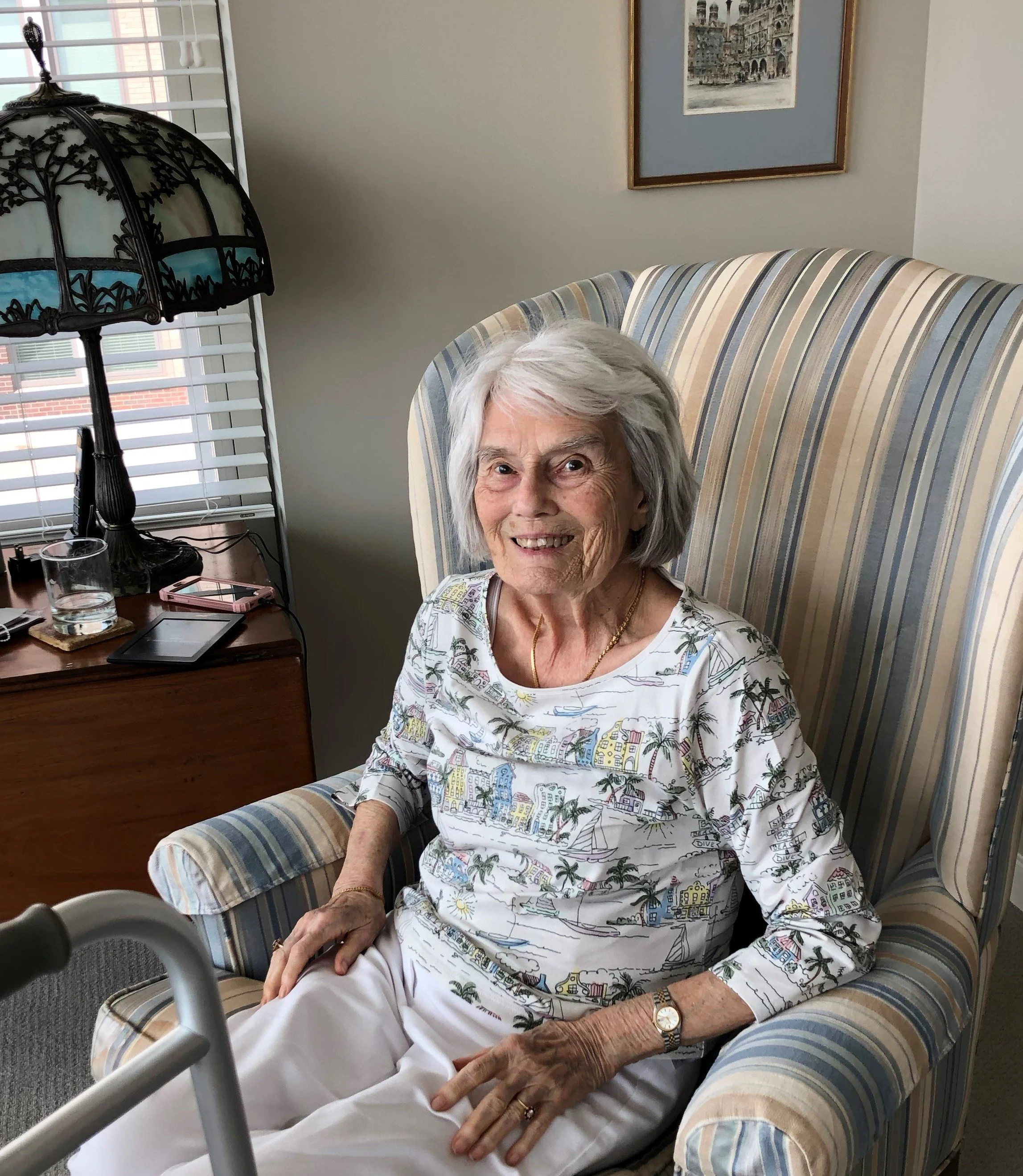
My siblings and I were optimistic that she might perk right up and enjoy life again. But something happened inside her brain that stole that from her – week by week she slid into the mystery world of dementia. After only a month in her new apartment the staff told us she needed to move down to the memory care unit where she could get the increased level of help that she needed. So we packed up her belongings and relocated her again.
She grew weaker every day; this brilliant woman’s words became mostly nonsensical; she could not sit up or briefly stand without assistance; and spent much of her time sleeping. We were devastated to watch the decline, but she seemed blissfully unaware. When she briefly came out of the fog, she would smile, her face would light up and this childlike joy shone through. In the end, her body grew weary of the struggle and sadly on August 14, 2022, just after her 95th birthday, our extraordinary mother took her last breath. She’s gone but she will be etched in our hearts forever.
[Photo: Mom still beautiful at 95 in her final home at the Landing in July, 2022.]
