The Immigrants
Why Leave Home?
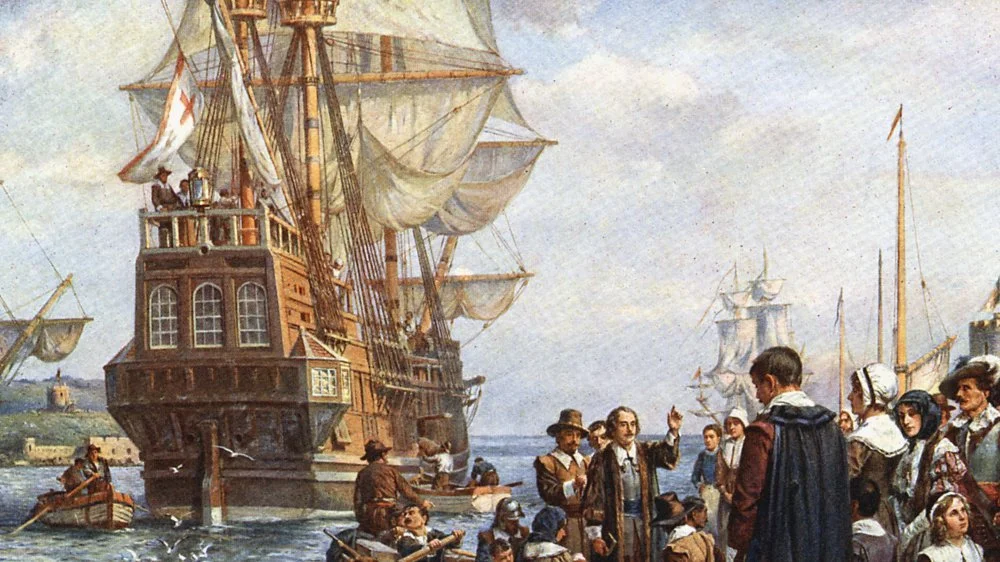
[Painting: Boarding a Ship for the New World in 1600s]
Don’t get me wrong, I love the thrill of adventure. I’ve gleefully explored five of the seven continents. But there is an enormous difference between “glamping” on a luxury safari in Africa in the 21st century and climbing on board a leaky rat infested seventeenth century vessel bound for the New World. Travelers in those days had to endure months at sea with foul food and drink, cramped quarters below deck with no light or fresh air, chronic nausea from rough seas and the ever present stench of disease and unsanitary conditions. And if they were lucky enough to survive the journey that faced uncertainty and even graver dangers when they stepped off the ship. So why did they leave home?

Life in Europe in those days was extremely arduous. England’s majestic ancient forests and the animals that inhabited them had all but disappeared - felled to provide lumber for the Crown’s navy. Robin Hood, the hero of the poor if he ever existed, was long gone. Life expectancy for children was heartbreakingly short – one third of London’s children never made it to age six. City streets were fouled with the cast offs from chamber pots and horse dung. Raw sewage flowed down the Thames River. Periodic famine was common. Smallpox, dysentery, syphilis, tuberculosis, typhus and other miserable diseases were rampant and unchecked. In short as Germans say: “Das Leben ist kein Ponyhof” - life was no pony farm.
[Photo: One of the few remaining Ancient Forests in England today]
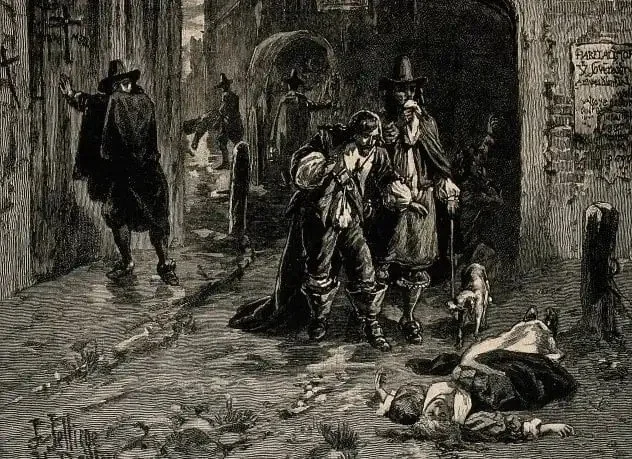
In 1603 and 1606, London and the surrounding countryside was beset by yet another outbreak of the most dreaded disease of all time, the Black Plague. Its victims suffered a wretched, ghastly death. In 1607 Jamestown was founded. The timing was not coincidental.
At that time, a handful of royals and gentry held on to their wealth and power with a greedy iron grip. Land was passed from father to the eldest son under the law of primogeniture, and marriages were arranged to preserve the family name and reputation. Beneath the gentry was a struggling middle class of yeoman, tradesman, merchants and artisans yearning for a better life, and a vast population of anguished poor living in squalor.
Out of the darkness a faint light glimmered from the shores of the New World.
Why did they leave home? The better question is why would anyone want to stay?
[Photo: The Bubonic Plague in London]
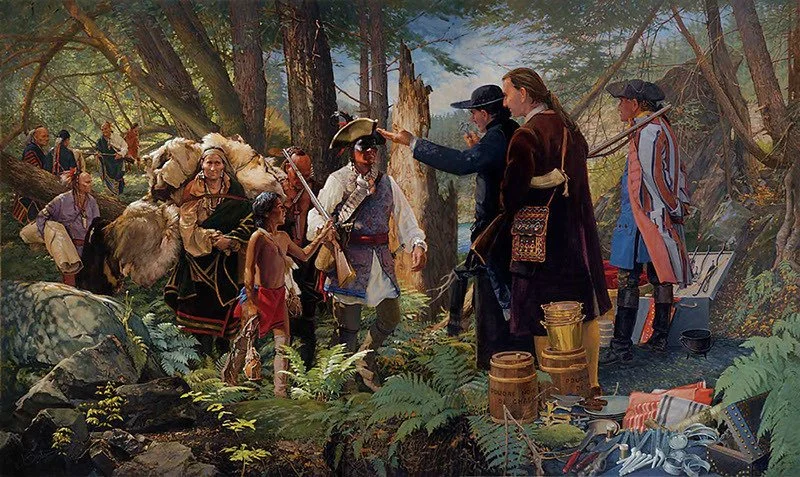
Still most people were reluctant to board the ships. So in an insatiable quest for profits, the Virginia Company of London rolled out a propaganda machine to entice potential immigrants to cross the ocean with the prospect of land and limitless natural resources. Virginia they claimed was an unspoiled wilderness brimming with magnificent timber, lush vegetation, and an abundance of wildlife, and it lay there ready for the taking. Siblings who under the primogeniture law were denied an inheritance, began to see the New World as an opportunity to build their own wealth and reputation. Wealthy fathers saw it as an opportunity to exile a black sheep son who threatened to tarnish the family name at home. Those seeking a place to escape religious persecution sailed to New England. But those who headed to the Virginia Colony sought adventure, independence and a monetary reward.
{Photo: Trading with Native Americans by John Buxton]
If travelers could afford the steep price of the voyage they were rewarded with 50 acres of land for each person they transported. If they had the right connections and the money to invest, even more land could be gobbled up. Can’t afford to pay for the voyage? No worries, sign a five to seven year indentured servant contract. After serving their term, the indentured servant was free but not entitled to the free land their voyage made available. Servitude was harsh and many did not survive in the New World and yet they too boarded the ships.
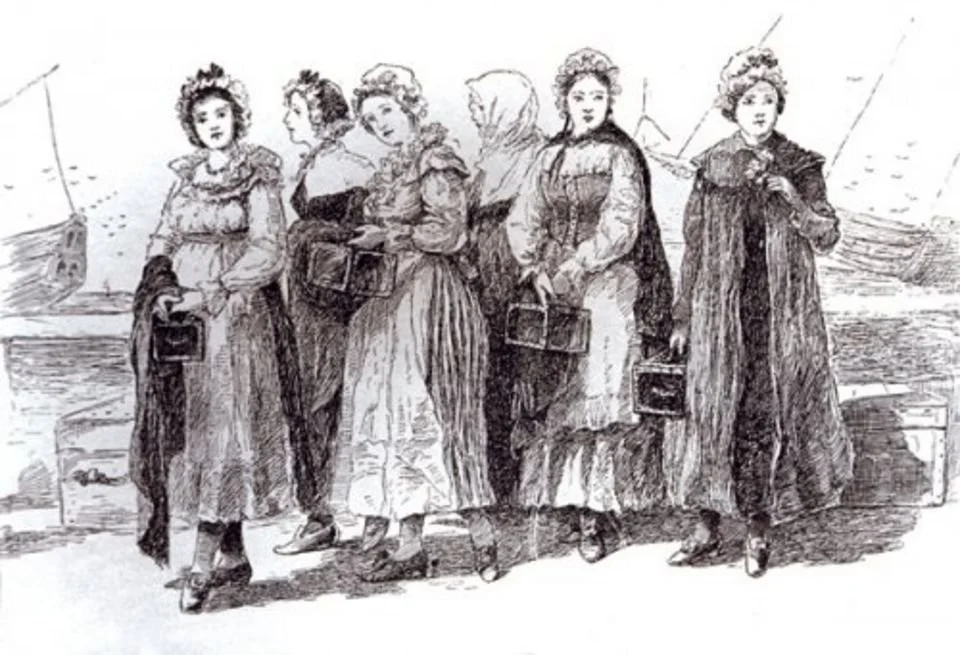
The colonists desperately needed more laborers to help them stabilize the settlements. In response, the Virginia Company of London stepped up their propaganda machine and resorted to unsavory tactics to shore up their failing investment. They scooped orphans off the streets and felons out of jail cells to serve as indentured servants in America. They took advantage of desperate, impoverished women by coercing them into accepting mail order bride schemes. These so called “tobacco wives” were sold in America for 120 pounds of tobacco. Of the 144 tobacco brides who were brough to the shores of America by the Virginia Company between 1619 and 1622, only six of them survived longer than six years in Jamestown.
My ancestors did not expect life would be easy in the New World but they weighed the risks and decided to make the leap. I for one, am grateful they did.
[Photo: Tobacco Brides arrive in Virginia]
