Joseph Cobb (1588-1654)
It was the year 1613. A determined 25 year old man named Joseph Cobb stood on the dock in London preparing to board the ship, the Treasurer, for the New World. He was a gentleman, “entitled by rank to wear a sword and trained by experience to use them.” He left behind his wife Elizabeth and their two young sons, Joseph Jr and Benjamin and ages 3 and 1, with the promise that he would return for them when the time was right.
Joseph was born in Amsterdam in 1588. His father, an English military man named Richard Cobb, met his mother, Sybil Sheets, while on duty in Amsterdam. The seventh of sixteen children, Joseph was anxious to make his mark on the world.
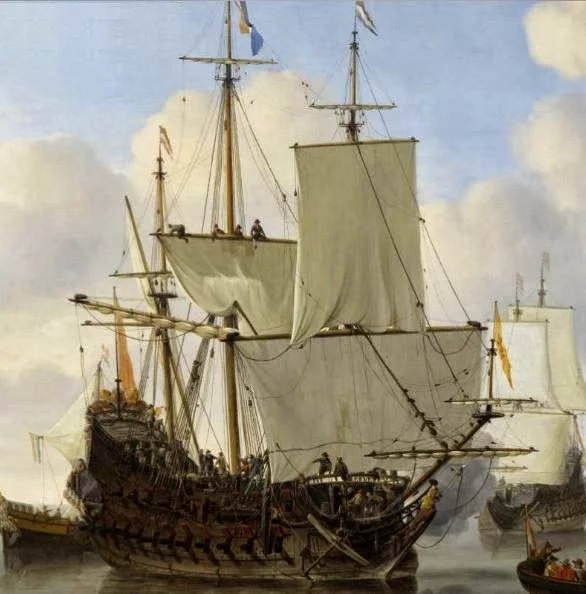
[Painting: Dutch Ship 1600s]
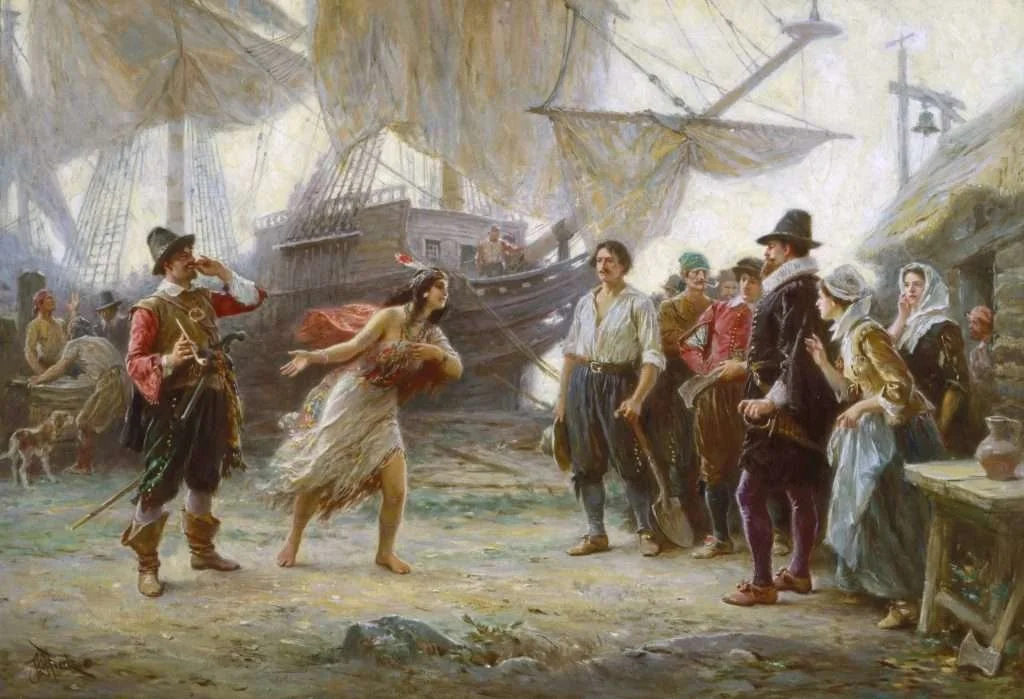
Joseph selected a notorious ship for his journey. The Treasurer was a war ship whose captain, Sir Samuel Argall, had a checkered reputation. After dropping off Joseph and the other passengers in March of 1613 on the shores of Virginia, Argall sailed up the James River and kidnapped Pocahontas. He held her prisoner on board as a hostage for the return of seven Englishmen that her father had enslaved. Later that year in July, Argall sailed to Maine and decimated a French Jesuit Colony that lived there. The Treasurer committed frequent acts of piracy against the Spanish. In 1619 Argall and the Treasurer carried out the contemptible mission of escorting the Dutch vessel that brought the first Africans to Virginia to be sold into a life of misery.
[Painting: The Abduction of Pocahontas buy Jean-Leon Gerome Ferris]
Joseph arrived in America only six years after the 1607 founding of Jamestown. Of the original 500 individuals who settled there, a mere sixty hardy souls were still alive. When Joseph stepped off the Treasurer in 1613, he became one of 1,232 colonists scattered along the banks of the James River and the Chesapeake Bay.
In total 7,700 daring individuals arrived in Virginia between 1607 and 1625. The attrition rates were abysmal. Only one in seven lasted. It was a terrifying game of Jamestown musical chairs --when the music stopped some had starved to death, some had been killed by tomahawk, some died of malaria, dysentery and other diseases. In 1622 a bloody Native American uprising wiped out 25% of the total white population over a 100 mile area. Dreams crushed, the weary and dispirited fled back to their homelands. Chilling stories of the dire living situation in Virginia trickled back to Europe. When the music stopped in 1625, Joseph Cobb still had a chair among the living. Joseph remained steadfast in his determination to make his new life work. His name is present today on the elite “ancient planters” list compiled by the “Order of the Descendants of Ancient Planters.” The term is applied to those persons who arrived in Virginia before 1616, remained for at least three years, and paid their own passage.
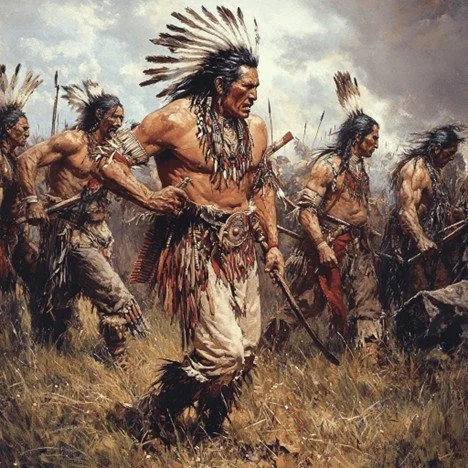
[Image: Painting of Powhatan uprising in 1622]
In 1623, ten years after he first arrived in Virginia, Joseph finally made arrangements for his wife Elizabeth and two sons to join him. They boarded the “Bonnie Bess” and reunited with him in the Virginia Colony. Elizabeth’s brother, Pharaoh Flinton, a physician and fellow “ancient planter,” had arrived in Virginia in 1612 with his wife Joane and four servants in tow. This may have played a part in Elizabeth’s willingness to make the long journey.
After the 1622 Massacre, many settlers abandoned their plantations and hunkered down in more populated areas such as Elizabeth City to shield themselves from other Native American uprisings. Joseph was among them. In the 1625 census Joseph is reported as owning a house in “Elizabeth Cittee”, along with 8 barrels of corn, 2 swords, a piece and 3 pounds of powder.
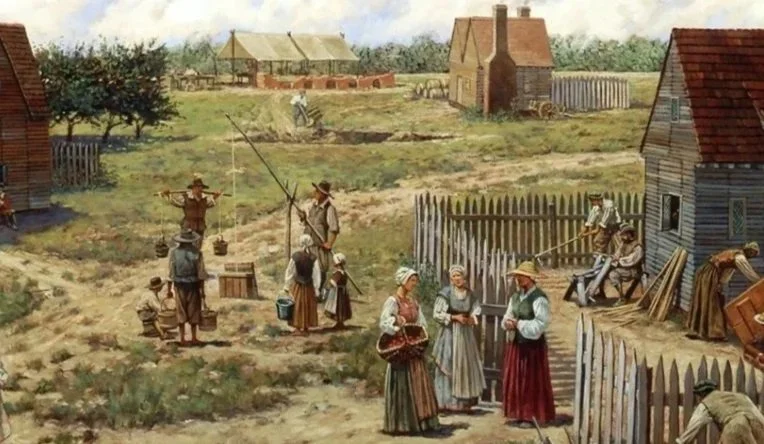
[Painting: Jamestown in the 1630s]

Despite Joseph’s meager belongings, only 38 persons owned their own home in the census and corn was a valuable staple for settlers. Corn bread, corn pudding, corn soup, fried corn cakes – the yellow kernel appeared ad nauseam in every meal. The cobs were dried and used as kindling to start fires and impart a much sought after smoky flavor for hams and bacon. From lessons hard learned during the “starving time” in the early Jamestown Colony, colonists were legally required to set aside at least two acres of their land to grow this essential crop.
[Photo: Corn field, the Life Blood of the Colony]
Soon after the Cobb family reunited, Joseph and Elizabeth were blessed with a son Pharaoh, (named for his uncle), a daughter Elizabeth (named for her mother), and some claim four others including a son named Nicholas. It is also possible other children may have been born but did not survive. Most infant deaths at that time occurred within the first few weeks of life and received private burials that were not recorded in public records. Largely because of child mortality and maternal deaths arising from childbirth, average life expectancy in the 1600’s in England was only about 35 years. In the Virginia Colony, where conditions were even harsher, the average life expectancy was 25.
In August of 1637, Joseph received a belated grant of 400 acres of land in the Isle of Wight County in Virginia. The grant was based on “headrights,” the award of 50 acres for those “personal adventurers” who paid their own way and 50 acres for each family member or indentured servant they brought with them. Joseph’s grant was based on his wife, two sons and four servants.
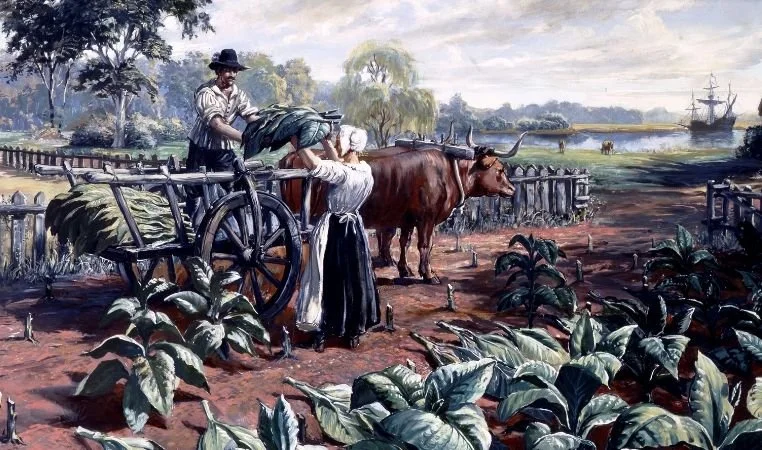
[Painting: Tobacco Farming in Colonial Virginia]
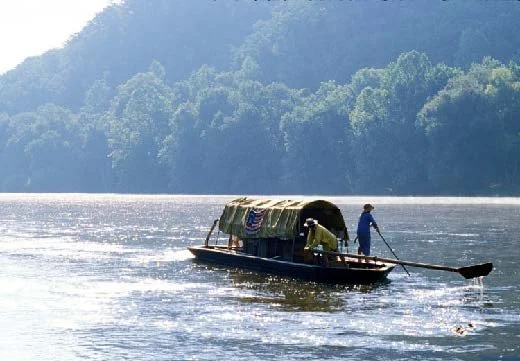
The basic mode of transportation in early Virginia was by boat. Like his fellow farmers, Joseph packed his tobacco in heavy barrels called hogsheads, rolled them down to landings, loaded them on flat bottomed river boats called bateaux, and paddled to ports like Jamestown for shipment to agents in England.
The encroachment of more and more land in Tidewater Virginia infuriated the Native Americans. In 1644 there was another Indian uprising in which 500 colonists were killed, sending shock waves through the Colony. The attack was organized by the same chief who had led the Massacre of 1622. There were reprisals and the chief was imprisoned and later shot in the back by one of the guards.
[Image: Travel by Bateaux]
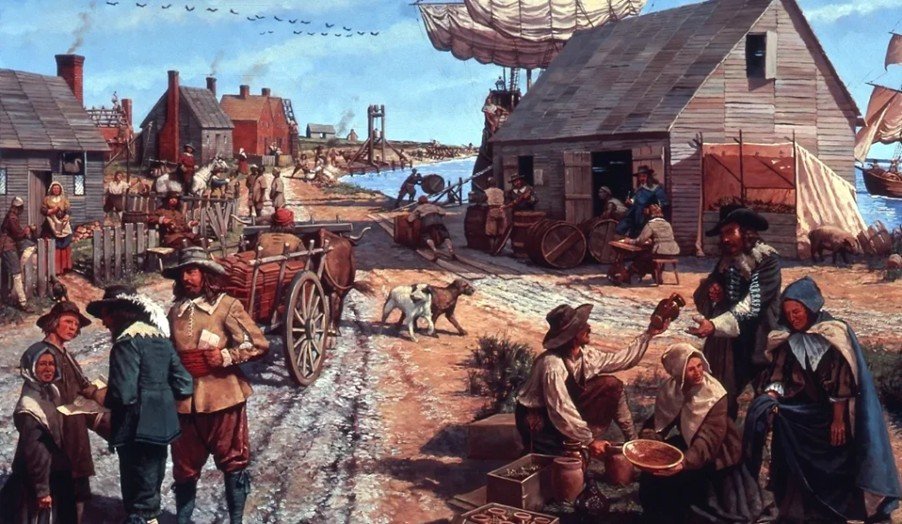
Against all odds, Joseph and his family persevered. Planters with the financial wherewithal to purchase large tracts of land and have indentured servants or enslaved Africans became very wealthy. By mid-century Jamestown flourished as a center for both domestic and foreign trade.
When Joseph prepared his will in March of 1653, he provided for his “well beloved wife Elizabeth” (300 acres of land called Goose Hill, and all “movables” on the land - seventeen cows, three calves, thirty-two hogs), his son Benjamin (one red cow and her calf), his son Pharaoh (one red cow and her calf), and his daughter Elizabeth (one black cow and one black yearling). There is no mention of the other children except to say that provided his wife does not remarry “ye said children that are left shall each have a child’s proportion.”
[Painting: Jamestown in 1650s]

Despite the fact that Nicholas was not mentioned in the will, nearly all Cobb genealogy books (my father’s included) reported that Nicholas was the son of Joseph. And that this Nicholas fathered my ancestor Edward Cobb. It turns out with the advent of DNA testing this lineage was not correct and sadly the family myth of our connection to early Jamestown was shattered.
[Image: DNA Image by Pete Linforth of Pixabay]
A company called Relative Genetics, founded in 2001 and purchased by Ancestry.com in 2007, engaged in various breakthrough DNA projects. The data collected included results from males that could document their lineage to a specific family line. The results of this study indicated there was no DNA match between the Joseph Cobb line and the Nicholas Cobb line. The same DNA study ruled out Ambrose Cobb who arrived in Virginia in the 1630s. It seems unlikely that Joseph’s “well beloved” Elizabeth had an affair with another man. So if the study is accurate, and if Joseph Cobb Sr did not have a son named Nicholas then who was our ancestor Nicholas Cobb? Check out my blog on Nicholas Cobb to find out.
