The Ricks Family(1638-1748)
My Paternal 8th and 7th Great Grandparents, Isaac Ricks Sr, immigrant and Isaac Ricks Jr

The name Ricks is thought to be of Germanic origin and its first appearance in England was about 1066 - the time of William the Conqueror. Spellings of names changed over time; names were recorded phonetically based on the interpretation (and literacy) of the person who recorded them, and they got anglicized upon arrival in a new country. Sometimes Ricks is also spelled Rickesis, Rickes, Rixe, and Rix. For consistency, I used the spelling “Ricks.”
[Photo: Quaker couple in the mid-1800s]
The presence of a family crest is a testament to a families’ status and influence and is associated with noble titles, wealth and historical significance. I don’t know what the Ricks family did to deserve one, but for what it is worth, here is their family crest:

[Photo: Ricks Family Crest]
According to the author of a 700 page genealogy gem called “History and Genealogy of the Ricks Family of America,” this crest can be found in the mosaic floor of the church at the Brancaster Castle (circa 1525), the Ricks family ancestral home in Norfolk County, England. If you watched Downton Abbey you might recognize this stunning photo:
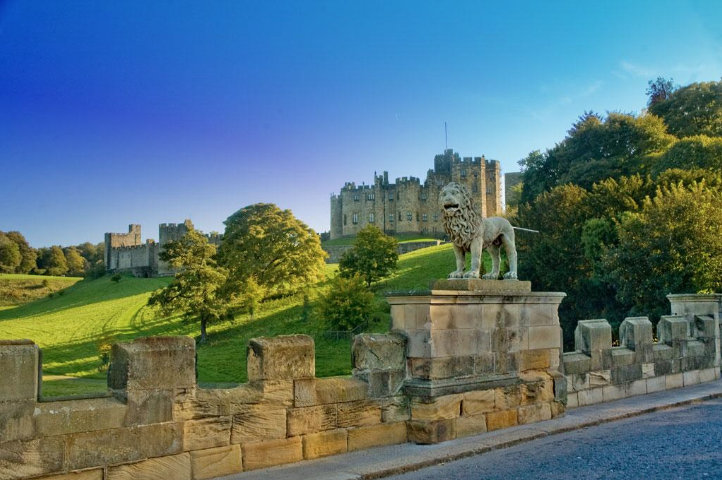
Brancaster Castle
This castle is referred to as “Brancaster Castle” in the film, but sadly when things seem too good to be true, they often aren’t. This magnificent property is actually Alnwick Castle, the 2nd largest owner occupied castle in England. This castle was used as a setting for many other well-known films including Hogwarts in the Harry Potter movies. Alnwick is a huge tourist attraction and for a fee you can even take “broomstick flying classes.” It appears that Duke and Duchess Percy need a little help with the upkeep of the premises.

My internet search uncovered a village called Brancaster. It’s a lovely little fishing village with 797 residents.
The village’s name means “Roman site of Branodunum.” Nearby is the ruins of an ancient Roman fort from the 5th century most of which was destroyed during the construction of a locally opposed housing development in the 1970s. (Humans can be such foolish creatures). Sadly, no mention of a castle in my hunt.
[Photo: The village of Brancaster, Norfolk England]
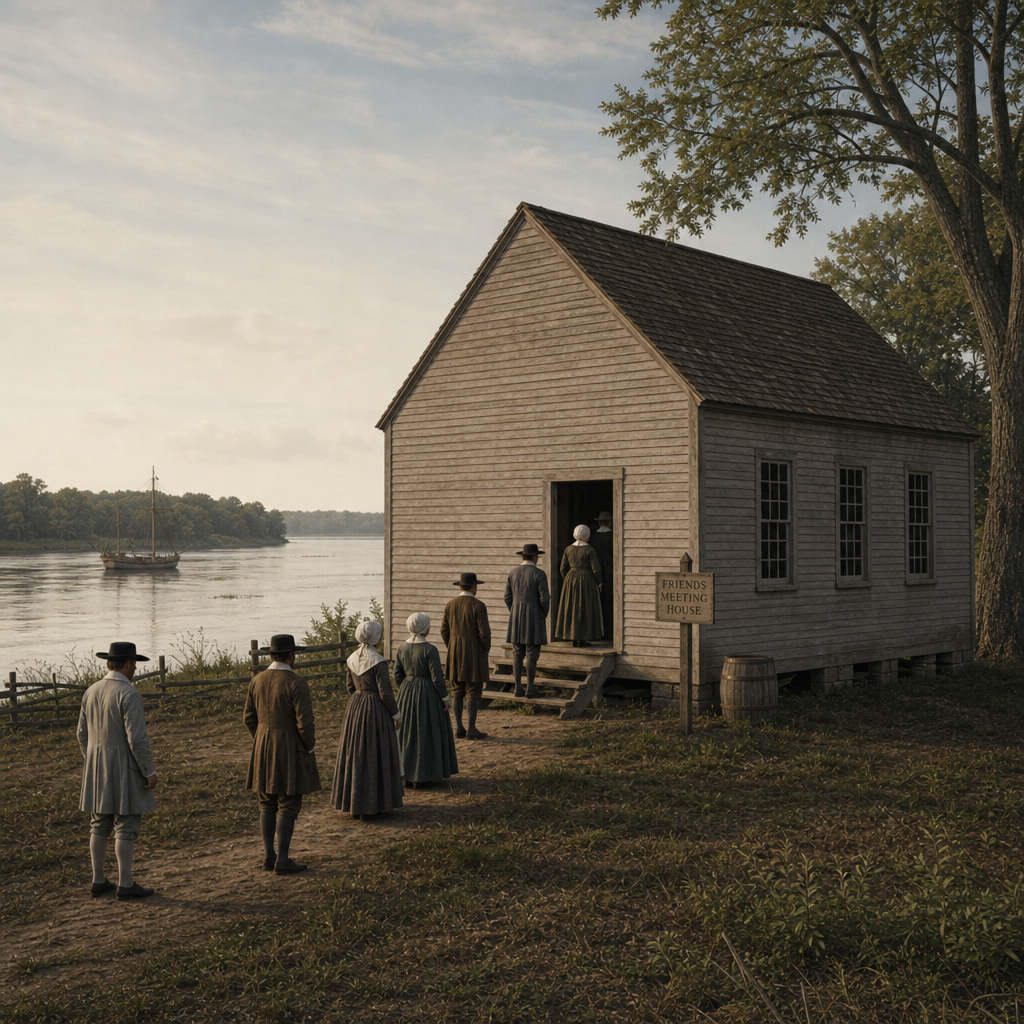
Isaac Ricks (spelled Rickesis in early accounts), my 8th great grandfather, was born in England in 1638 and died at the age of 85 in 1732. He immigrated to America and settled in a place called Chuckatuck on the Nansemond River in Isle of Wight, Virginia. According to old church records from the Chuckatuck Friends Meeting Place, his wife was named Kathren and they had a son, my ancestor, named Isaac Jr in 1669. They also had eight additional sons: William (1670), John (1672), Abraham (1674), Jacob (1677), Robert (1679), Benjamin(1682), Richard (1684) and James (1690); a daughter named Kathren after her mother who only lived for two months (1684), and another daughter named Jeanne (1687). In 1702 Abraham and Robert built the Chuckatuck Church in exchange for 32,000 pounds of tobacco (the currency of the time, equivalent to about 35,000 in today’s dollars.) Prior to the building of the church the “Friends” (commonly known as Quakers) met in each other’s homes. The church was abandoned and “laid down” in 1769 because religious persecution forced large numbers of Quakers to relocate to North Carolina.
[Image: AI generated image of Quaker Meetinghouse in late 1600s.]
Persecution was not new to the Quakers. It had begun long before in England prompting their immigration to America. The Quaker movement began in England in the 1640’s. Its founder, George Fox, believed that every individual could experience the “inner light” of communication with God without the need for clergy or formal rituals. His teachings were contrary to the established Church of England and his converts were subject to violent persecution. When Puritans arrived in New England they brought their deep seated hatred of Quakers with them. Beginning in 1656, laws forbade any captain to land Quakers in Massachusetts. Fines were exacted for anyone providing food and shelter to them. If they dared to come ashore Quakers were “to be severely whipped on his or her entrance and kept constantly at work and none were suffered to speak to them.” Quakers were publicly flogged, had their ears cut off and their tongues bored through with hot irons. In some cases in Boston the death penalty was exacted.
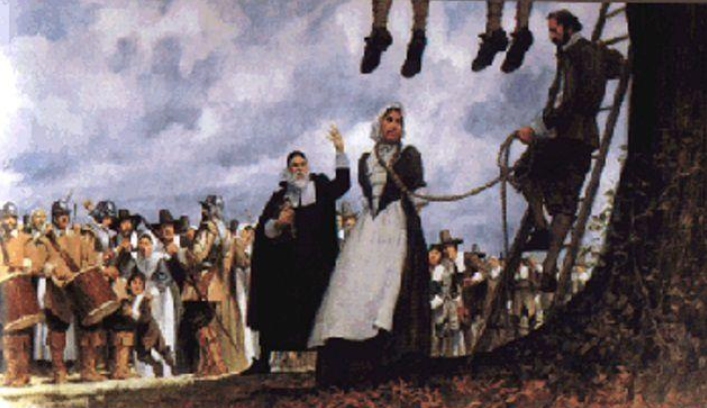
[Painting of Quakers being hung in the Boston Common]
The first Quakers arrived in Virginia in the 1650’s. Elizabeth Harris, one of Fox’s missionaries, founded settlements of “Friends” along the James River and the movement spread to the Isle of Wight and Lower Norfolk Counties. Since Virginia Quakers, like their New England brethren, flouted civil disobedience the magistrates became increasingly hostile to them. The first documented arrest of a Virginia Quaker missionary was William Robinson, who was charged with “denying the humanity of Christ” and being a “seducer of people to faction.” He returned to Massachusetts, and in 1659 was hanged from an Elm tree in the Boston Commons with other Quakers for daring to return from banishment.
In 1663, Virginia’s Governor, Sir William Beverly, fired off a steamy missive to the “gentlemen” of the James River area enjoining them to use every effort “to root out ye abdominal seed of ye Quakers.” Their refusal to remove their hats in public, swear oaths, or pay tithes to the Anglican church led to their imprisonment and property confiscation. Laws were passed requiring baptism of children according to Anglican church practices, making everyone over 16 to attend Anglican church services, and imposing a fine of 200 pounds of tobacco on anyone attending a Quaker service. Virginia officials refused to accept Quaker marriages as legal. Couples who chose to wed in the presence of God but without the services of an Anglican minister were accused of fornication (with fines as high as 500 pounds of tobacco and imprisonment) as late as 1690.
Quakers are the forerunners of the movement for social justice. They were early advocates for the abolition of slavery, women’s rights, and the right to refuse military service. They were among the first religious groups to recognize same-sex marriages. For such a relatively small group (only 75,000 members in the US today) they certainly have had a big social impact.
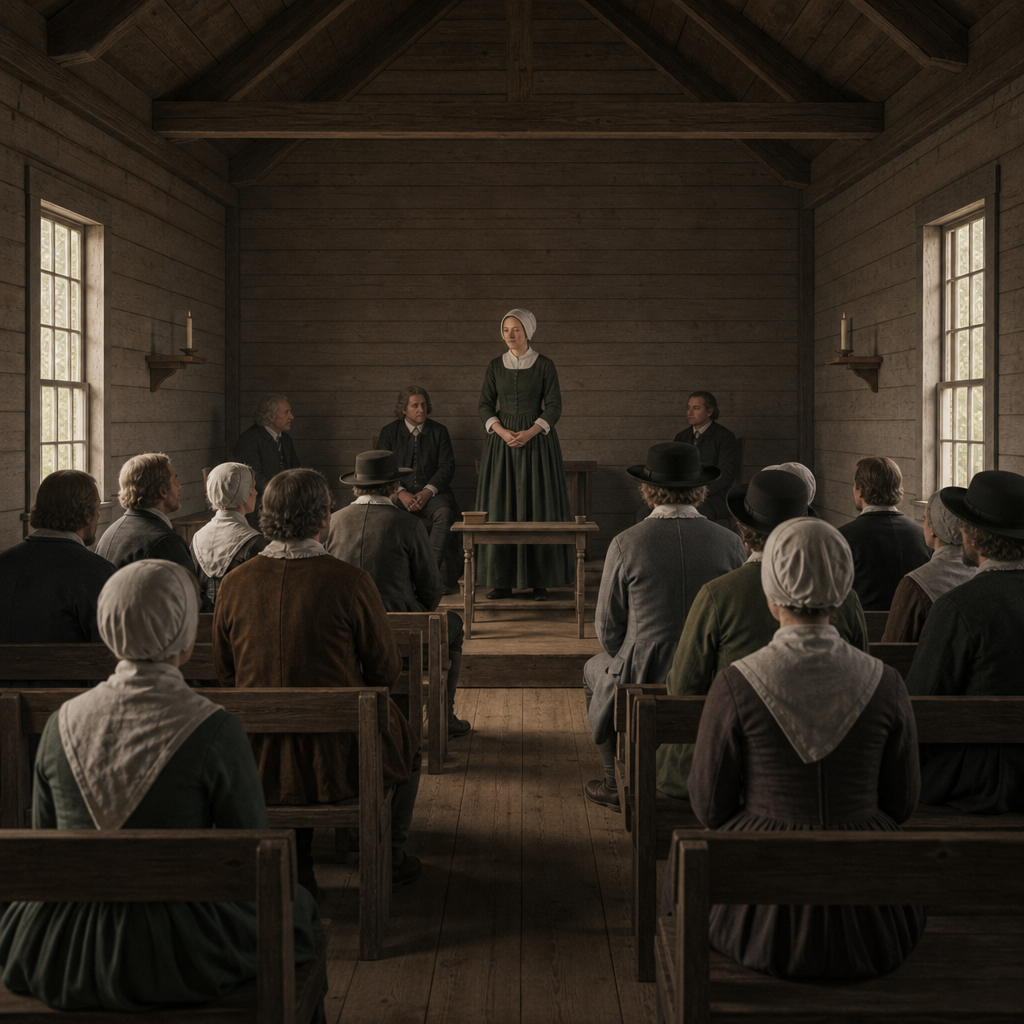
Isaac Ricks, the immigrant, and his family appear to have been regularly active in their Quaker church. Based on the political climate at the time they certainly must have experienced some of the negative consequences of their choice of religion. Isaac Sr and his wife died in Virginia, but it is telling that their son Issac Jr ultimately chose to move to North Carolina. This image of a Quaker gathering in a meeting house makes you wonder why this peaceful group of worshippers attracted such angry hostility from others in their community.
[Image: AI generated image of the inside of a Quaker meetinghouse in the late 1600s in Virginia.]
Isaac Ricks Jr (1669-1748), my 7th great grandfather, married Sarah McKinnie, the daughter of Barnaby McKinnie, a Justice of the Peace, a Judge of the General Court and a Member of the General Assembly in North Carolina. In 1722 when Barnaby died he left Isaac 100 acres to land. Isaac’s will was probated in Edgecombe County, North Carolina in 1748. He left his plantation to his son Abraham (after a life interest to his wife), 400 acres of land to his son Robert, 80 pounds of Virginia currency to his son John; enslaved persons, furniture, household goods and livestock were allocated among these three sons and two daughters. Interestingly, only his wife and Abraham are referred to as “my beloved” in the will, and he chose not include five of his sons, including my 6th great grandfather, Benjamin Ricks. The omission of his two oldest sons, William and Isaac III, might make sense. It appears William renounced Quakerism and was quite wealthy (his widow, Sarah his 2nd wife, mentions 50 to 60 enslaved persons in her will). His second oldest son Isaac III owned a successful grist mill on the Tar River and the land on which the present town of Rocky Mount now stands. Benjamin’s story is told in the next blog.
