William Cobb (1695-1769)
My Paternal 6th Great Grandfather, wife unknown
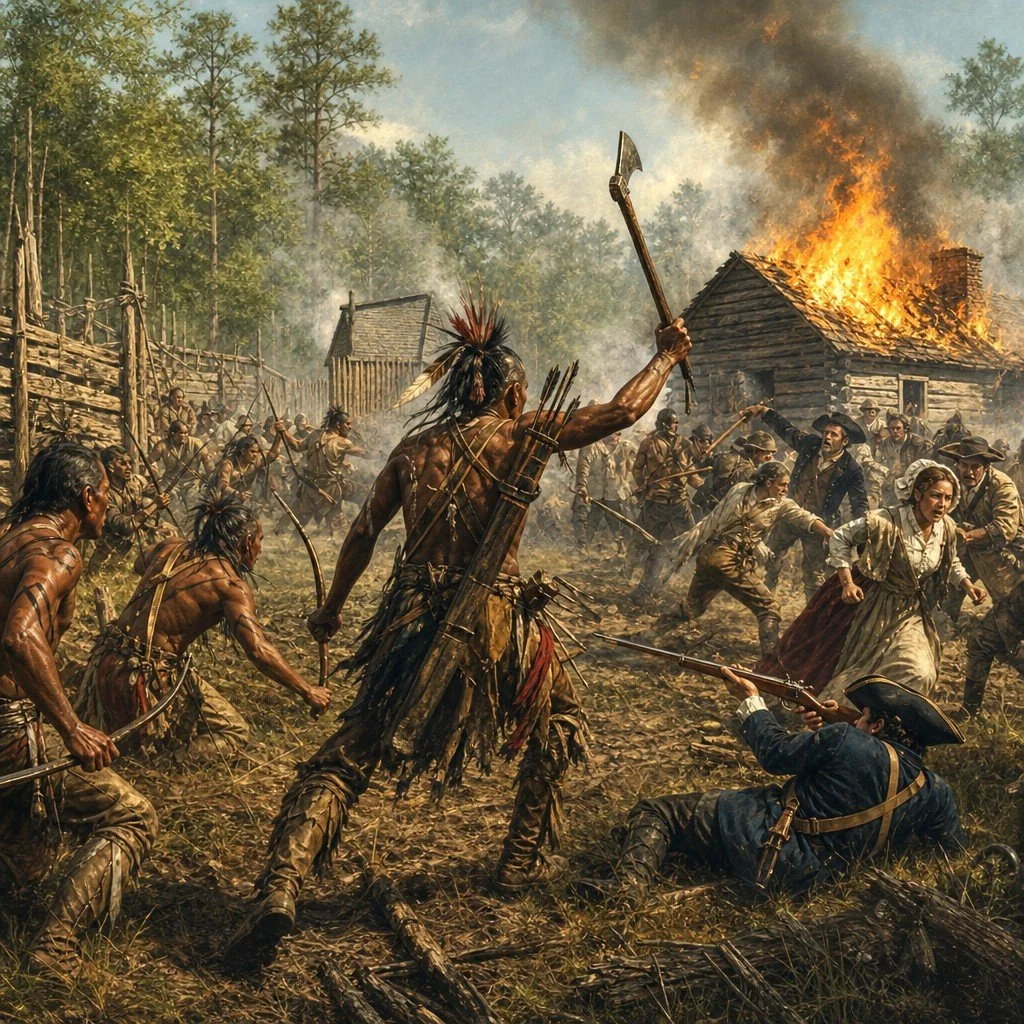
William Cobb, the son of Edward Cobb and Dorothy Blunt, was born in Isle of Wight, Virginia near the border of North Carolina. In the year William Cobb was born, 1695, the population of the Virginia Colony had grown to nearly 60,000, more than double the number of people that existed when his father was born. By 1730 the colony had nearly doubled again. For many people, Virginia had become much too tame and they resented the encroachment of government in their lives and the inevitable the imposition of taxes that went with it. Tobacco had drained Virginian land of its nutrients; and the promise of fertile land in the south was tempting. However, the decision to move south was fraught with danger. The inflex of white settlers provoked bloody uprisings by Tuscarora tribes in 1711 and 1713. Smaller threats existed until the mid 1750s.
[Image: AI generated image of Tuscarora Uprising in 1713 North Carolina]
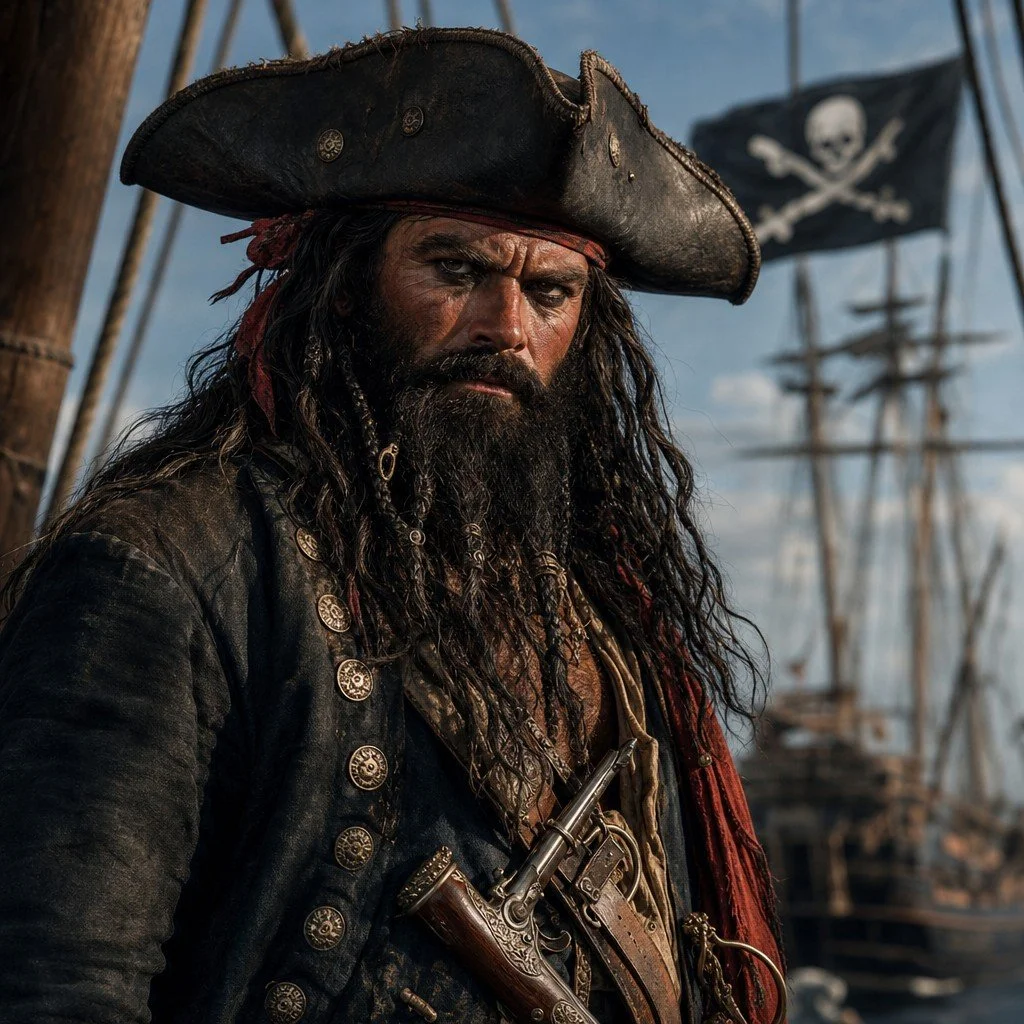
There was danger on the land but also from the sea. Dubbed the “Graveyard of the Atlantic,” the Outer Banks of North Carolina was notorious for its very unfriendly coastline. Unlike the tidewater area in Virginia, its shores were not deep enough for ships that could carry cargo direct to England. Goods had to be shipped in smaller vessels to ports in Virginia where they could be loaded onto bigger ships. Pirates patrolled its waters, creating terror in their wake. The coastline made an ideal hideout for pirates, who bolted out of hiding to plunder the ships passing by. One of the most pathologically deranged pirates, Blackbeard, was finally beheaded during a battle off the coast of North Carolina in 1718. Settlers were undoubtedly greatly relieved. By 1730 piracy has ceased being a meaningful threat and North Carolina’s coastline became safe for merchant shipping. In 1729, eleven years after Blackbeard beheading, William’s sister Elizabeth and her family made the bold move to relocate from Virginia to Bertie County in North Carolina. Gradually other Cobb family members, including William, trickled over the border to join her. They were all in for a very wild ride.
[Image: AI generated image of the dreaded Blackbeard]
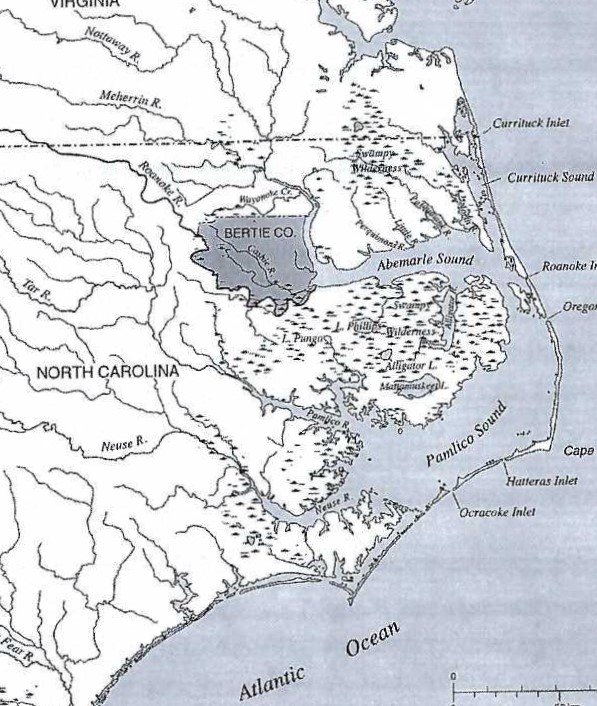
Bertie County was founded in 1722. During the early colonial period there were no roads, no schools and no churches and most white residents lived an isolated rural existence with their slaves. They worked from “cant to cant– when I wake up I can’t see nuthin’ and I stop work when I can’t see nuthin’.” Only the rich had time for education and social activities. Up until 1760 the only central gathering place in the County was the courthouse. Despite the distance and poor roads, white settlers got a respite from their isolation four times a year when they made the pilgrimage to the courthouse for quarterly meetings. They participated in cockfights, musters and horse races, and bought and sold their home grown goods. Settlers bought and sold slaves, gamed, drank large quantities of rum and too often fought with each other. One courthouse meeting was attended by William Byrd, the Virginia Commissioner, who was appalled by the lawless behavior of the inhabitants. He noted Bertie County had a reputation for “looseness and overindulgence in sex” and described during fights “where eyes were gouged out, noses and tongues were slit, ears and fingers bitten off.”
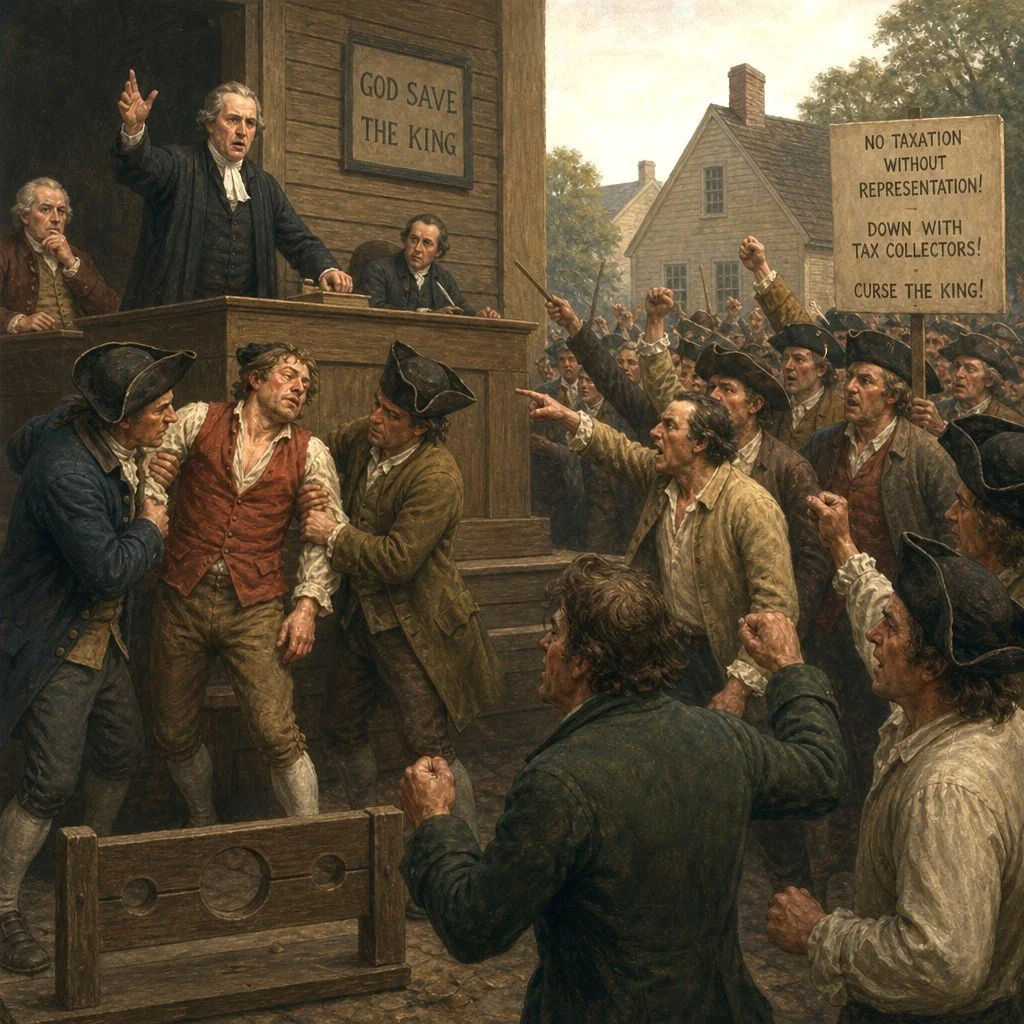
At one courthouse meeting a magistrate took it upon himself to order a rabble-rouser to the stockade for being drunk and disorderly. The crowd turned on him and he narrowly escaped being whipped. In a later incident, after hearing that a man was accosted by a tax collector for not paying his taxes, a crowd of 500 men gathered, made rebellious speeches, cursed the king’s name and threatened the tax collector with violence. The crowd disbursed when the man and the tax collector came to an agreement.
Some African Americans attended these gatherings to either assist their masters with heavy loads or to be sold, but most lived on the rural plantation and never got further than their master’s fields. Tuscarora Natives who lived on reservations, rarely ventured off them for fear of being beaten or kidnapped and sold into slavery. The area around the reservation became known as “Grab Town.” What is not widely known is that, despite the great risks, the Tuscarora were actively involved in sheltering escaped slaves and assisting them in their escape through an “underground railroad” that ran through their reservation.
[AI generated image of Bertie County rowdy courthouse meetings.]
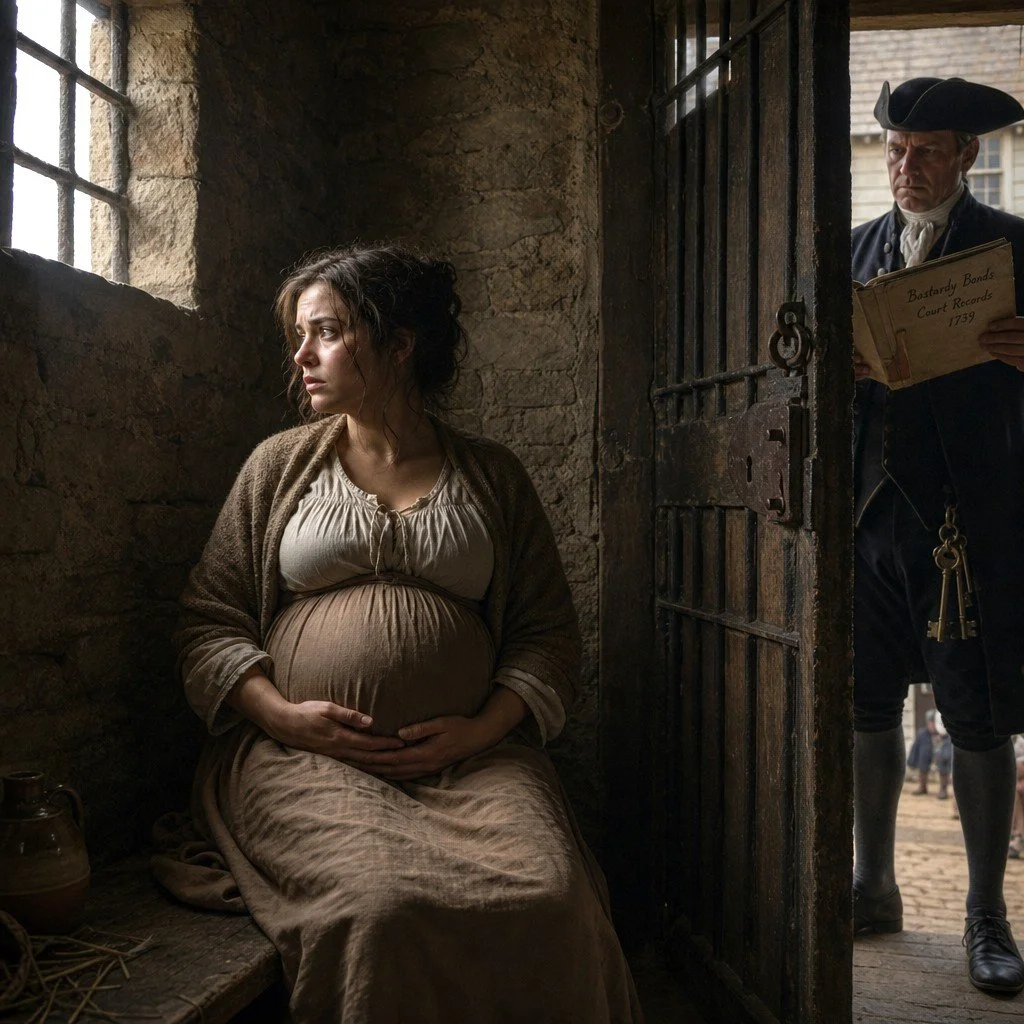
Beginning in 1739 the courthouse kept records of “bastardy bonds”. In these bonds, the fathers of illegitimate children were forced by the court to either care for their children or be imprisoned. If a woman refused to name the father, she was jailed until she confessed. Interestingly, but sadly not surprisingly, this law did not apply to Native and African Americans nor to their rich slave owners who could sexually abuse their enslaved women without fear of consequence. Out of curiosity I checked the North Carolina bastardy bond listings for references to our family name. I did find some Cobbs, but there did not appear to be any direct connections to my ancestors.
[AI generated image of a woman jailed for refusing to name the father of her unborn child.]
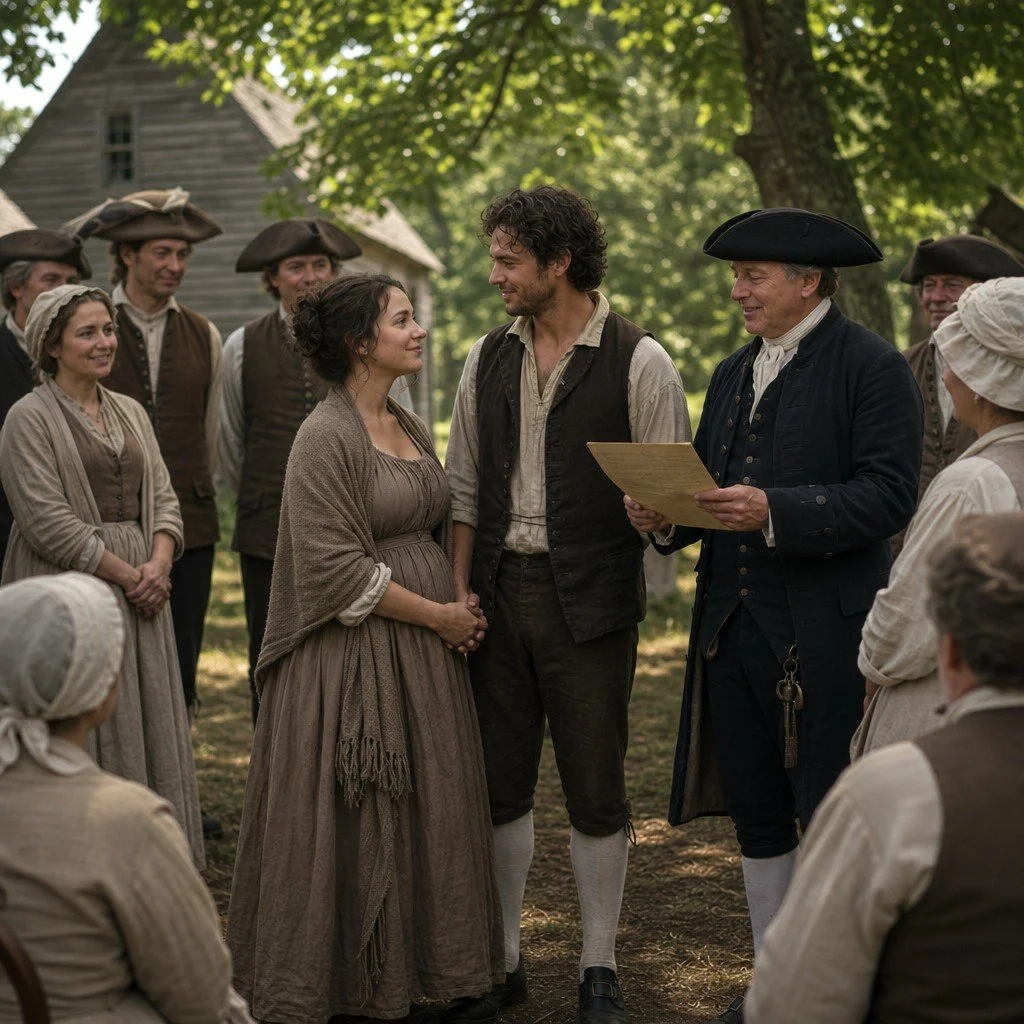
Only ministers of the Church of England could perform legal marriages and other religious groups were not recognized. Marriage certificates were a luxury only the rich could afford. Many couples in Colonial America skipped the formality of marriage. Instead white settlers posted “banns” to inform the community of their intent to marry. Banns were read three times in a row, after which the community considered the couple to be married. These informal unions allowed a couple to separate on their own terms. With more men than women in the colony, an abandoned wife could form a new union without difficulty.
[AI generate image of a couple getting married informally in colonial times.]
Although I was able to put together an interesting glimpse of life in wild and crazy Bertie County during William’s lifetime, I could find little about William himself. What we do know is that William fathered at least one child, Edward (born around 1727), but the name of his wife (if he married) and any other of their potential children is a mystery. We know he witnessed the sale of his sister Elizabeth’s land to their brother Edward Jr in the Isle of Wight in Virginia in 1729. We know he was not mentioned in his father’s will but most likely he had been given his inheritance before his father’s death in 1731. We know William followed in his older siblings’ footsteps south to the new frontier but the year of his departure from Virginia to start a new life for his family is not known. The earliest proven mention of his residency in North Carolina was in June of 1753 when William witnessed the sale of land on the Tar River abutting Cheek’s Mill Creek. In 1756, he gave 193 acres of land on Cheek’s Mill Creek to his son Edward. In 1759, he purchased 100 acres of land on Cheek’s Mill from John Thigpen. It appears he then relocated to Johnston County because two years later in 1761 a William Cobb, “of Johnston County”, sold 100 acres which abutted Cheek’s Mill Creek to Thomas Harrell, of Bertie County. The last record of William was in 1768 in Johnston County. If William left a will, it hasn’t been found. His son Edward’s story is told in s separate blog.
