Rosa Judson Rodgers (1893-1967)
My Maternal Grandmother, married Durant Howard Tillitt
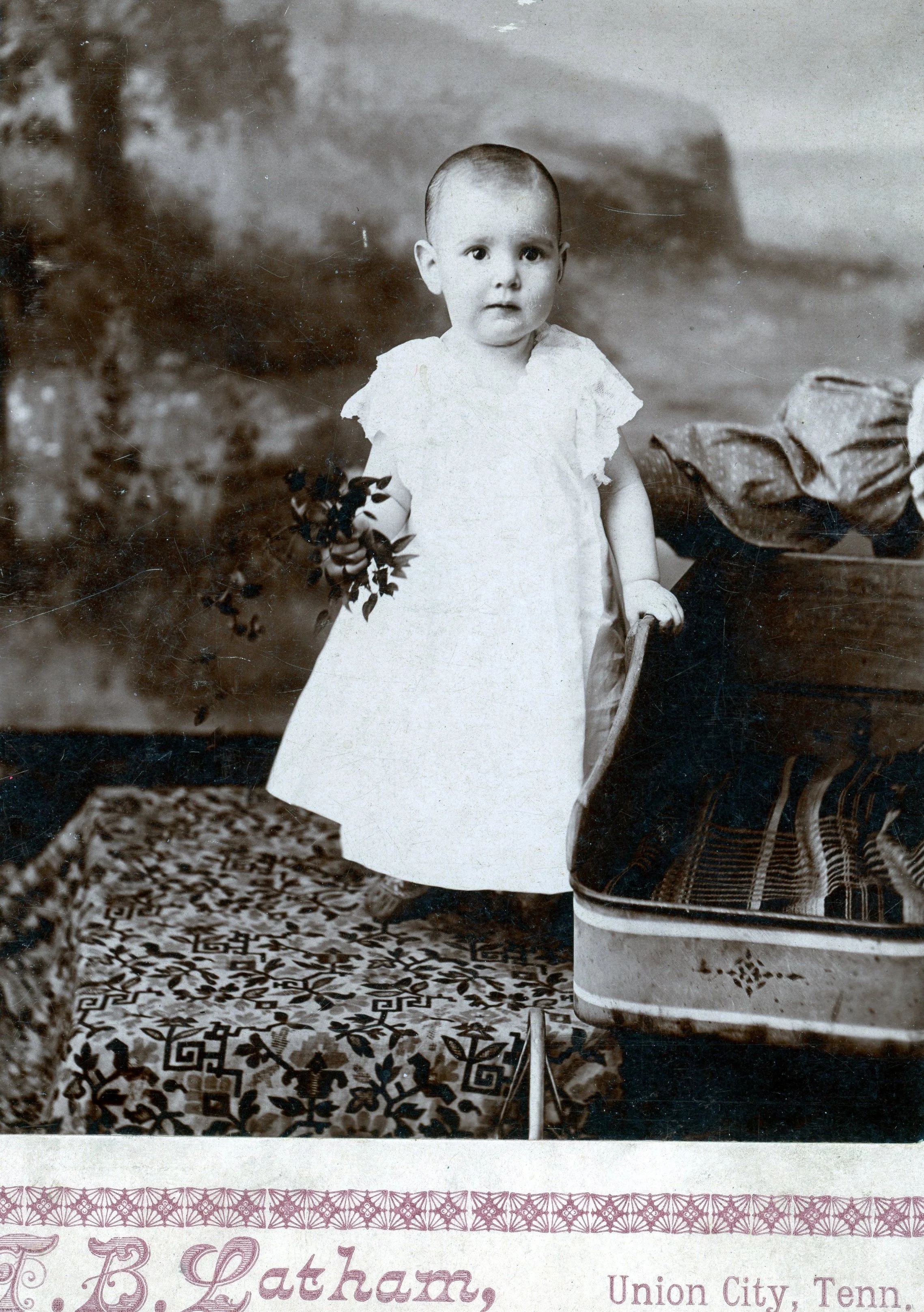
Rosa Judson Rodgers, the daughter of Dr. Charles Weldon Rodgers and Anna Leticia Hearne was born in Como, Tennessee on May 20, 1893. She was named after her mother’s sisters, Rosa Carlton and Effie Judson.
When she was a young girl, a boy had a crush on her and showed his affection by dipping her long strawberry blond pigtails in the ink well on his desk. He also gave her a paper ring from an RJ Reynolds Tobacco Company cigar because it had her initials on it “RJR”.
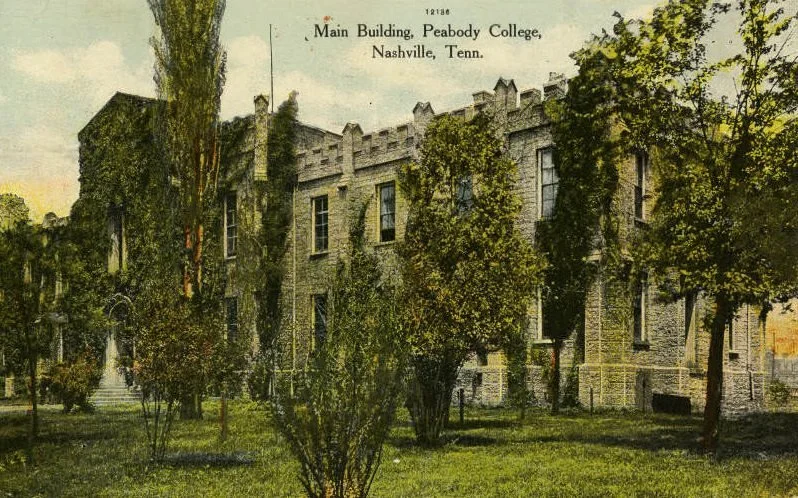
Her father didn’t think girls needed to go to college, so with single minded determination, Rosa paid her way through both an undergraduate and graduate degree at George Peabody College for Teachers in Nashville, Tennessee (now part of Vanderbilt University). She had a summer teaching job at the Louisiana State University in Baton Rouge, where she graded student papers on the Mississippi River ferry to catch the breezes and stay cool. She taught elementary school in Mackenzie, Tennessee (5th and 6th grade) and later in Paris Tennessee (3rd grade) followed by a two year position at Peabody College helping to train other would be teachers. After completing her undergraduate degree in 1919 at the age of 26 she attained a supervisor position in the education system in Montgomery, Alabama. No small feat given the times she lived in.
[Photo: Rosa Judson Rodgers Age 2 1895]
The view up until the early 1900s was that women were not capable of advanced education and that the “strains of collegiate life” could harm a woman’s health. Why waste resources on women if they were only going to stay in their “natural sphere” and stay home and raise babies? In 1900 barely 2.8% of U.S. females attended college. Only the “wealthy and favored few” attended colleges.
Rosa was neither wealthy nor favored, she was just drawn to learning and wanted a career. Eleanor Roosevelt’s mother once remarked that “women who went to college were very apt to be old maids and become book worms – a dire threat to any girl’s chance of attracting a husband.” Yet, Eleanor grew up to become one of the most influential and beloved First Ladies and female leaders of the 20th century. I’ve often wondered who Rosa’s role model was.
[Photo: George Peabody College for Women in 1909]
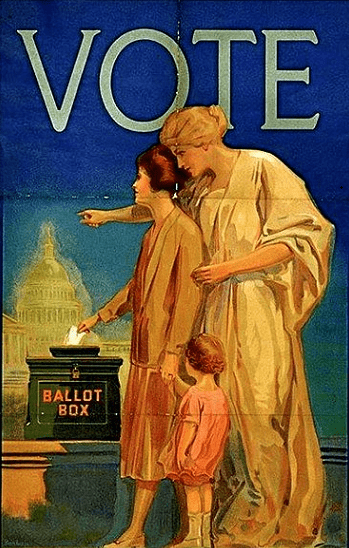
By 1920 the number of women attending college at risen to a mere 7%. In August of that year, women after decades of struggle, were finally given the right to vote. Although in some places in America the “roaring twenties” were in full swing – illegal alcohol, bobbed hair, short dresses and the new dance craze “the Charleston” - people in small town America did not participate in this lifestyle.
[Photo: August 8, 1920 Women finally get the right to vote]
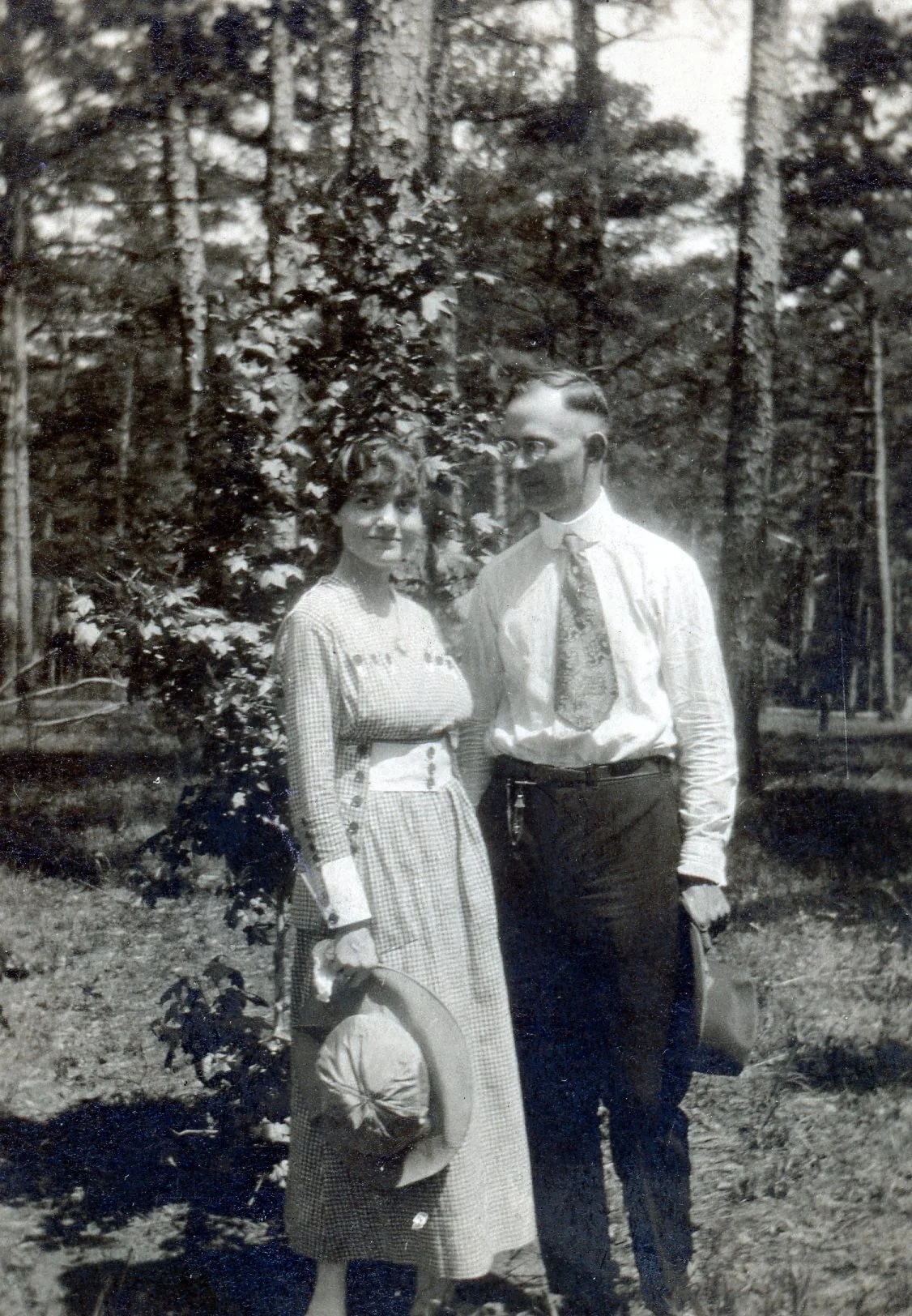
Rosa met and married a man who was an equal to her intellectually and supported her need to have a career. His name was Durant Howard Tillitt. They married in 1921, honeymooned in Niagara Falls and settled into married life in a quiet little town, Andrews, in the mountainous western corner of North Carolina. Howard opened his legal practice and was actively involved in politics.
{Photo: Rosa and Howard in 1921]
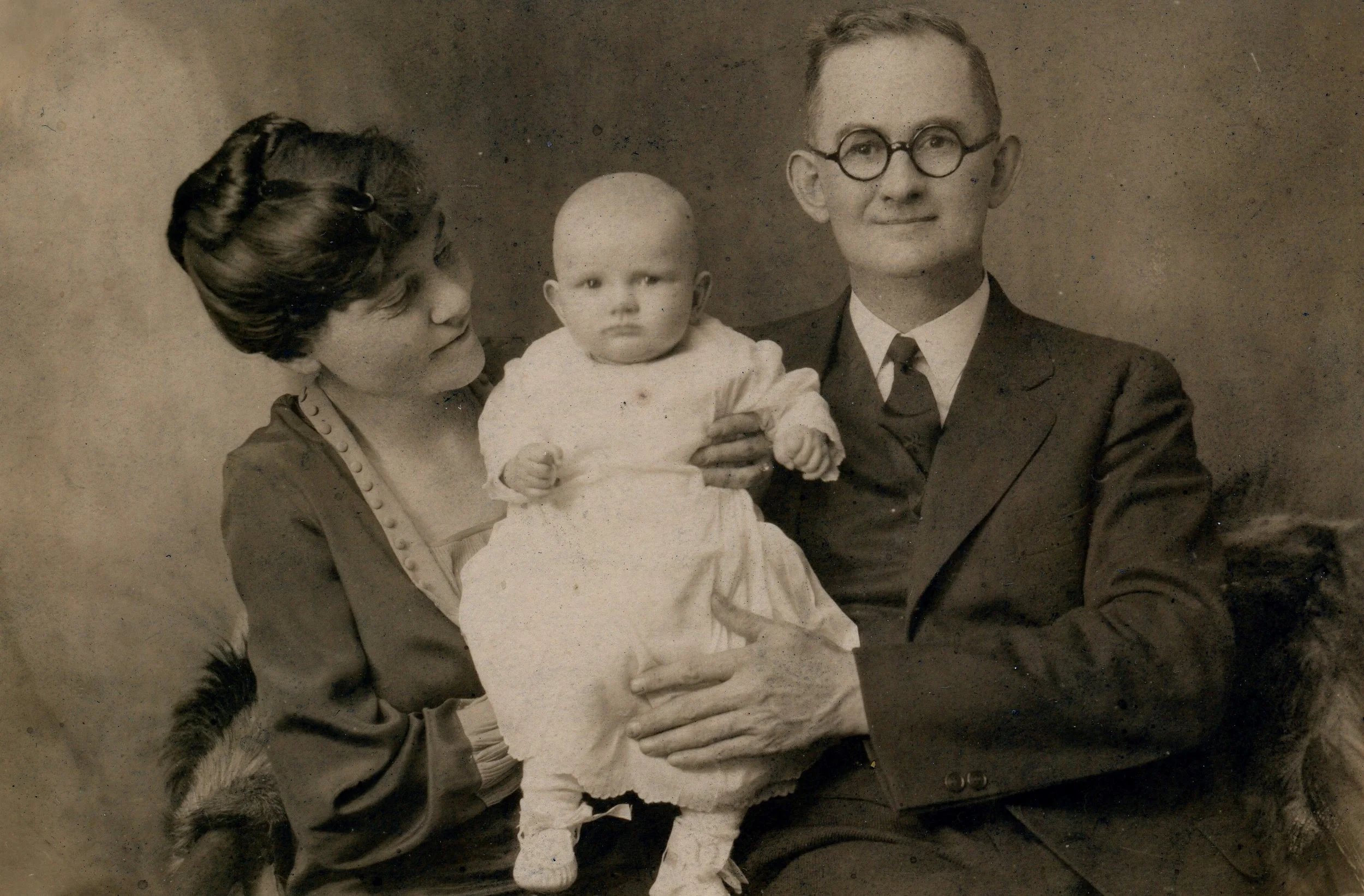
[Photo: Rosa, Howard and Bettie Anna in 1927]

Rosa got a job teaching 5th grade at the elementary school where she continued to work until she gave birth to their only child, Bettie Anna (my mother) in 1927. Rosa wanted more children but her husband, who was 10 years older than she was, felt he was too old to have any more.
[Photo: Rosa with Bettie Anna in 1828]
When their daughter started school, Rosa went back to work teaching – this time for 7th graders. Three years later in 1936 she became principal of the Andrews Elementary School. Her world changed on April 13, 1940 when her beloved Howard died suddenly one evening of a heart attack. Rosa laid off her live-in maid, took in boarders and rented two rooms in the house to help make ends meet.
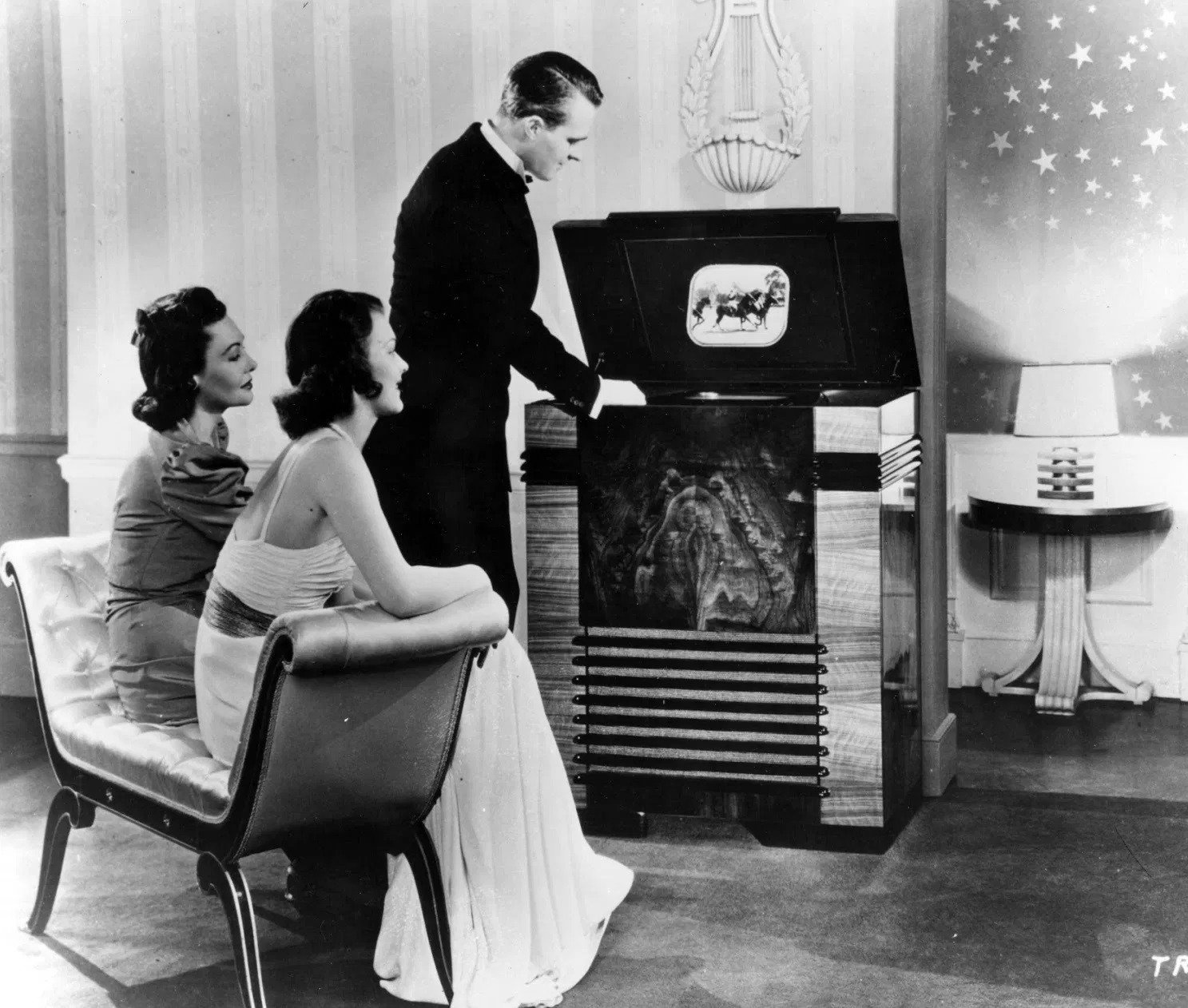
The family had planned to take a trip to the World’s Fair in New York that summer and Rosa decided to attend, despite the tragedy that had occurred. My mother recalls that even though Europe was embroiled in war, they were surprised to discover France and Germany had a pavilion side by side at the Fair. At the Fair they were astonished to see an exciting new invention: the television!
[Photo: RCA Television at the World’s Fair in NY]
In 1942, Rosa with her daughter Bettie Anna in tow, went to Nashville to attend summer school to complete her final work on her master’s degree at Peabody College. While there, Rosa rekindled a relationship with an old high school beau, Charlie Witherspoon. Charlie was a widower who was living with his son and his sister-in-law. The sister-in-law was dead set against the romance and threatened to have his son’s inheritance cut off unless Charlie ended his relationship with Rosa. The threat nipped their relationship in the bud.
When Rosa returned to Andrews, the superintendent of schools was jealous of her, and convinced himself she was out to get his job. He convinced the School Board that the two of them could not work together and he had her fired -- something he would never have got away with when Rosa’s husband, the Mayor of the town, was still alive.
Undaunted, in 1943 she landed a job as Supervisor in the City School system in Statesville, North Carolina. The only home that Bettie Anna had ever known was sold and the family moved into a small two bedroom apartment on 118 Mulberry Street. Rosa slept on the couch in the living room so her mother and daughter could have their own rooms.
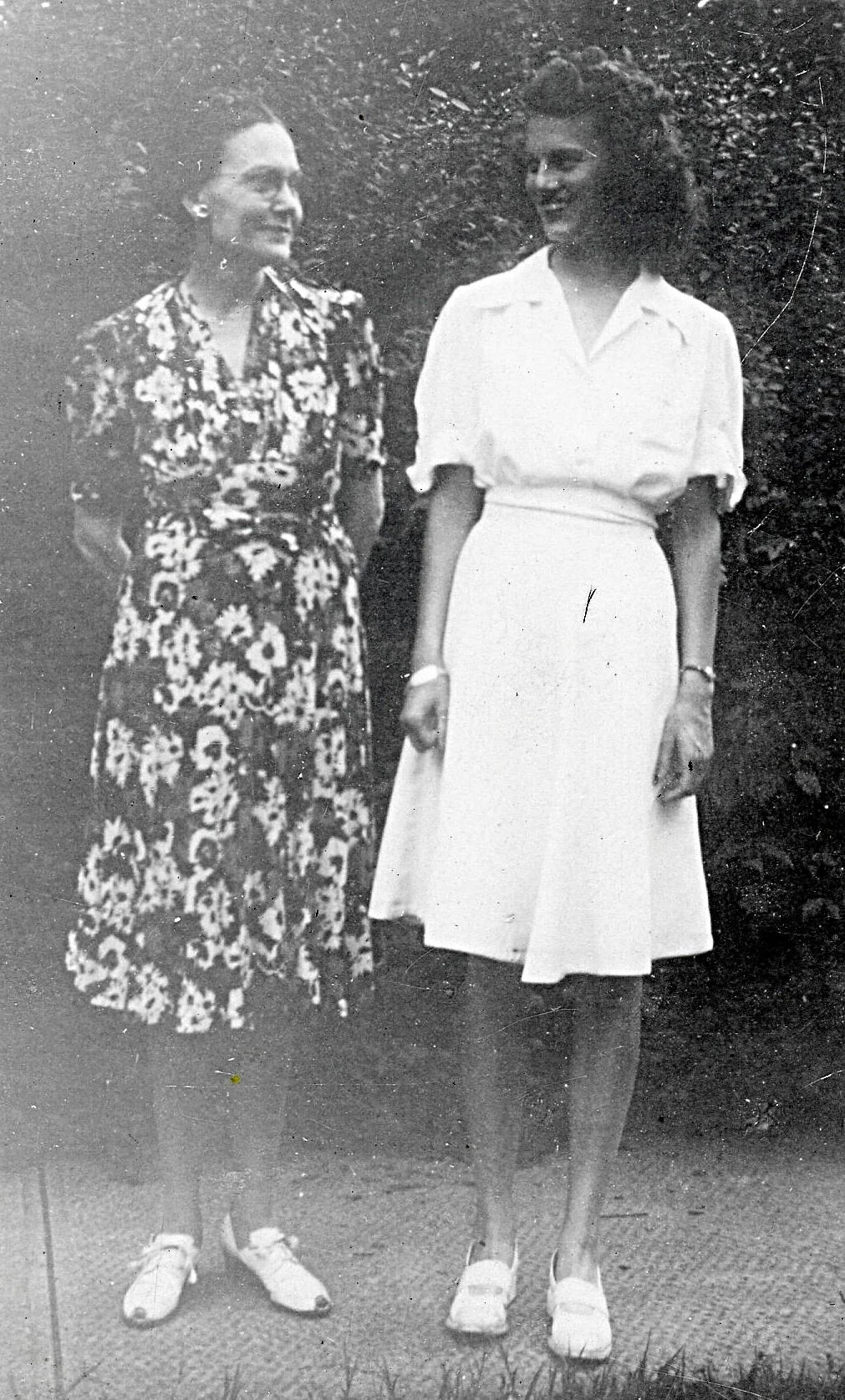
Her daughter Bettie Anna graduated from high school in Statesville in 1944.
[Photo: Rosa and Bettie Anna on high school graduation day]

Four years later in 1947 Rosa got a break and was given an exciting job opportunity as Director of Elementary Instruction working for the Superintendent of Schools in Durham, North Carolina. With the generous help from her brother Gordon, she purchased a charming home in Durham where she lived for the rest of her life.
[Photo: Rosa’ home at 1410 Magnum Street in Durham, North Carolina]
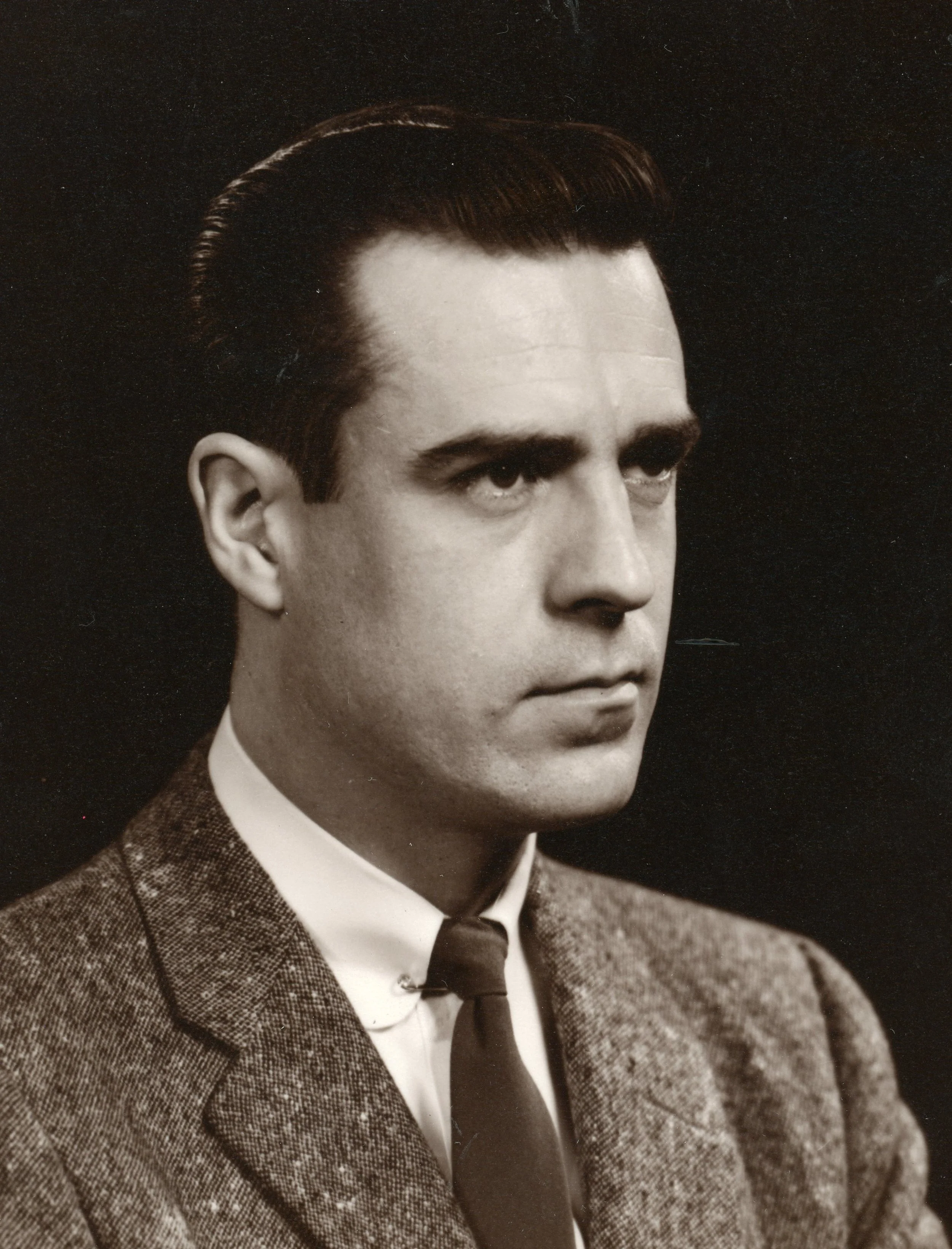
In the early 1950s Rosa took in a boarder named Ralph Reins who lived for many years in her spare bedroom. He had studied design at NC State University and Richmond Professional Institute and was employed as a graphic artist for various commercial businesses. They became the best of friends, and she was heartbroken when he moved out (while she was traveling so he would not have to face her!) in 1959. They remained friends for nearly 40 years. Ralph was strikingly handsome with a heart of gold, and we all adored him. I decided at a very young age that when I grew up I wanted to marry him. He was my first crush. After he moved out, he lived in a house with a male housemate named Mack. Their home was filled with wonderful art and their landscaping was a lush magazine-worthy treasure with secret nooks and crannies and hammocks. It was an inspiration for my young mind. In the 1980s Mack came down with a strange blood disorder of unknown origin and died. In August of 1991 Ralph sat in a chair in his beautiful garden, stuck a gun to his head and pulled the trigger. He died instantly. The pieces fell together, and it dawned on us that Ralph was gay, that he too must have contracted AIDS (the strange disease that finally had a name), that he had seen what it could do to his lover and decided not to go down that road himself.
[Photo: The charming and handsome Ralph Reins, my first crush]
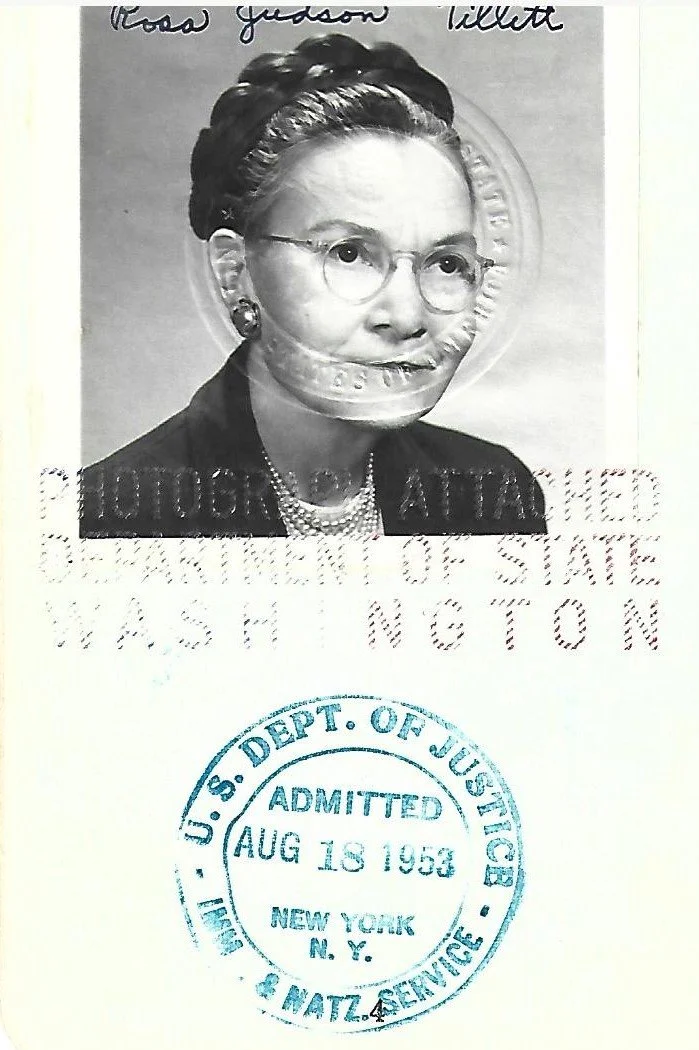
Rosa traveled all over the world bringing home artifacts and costumes and prepared slide shows to share with civic clubs and church groups. She believed that laughter was the common bond among people. “I have rarely met anyone, anywhere I have ever been, that wouldn’t smile if I smiled at them.” One time she flew to London and took a voyage on a Dutch cargo ship all the way around the tip of Africa and back up again through the Suez Canal and back to London. One woman in the audience at one of her lectures said she wanted to go to Africa, but she wasn’t interested in the people, or the animals and my grandmother responded: “Well, then why on earth would you want to go?” It was unusual for women of her era to travel unaccompanied around the world. The passport issued to her in 1953 had her name followed by the words “…the bearer is accompanied by his wife xxx and his minor children xxx, xxx.” America was just not prepared for women like Rosa.
[Photo: Rosa’s 1953 passport]
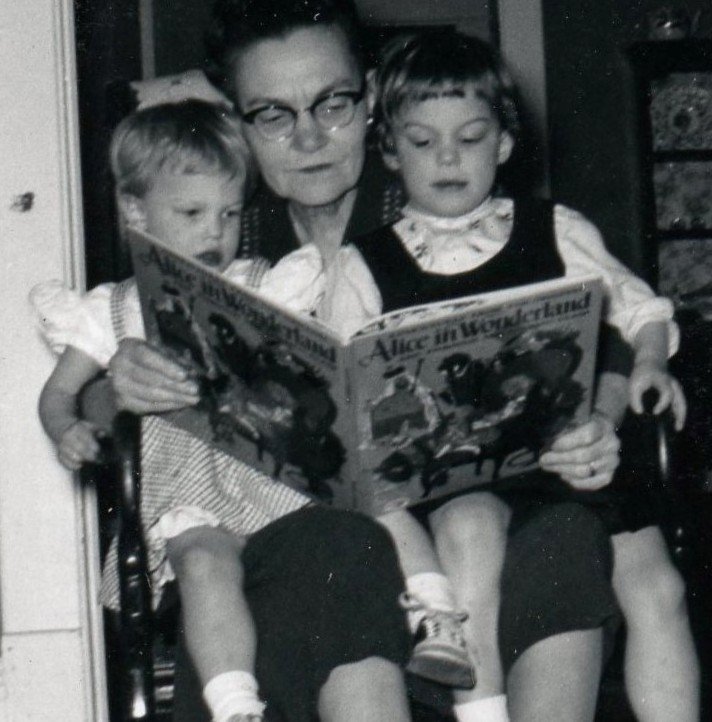
Rosa had a hearty infectious laugh and was well loved for her story telling by children’s groups and adults alike. She was widely known as the “Story Lady” in Durham because of the delightful fables and children’s stories she shared with the children all over the City. As children we rocked on the glider on her front porch on hot summer nights and were mesmerized by her stories and colorful accents, particularly the stories about “Brer Rabbit.” Her home was chalk full of wooden African carvings and masks, Japanese dolls in glass boxes, costumes, hand painted Asian plates and other goodies from her travels. She set up her slide projector in the dining room and we gazed wide eyed at pictures of her adventures. I particularly remember one picture of her standing next to an ant hill in Africa
that was taller than she was. Very few women in her time would have embarked on such journeys. Hands down had the most amazing grandmother ever.
[Photo: Out favorite place in Grandma’s house, her lap at story time. Photo taken of Rosa with her granddaughters in 1955.]
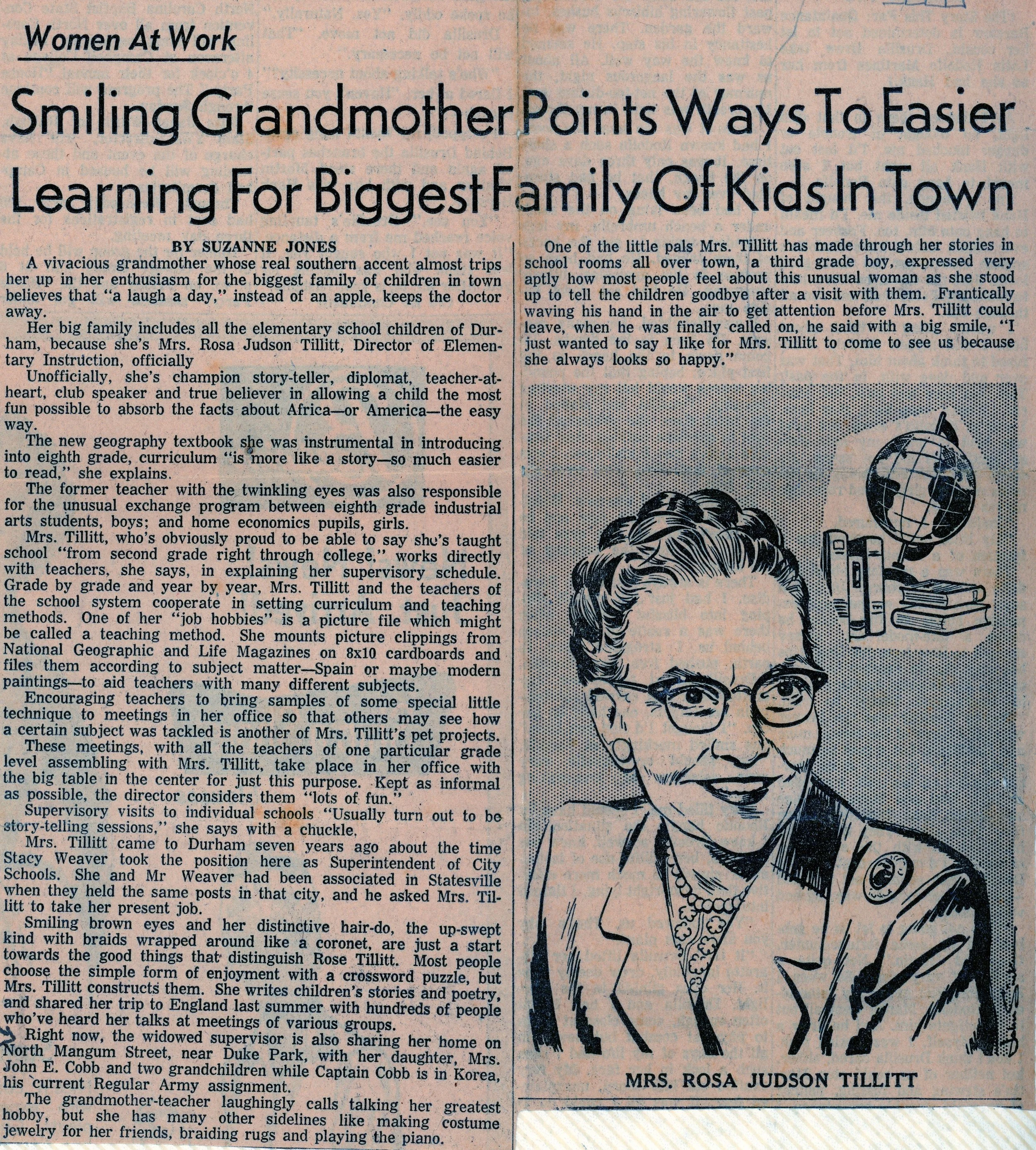
If you take the time to read this glowing newspaper article written about Rosa in 1956, you’ll understand why this remarkable woman was beloved by her family and her community.
[Photo: Newspaper article featuring Rosa in 1956.]
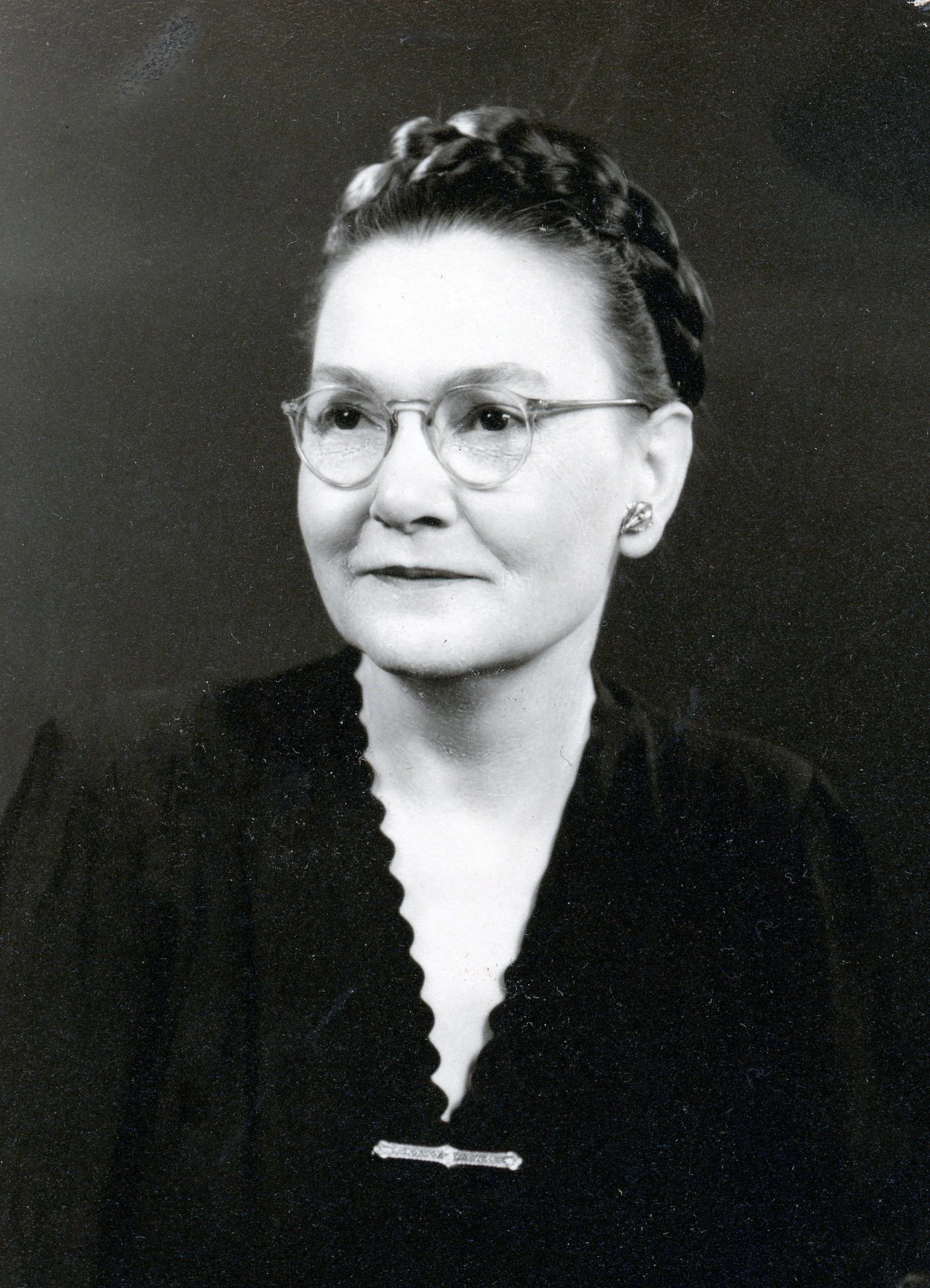
Her bookshelves were loaded with age appropriate children’s books each time we visited. She had a chest with tiny drawers filled with brightly colored beads that she used for making her dolls and intricate beaded stuffed animals that were sold in local gift shops. She had stacks of sketch books around the house in which she drew pictures of eyes and noses and ears. We’d dangle yarn off the porch to play with a feral cat named Mustard. She’d give us empty spools with bowls of soap detergent and water, and we’d cover her porch and sidewalk with bubbles. We’d walk down the honeysuckled lined street down to the park to play on the swings and the merry-go-round. We’d catch lightening bugs in her front yard at night and make homes for them in glass jars. She’d make what came to be known as the “Grandma breakfast” – scrambled eggs, bacon, grits and thin sliced toast slathered in apple butter. The bread was sliced very thin and broiled so it was deliciously crispy. Her other claim to fame was a delicious homemade vegetable soup but other than that, this career women had never really learned to cook and fed us mostly take out dinners (yummy Brunswick stew!) when we would visit.
[Photo: Rosa with her distinctive trademark braided hair style in 1960]
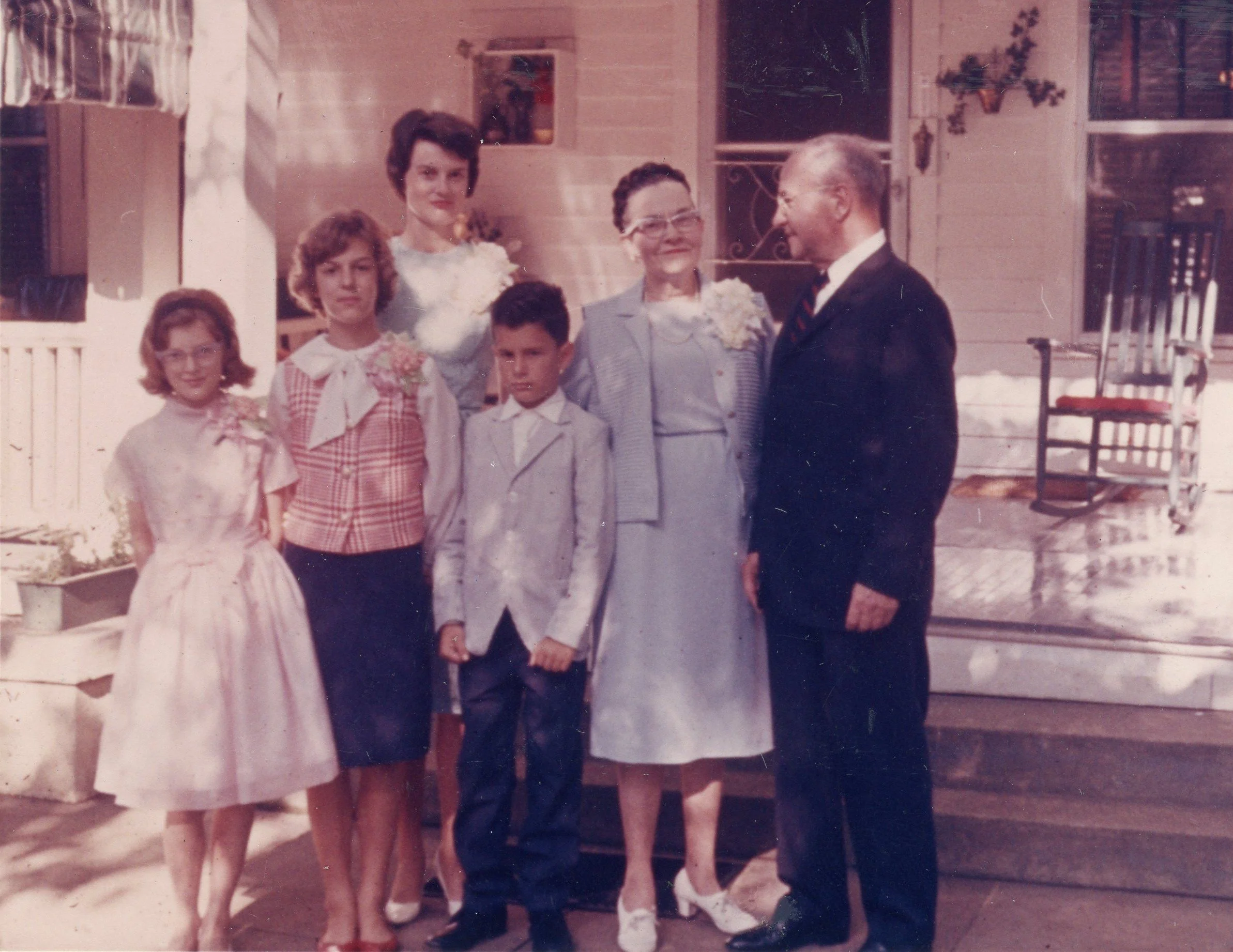
I adored her – as the middle child in the family I always felt somewhat neglected – but she always made me feel special. She once told me never to worry because like me, the best gifts came in small packages. In the early 60’s she wanted me to take a river boat trip down the Mississippi river with her, but I was busy in my pre-adolescent world by then and turned her down. It was a decision that I have always regretted.
Not only did she love crossword puzzles she was also skilled at creating them. She had chess boards all over the house and would play chess by mail with various people, each letter indicating the next move the player wanted to make. She married one of her chess partners in June of 1964, William Whigham Taylor, a retired professor from Florida, in the hopes of having a travel companion. Unfortunately, he became ill, and she spent much of their short marriage taking care of him until his death from a stroke in February of 1967.
Five months later, Rosa became ill as well and died after several weeks in the hospital of kidney failure. The doctor told my mother that Rosa’s disease was terminal, but Mom chose not to tell her because she didn’t want to upset her in her final days. Rosa was so admired that even though she had been retired for eleven years, Durham city schoolteachers, principals and office personnel of the city schools all served as honorary pall bearers at her funeral. The Story Lady was gone forever, but certainly not forgotten!
[Photo: Rosa marries Bill Taylor in her home with her family in 1964]
My obsession with traveling and of the African continent in particular, my love of books, my creative energy, my sense of self confidence – I attribute it all to her. Her spirit is always with me. Actually, much to my unending joy, according to a psychic that I once hired, Rosa’s spirit is often with my daughter, Lindsay. The psychic described my grandmother in great detail -- her unusual hair style, her glasses, her story telling, her love of sewing -- and said that she could see her spirit standing right beside Lindsay. The psychic was quite extraordinary and described other things that she could not possibly have known about my life and family. Lindsay subsequently went to an unrelated psychic in a different state that told her similar things about Rosa. Quite amazing. I find it very comforting.
