The Gray Family
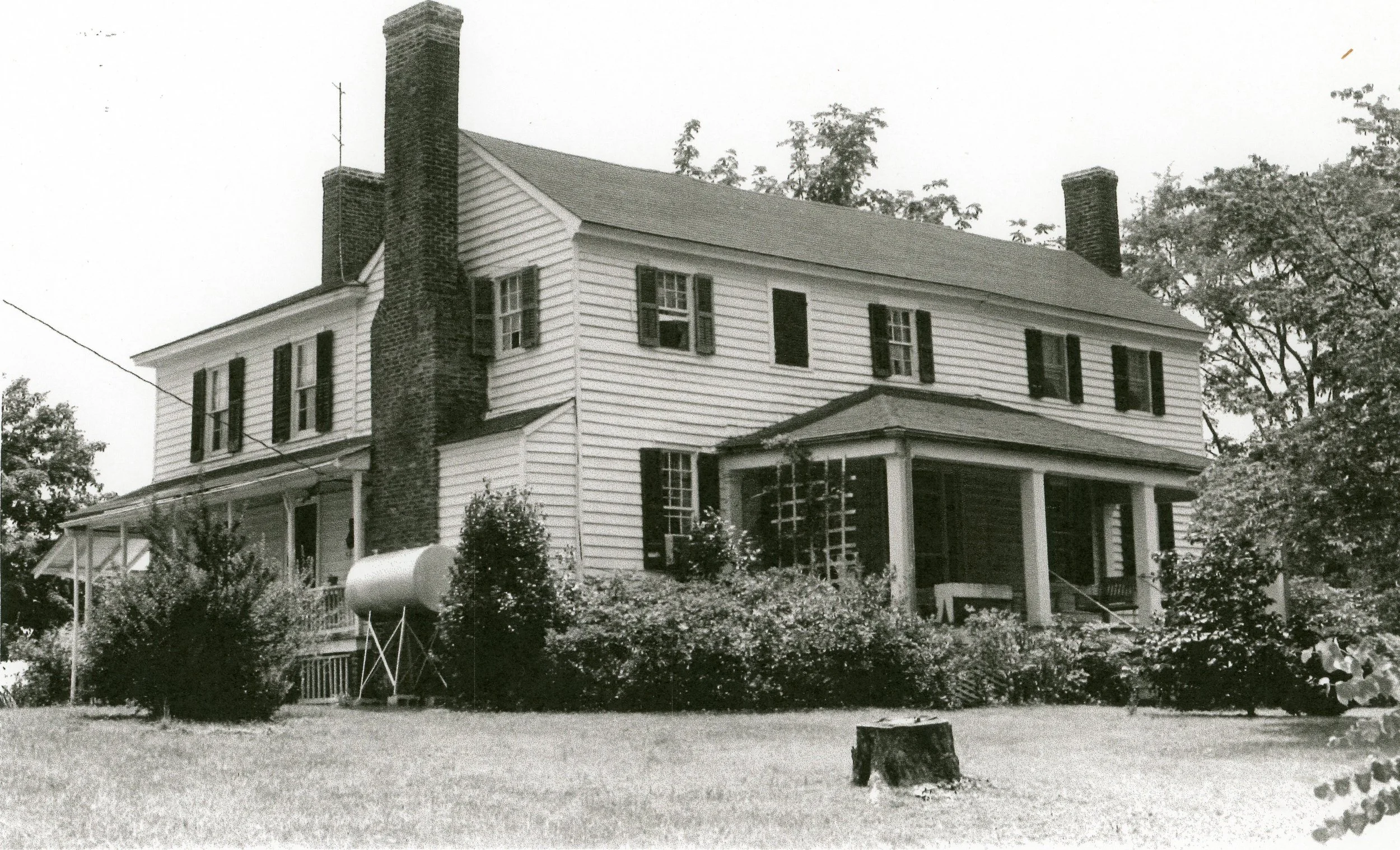
John Gray Sr, my 6th great grandfather, was born on October 21, 1662 in Glasgow, Scotland. He married Jean Pateson in July 1686 and produced four sons, John Jr, Daniel, William and Robert. His eldest son John Gary Jr, born in Scotland in 1691, emigrated to North Carolina in 1713 as a surveyor and married Susannah Ann Bryan, the daughter of Lewis Bryan Sr and Elizabeth Hunter in 1717. In 1729 John Jr acquired 1,000 acres of land overlooking the beautiful valley of Cashie for 140 pounds. The land was “always spicy with the scent of pine and cedar and in spring and early summer fragrant with the blooms of wild grape, sweetbriar roses and honeysuckle.”
[Photo: Rosefield Plantation in 1982]
The plantation was named Rosefield after the bed of wild roses that grew at the original site. One hundred acres of his land was later donated by his son William with the stipulation that it should “forever be used as a town.” That town became the Town of Windsor in Bertie County, North Carolina. The plantation house located on 60 acres of the original tract, is currently listed on the National List of Historic Places, and as of the date of application in 1982 remained in the name of John Gray’s descendants.

Honeysuckle
The Plantation’s beauty and lovely scents in summer were due to these flowers.
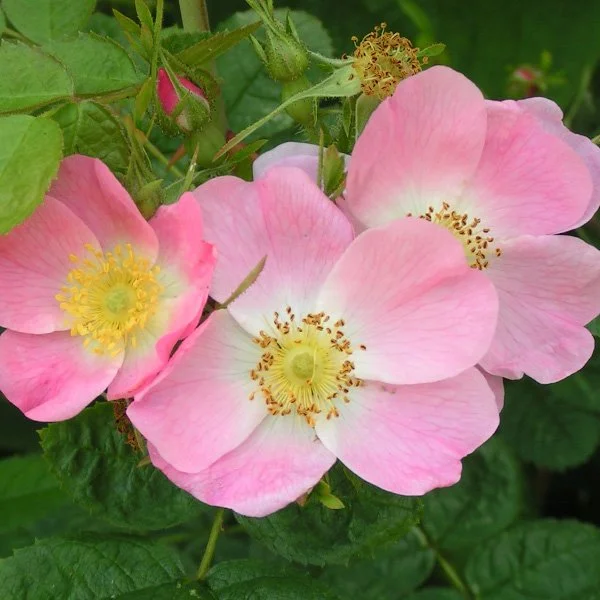
Sweet Briar Rose
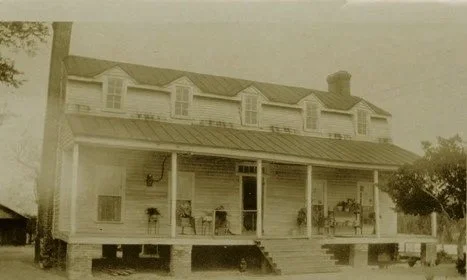
John Gray Jr (1691-1750) and his wife Ann (1696-1770) produced eight daughters and three sons. It is unclear where John’s original house was on the Rosefield plantation, but their daughter Barbara and her husband Col Jacob Blount were living in it with her father when their son William Blount was born in 1749. When William was six years old his parents moved to their new home, Blount Hall, near today’s Greenville, North Carolina, where Jacob eventually owned 6,000 acres and held 74 people in slavery.
[Photo: Blount Hall in Greenville, North Carolina]

Painting of the Signing of the Constitution by Howard Chandler Christy
William Blount became a colorful and controversial character. When the Revolutionary War broke out William served as paymaster for the 3rd North Carolina Regiment of the Continental Army. Although not a combat officer, William traveled with the army and fought in several key battles. He and his brother John Gray Blount also commissioned four privateers; legal pirates hired to capture British ships. His brother Thomas was 17 years old when he became a soldier and shortly thereafter was taken prisoner by the British and not released until two years later when the war ended in 1783.
William became a state delegate to the US Constitution Convention and his signature is on that document in 1787. In this famous 1940 painting by Howard Chandler Christy “Scene at the Signing of the Constitution” William Blount, John Gray Jr’s grandson, is standing directly behind the signer.
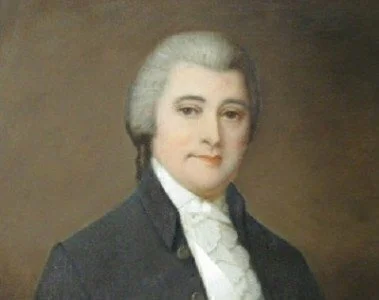
After the war, the three Blount brothers formed a hugely successful merchant business. President George Washington named William Governor of the territory now known as Kentucky and Tennessee and Superintendent of Indian Affairs. He didn’t know it at the time, but Washington had released the proverbial fox into the chicken house. In a display of unbridled greed William directed his company agents to file land claims under “any names – fictious ones will do.” The Cherokee Indians, whose land were stolen from them referred to him by the Cherokee nickname “Dirt Captain.”
William led a statehood effort and when Tennessee became a state, he was elected as the new state’s US Senator. Throughout the 1780s and 1790s, William Blount and his brothers gradually bought up massive amounts of western lands, acquiring over 2.5 million acres by the mid-1790s Much of this land was bought on credit, pushing the family deeply into debt. In 1795, the market for western lands collapsed, and land prices plummeted. His risky land investments left the family in financial straits, and in the 1790s, he (on his own accord) conspired to have Great Britain take over Spanish-controlled Louisiana and Florida in the hope of boosting local land prices.
[Photo: William Blount, the only US Senator to be impeached]
When the conspiracy was uncovered in 1797, Blount was expelled from the Senate and became the first federal official to face impeachment. George Washington called for swift justice against Blount and hoped he would be "held in detestation by all good men." Abigail Adams called the conspiracy a "diabolical plot" and bemoaned the fact that there was no guillotine in Philadelphia. You can understand their fury at him when you consider William Blount was trying to sell off portions of America to the country with whom we had just fought a war to gain our independence. Despite all the ruckus, William Blount remained popular in Tennessee and served in the state senate during the last years of his life until his death in 1800. His brother Thomas followed in his brother’s footsteps – he was elected a US Congressman in North Carolina serving three full sessions despite being tried and acquitted for misdemeanor land fraud charges in 1800.
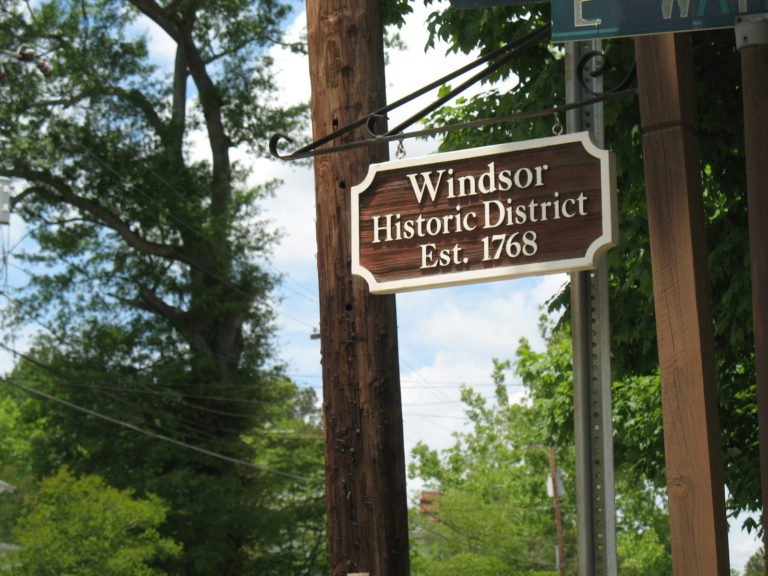
John Gray Jr drafted his will in 1745 and died on 11 October 1750. His wife Ann was pregnant at the time of his death and in 1751 gave birth to a daughter Sarah Winifred Gray. (Nineteen years later Winifred married my 4th great grandfather Edward Cobb). In addition to the 1,000 acre Rosefield land and plantation house in Bertie County, John Jr owned land in Northampton, Edgecombe and Craven Counties, 89 hogs, 60 head of cattle, and 16 enslaved persons. His household inventory, which included among other things 6 feather beds, 80 books and 2 wig boxes reflected his prosperity. John’s son William Gray (1730-1801), inherited Rosefield and he began to build a second plantation home (the one that still exists today) on the property. William was a prosperous planter, merchant, ship builder, and was active in county politics. He is credited with being the founder of the Town of Windsor.
[Photo: Windsor, North Carolina Historic District Marker today]
Windsor was a chaotic place in the spring of 1781. The Town of Edenton was one of the few ports along the coast of North Carolina open to trade. The British Fleet blocked all ports and a large British “row galley” commanded by former colonial officer Michael Quinn began attacking Patriot ships in the Chowan River threatening to raid and plunder the plantations surrounding the town. Boats arrived from Windsor offering refuge to fleeing families. There was a furry of hasty packing and by dawn the residents and livestock were gone. For a week Edenton was a ghost town. Windsor by contrast was jam packed. No doubt William and his family at Rosefield Plantation were pressed into service. A historian noted: “The village of Windsor was crowded with refugees, and its few houses literally swarmed with women and children, valuable furniture thrust into barns, smokehouses converted to kitchens and ladies educated in luxurious habits had to prepare their slender meals with their own hands.” This begs the question – did they leave their enslaved cooks behind?
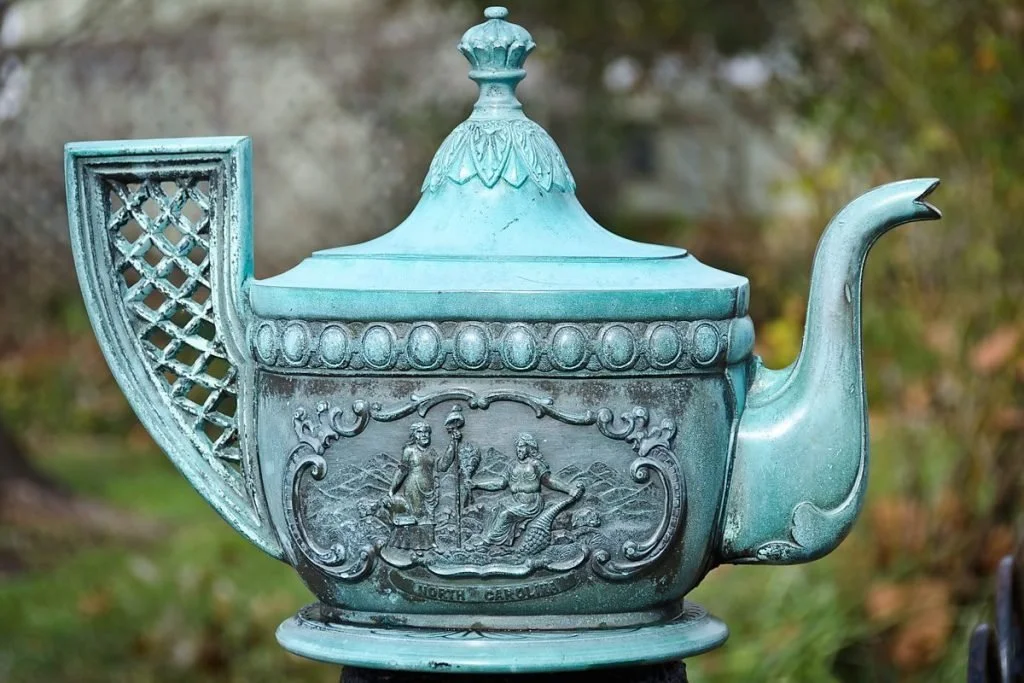
Edenton was known for its feisty women. In 1774 they made history staging the first female political protest in the American colonies. Lead by Penelope Barker, 51 Edenton women signed a petition boycotting British tea and cloth. Instead of hiding like the men at the Boston Tea Party, these women bolding signed their real names, risking being charged with treason.
[Photo: Edenton Tea Party Memorial Teapot]
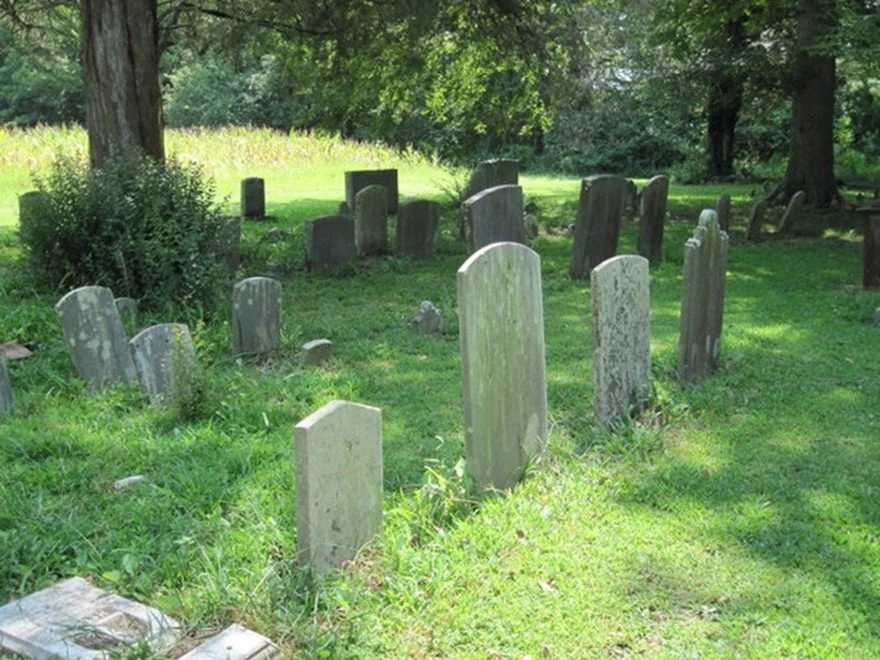
John Gray Jr and his wife Ann are buried in the cemetery at Rosefield plantation, along with his son William and his wife Francis. Today 54 of their descendants share this quiet resting place. Notably missing in the family cemetery is the black sheep William Blount, who is interred in Knoxville, Tennessee. His Knoxville home, the “Blount Mansion,” is a non-profit museum.
[Photo: Rosefield Plantation Family Cemetery]
